Sunday, December 28, 2025
ADVT 
National

Stricter rules for Americans heading to Alaska

Darpan News Desk The Canadian Press, 30 Jul, 2020 06:29 PM
  • Stricter rules for Americans heading to Alaska

The federal government is tightening the rules for non-essential American travellers passing through Canada en route to Alaska, in order to reduce the time spent in the country during the COVID-19 pandemic.

Canada Border Services Agency says U.S. travellers heading to Alaska will be required to use one of five designated border crossings: four in B.C. and one in Alberta.

They must also take the most direct routes possible, avoiding all national parks and tourist activities, and will be issued a tag to hang from their vehicle's rear-view mirror for the duration of their trip to ensure compliance with the rules.

Before entering the U.S., Alaska-bound travellers must report to the nearest Canadian border checkpoint to confirm their exit from Canada.

These measures will also apply to Americans travelling from Alaska to the U.S. through Canada, but U.S.-bound travellers will be permitted to use any border crossing of their choosing.

Any Americans who show symptoms of COVID-19 will not be allowed to enter Canada, and anyone found to have presented false information to a Canadian border officer could be denied entry or banned from returning to Canada.

Restrictions on non-essential travel across the Canada-U.S. border have been in place since March 21 due to COVID-19, but Americans are permitted to travel through Canada by car if they are heading to Alaska.

In June, posts on social media claimed some Americans had been visiting popular tourist destinations in Canada, such as Banff National Park, after telling border agents they were driving to Alaska.

The RCMP issued tickets to some individuals for violating the Public Health Act during the COVID-19 pandemic.

These new border measures are aimed at trying to limit the time Americans spend in Canada while in transit to the northernmost U.S. state, which can only be accessed by going through Canada if travelling by land.

Following admission into Canada, travellers are given a handout telling them they must avoid contact with others while in transit, remain in their vehicle as much as possible and should pay for gas at the pump and use drive-through options for food.

They are told not to make any unnecessary stops and to wear a mask or face covering.

CBSA is encouraging these travellers not to make any detours and only use services that are available along their direct route.
MORE National ARTICLES

Conservatives gear up to grill government in modified return of House of Commons propose and oppose: Tories

Conservatives gear up to grill government in modified return of House of Commons propose and oppose: Tories
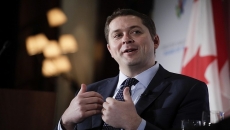
Conservative Leader Andrew Scheer laid out Monday the numerous lines of inquiry his party intends to follow this week as a modified version of a House of Commons sitting gets underway. They include the state of the nation's emergency supply stockpile, the mishmash of federal economic benefit programs that allow some to fall through the cracks and to what extent the minority Liberals are backstopping provincial efforts to reopen their economies, Scheer said.

Conservatives gear up to grill government in modified return of House of Commons propose and oppose: Tories

Learning to live with COVID-19 requires permanent fixes to vulnerable settings

Learning to live with COVID-19 requires permanent fixes to vulnerable settings
Canada's chief public health officer warned Monday there is still a lot we don't know about the virus that causes COVID-19, but said stopping this pandemic or preventing a future one will require more than just physical distancing and handwashing. Dr. Theresa Tam said we simply do not know yet whether someone who has had COVID-19 will be immune from getting it again, or how long that immunity will last.

Learning to live with COVID-19 requires permanent fixes to vulnerable settings

B.C. university creates institute to take microscope-telescope view of pandemic

B.C. university creates institute to take microscope-telescope view of pandemic
The COVID-19 pandemic has placed the world at a tipping point that's challenging social, political, economic and environmental structures, says the director of a new academic research institute at British Columbia's Royal Roads University. Dr. Thomas Homer-Dixon said Monday the pandemic is an event with the power to cause those structures to fall like dominos or shift radically to new paths.

B.C. university creates institute to take microscope-telescope view of pandemic

Drugs and cash seized from a Whalley area residence in Surrey

Drugs and cash seized from a Whalley area residence in Surrey
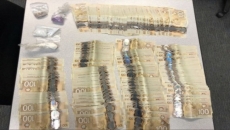
Illicit drugs and cash have been seized from a residence in the Whalley area following an investigation by the Surrey RCMP. The investigation began on March 5th, 2020 by the Surrey RCMP Community Response Unit (CRU). CRU observed suspicious activity consistent with drug trafficking at a residence in the 11400 block of 124 street.     

Drugs and cash seized from a Whalley area residence in Surrey

Police say B.C. woman whose disappearance sparked wide search found dead in Burnaby

Police say B.C. woman whose disappearance sparked wide search found dead in Burnaby
The body of a missing British Columbia woman has been found two months after she disappeared. A statement from New Westminster police says the body believed to be that of Nirla Sharma was discovered Sunday along the Fraser River between New Westminster and Burnaby. The woman's disappearance from her New Westminster home sparked a major search in late February.

Police say B.C. woman whose disappearance sparked wide search found dead in Burnaby

PM Trudeau says nearly 10,000 businesses apply for wage subsidy in first hours

PM Trudeau says nearly 10,000 businesses apply for wage subsidy in first hours
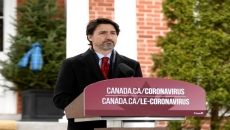
Prime Minister Justin Trudeau says nearly 10,000 businesses have applied for the federal government's wage-subsidy program to help them deal with the COVID-19 pandemic. The emergency measure will cover 75 per cent of wages for employers that have seen sharp declines in revenue since the novel coronavirus hit Canada hard in March, up to $847 per worker.    

PM Trudeau says nearly 10,000 businesses apply for wage subsidy in first hours