Monday, December 29, 2025
ADVT 
National

Stricter rules for Americans heading to Alaska

Darpan News Desk The Canadian Press, 30 Jul, 2020 06:29 PM
  • Stricter rules for Americans heading to Alaska

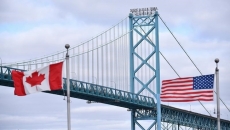
The federal government is tightening the rules for non-essential American travellers passing through Canada en route to Alaska, in order to reduce the time spent in the country during the COVID-19 pandemic.

Canada Border Services Agency says U.S. travellers heading to Alaska will be required to use one of five designated border crossings: four in B.C. and one in Alberta.

They must also take the most direct routes possible, avoiding all national parks and tourist activities, and will be issued a tag to hang from their vehicle's rear-view mirror for the duration of their trip to ensure compliance with the rules.

Before entering the U.S., Alaska-bound travellers must report to the nearest Canadian border checkpoint to confirm their exit from Canada.

These measures will also apply to Americans travelling from Alaska to the U.S. through Canada, but U.S.-bound travellers will be permitted to use any border crossing of their choosing.

Any Americans who show symptoms of COVID-19 will not be allowed to enter Canada, and anyone found to have presented false information to a Canadian border officer could be denied entry or banned from returning to Canada.

Restrictions on non-essential travel across the Canada-U.S. border have been in place since March 21 due to COVID-19, but Americans are permitted to travel through Canada by car if they are heading to Alaska.

In June, posts on social media claimed some Americans had been visiting popular tourist destinations in Canada, such as Banff National Park, after telling border agents they were driving to Alaska.

The RCMP issued tickets to some individuals for violating the Public Health Act during the COVID-19 pandemic.

These new border measures are aimed at trying to limit the time Americans spend in Canada while in transit to the northernmost U.S. state, which can only be accessed by going through Canada if travelling by land.

Following admission into Canada, travellers are given a handout telling them they must avoid contact with others while in transit, remain in their vehicle as much as possible and should pay for gas at the pump and use drive-through options for food.

They are told not to make any unnecessary stops and to wear a mask or face covering.

CBSA is encouraging these travellers not to make any detours and only use services that are available along their direct route.

MORE National ARTICLES

Demand will fuel B.C. real estate in 2021 after COVID recession: report

Demand will fuel B.C. real estate in 2021 after COVID recession: report
A report from the B.C. Real Estate Association says the 2020 COVID-driven recession will be deep, although it could be shorter than other Canadian economic downturns. The market intelligence report released Monday by the association says it expects home sales to sink 30 to 40 per cent for April 2020. 

Demand will fuel B.C. real estate in 2021 after COVID recession: report

Prime Minister Justin Trudeau confirms border closure, which began on March 21 and was set to expire on Tuesday.

Prime Minister Justin Trudeau confirms border closure, which began on March 21 and was set to expire on Tuesday.
Canadian officials acknowledged some regions of the country could be closer to re-opening parts of the economy than others, but continued to stress a careful approach as the border closure with the hard-hit United States was extended for another 30 days during the COVID-19 crisis. Prime Minister Justin Trudeau confirmed the extension on Saturday for the closure restricting non-essential travel across the border, which began on March 21 and was set to expire on Tuesday.

Prime Minister Justin Trudeau confirms border closure, which began on March 21 and was set to expire on Tuesday.

Feds pledge $306M aid for Indigenous businesses suffering COVID-19 losses

Feds pledge $306M aid for Indigenous businesses suffering COVID-19 losses
Prime Minister Justin Trudeau says the government will provide $306 million in funding to help small and medium-sized Indigenous businesses suffering the economic effects of the COVID-19 pandemic. 

Feds pledge $306M aid for Indigenous businesses suffering COVID-19 losses

3 new COVID-19 deaths in B.C. for 81 total, says provincial health officer

3 new COVID-19 deaths in B.C. for 81 total, says provincial health officer
B.C's provincial health officer says three more people in the province have died after testing positive for COVID-19. Dr. Bonnie Henry says the latest deaths came from long-term care facilities and bring the province's total up to 81 deaths. The province has 29 new cases for a total of 1,647.

3 new COVID-19 deaths in B.C. for 81 total, says provincial health officer

Liberals pledge financial aid to sectors of economy hit hard by COVID-19

Liberals pledge financial aid to sectors of economy hit hard by COVID-19
On Friday, the Liberals announced $1.7 billion to help clean up "orphaned wells" in oil-producing provinces, and a $750-million fund to cut methane emissions by providing loans to companies.    

Liberals pledge financial aid to sectors of economy hit hard by COVID-19

Officials set to release estimates of the extent of COVID-19 spread in B.C.

British Columbia is preparing to release its latest estimates of how the new coronavirus may spread through the province over the coming months. Provincial health officer Dr. Bonnie Henry, Health Minister Adrian Dix and health ministry officials release the epidemiological modelling later today.

Officials set to release estimates of the extent of COVID-19 spread in B.C.