Tuesday, December 23, 2025
ADVT 
National

Stricter rules for Americans heading to Alaska

Darpan News Desk The Canadian Press, 30 Jul, 2020 06:29 PM
  • Stricter rules for Americans heading to Alaska

The federal government is tightening the rules for non-essential American travellers passing through Canada en route to Alaska, in order to reduce the time spent in the country during the COVID-19 pandemic.

Canada Border Services Agency says U.S. travellers heading to Alaska will be required to use one of five designated border crossings: four in B.C. and one in Alberta.

They must also take the most direct routes possible, avoiding all national parks and tourist activities, and will be issued a tag to hang from their vehicle's rear-view mirror for the duration of their trip to ensure compliance with the rules.

Before entering the U.S., Alaska-bound travellers must report to the nearest Canadian border checkpoint to confirm their exit from Canada.

These measures will also apply to Americans travelling from Alaska to the U.S. through Canada, but U.S.-bound travellers will be permitted to use any border crossing of their choosing.

Any Americans who show symptoms of COVID-19 will not be allowed to enter Canada, and anyone found to have presented false information to a Canadian border officer could be denied entry or banned from returning to Canada.

Restrictions on non-essential travel across the Canada-U.S. border have been in place since March 21 due to COVID-19, but Americans are permitted to travel through Canada by car if they are heading to Alaska.

In June, posts on social media claimed some Americans had been visiting popular tourist destinations in Canada, such as Banff National Park, after telling border agents they were driving to Alaska.

The RCMP issued tickets to some individuals for violating the Public Health Act during the COVID-19 pandemic.

These new border measures are aimed at trying to limit the time Americans spend in Canada while in transit to the northernmost U.S. state, which can only be accessed by going through Canada if travelling by land.

Following admission into Canada, travellers are given a handout telling them they must avoid contact with others while in transit, remain in their vehicle as much as possible and should pay for gas at the pump and use drive-through options for food.

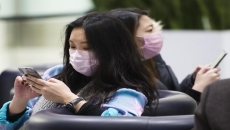
They are told not to make any unnecessary stops and to wear a mask or face covering.

CBSA is encouraging these travellers not to make any detours and only use services that are available along their direct route.


MORE National ARTICLES

Demonstration continues west of Toronto over police shooting death of man

Demonstration continues west of Toronto over police shooting death of man
A group of people protesting the shooting death of a man in mental health crisis on the weekend continue to block an intersection in Mississauga, Ont.

Demonstration continues west of Toronto over police shooting death of man

COVID-19 to leave some lasting economic damage, Bank of Canada chief says

COVID-19 to leave some lasting economic damage, Bank of Canada chief says
Canada's top central banker says there will be long-term economic damage from the COVID-19 pandemic as the country charts a "prolonged and bumpy" course to recovery.

COVID-19 to leave some lasting economic damage, Bank of Canada chief says

Trudeau says China made 'obvious link' between Meng and two Michaels

Trudeau says China made 'obvious link' between Meng and two Michaels
Prime Minister Justin Trudeau says Chinese officials it made clear in the days following their arrests of Michael Kovrig and Michael Spavor that their imprisonments were linked with Canada's detaining high-tech scion Meng Wanzhou days earlier.

Trudeau says China made 'obvious link' between Meng and two Michaels

Online poll finds 43 per cent of Chinese-Canadians faced threats over COVID-19

Online poll finds 43 per cent of Chinese-Canadians faced threats over COVID-19
A new survey of Chinese-Canadians says 43 per cent reported being threatened or intimidated as a result of the COVID-19 pandemic.

Online poll finds 43 per cent of Chinese-Canadians faced threats over COVID-19

Feds lay out guidelines for returning public servants to workplaces

Feds lay out guidelines for returning public servants to workplaces
Canada's roughly 250,000 federal public servants are being primed for an eventual return to their workplaces, though many are expected to continue working remotely for the foreseeable future.

Feds lay out guidelines for returning public servants to workplaces

A look at how provinces plan to emerge from COVID-19 shutdown

A look at how provinces plan to emerge from COVID-19 shutdown
Provinces and territories have been releasing plans for easing restrictions that were put in place to limit the spread of COVID-19.

A look at how provinces plan to emerge from COVID-19 shutdown