
Wednesday, December 31, 2025
ADVT 
National

Strike by B.C.'s professionals could delay national-interest mine project: union

Darpan News Desk The Canadian Press, 17 Oct, 2025 10:22 AM
  • Strike by B.C.'s professionals could delay national-interest mine project: union

The union representing licensed professionals in British Columbia says its latest escalation of strike action could result in "costly delays" in projects such as the expansion of the high-profile Red Chris mine. 

Professional Employees Association executive director Melissa Moroz says engineers, geoscientists and mining inspectors are among those now on the picket lines as all but its essential members take strike action. 

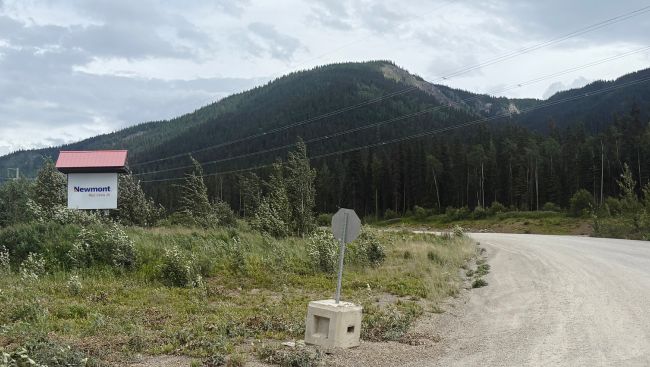
Moroz says those professionals support projects such as the Red Chris copper and gold mine in northwestern B.C., one of five national-interest projects that was identified to fast-track by Prime Minister Mark Carney for its potential to strengthen Canada’s role as a reliable supplier of copper.

She says their strike will present a "problem" for the mine's expansion. 

The union has been striking alongside thousands of members of the BC General Employees' Union, with more than 1,600 professionals now off the job in the latest escalation.

The BCGEU announced its own escalation Thursday, adding 370 workers to picket lines, and with 25,000 of its members strike, union president Paul Finch says that's a "near-full walkout." 

The Canadian Federation of Independent Business says the BCGEU strike has led to weakened confidence by small businesses in the province.

The federation's October survey shows B.C. businesses expect poorer performances in the months ahead, second-lowest in the country after Alberta. 

The federation says restaurants and bars have been especially hard hit with the shutdown of B.C.'s provincial liquor distribution network, and the group is calling for the province to resolve the strike and improve access to private supply.

The B.C. government issued a bulletin Thursday saying it was taking steps to ensure those on disability and income assistance would get their cheques. 

It says all Service BC locations were behind pickets as of Wednesday, but those offices will continue to provide essential services for people who rely on it, although timelines may be longer than usual. 

The bulletin says cheques will go out on Oct. 22, but depending on Canada Post's rotating strike action, there may also be delays in delivery of the payments. 

About 90 per cent of people will receive their money by direct deposit and won't be affected by the postal strike, it says. 

Moroz says talks between the PEA and the province broke off earlier this week after government did not improve its offer, and the union had no choice but to step up the pressure. 

"I hope that our escalation shows government that our members are serious," she said during an announcement of the latest job action on Thursday. "We've never had this kind of strike before. We're hoping the employer takes note and comes back to the bargaining table and makes a reasonable offer so that we can get a deal."

Professionals with the union are employed across several provincial ministries including Health, Attorney General, Mining and Water, Land and Resource Stewardship.

The union said talks broke down Tuesday when government negotiators didn't increase a wage offer of 3.5 per cent over two years. 

Picture Courtesy: THE CANADIAN PRESS/Dave Middleton

MORE National ARTICLES

Weak loonie signals economy is 'in trouble': currency expert

Weak loonie signals economy is 'in trouble': currency expert
The Bank of Canada's end-of-day exchange rate Monday had the loonie trading at 68.48 cents US, but the Canadian dollar neared 70 cents in the minutes after Prime Minister Justin Trudeau said the planned tariffs would be paused for at least 30 days. The overall trend for the Canadian dollar however has been weak, which has implications for the economy. 

Weak loonie signals economy is 'in trouble': currency expert

Interprovincial trade barriers: what they are, why they exist and how to cut them

Interprovincial trade barriers: what they are, why they exist and how to cut them
The Trump administration's on-again, off-again threat to impose damaging tariffs has boosted an old idea for driving economic growth in Canada: eliminating interprovincial trade barriers. Here's a look at how interprovincial trade barriers work and why years of efforts to tear them down them have largely failed.

Interprovincial trade barriers: what they are, why they exist and how to cut them

Trudeau says U.S. tariffs on Canada will be paused for 30 days

Trudeau says U.S. tariffs on Canada will be paused for 30 days
Prime Minister Justin Trudeau says "proposed tariffs" between Canada and the United States will be paused for at least 30 days while the countries work together on the border.

Trudeau says U.S. tariffs on Canada will be paused for 30 days

Canada's forestry sector faces uncertainty with 25 per cent U.S. tariffs

Canada's forestry sector faces uncertainty with 25 per cent U.S. tariffs
A wide shadow of uncertainty has been cast over Canada's forestry sector by U.S. President Donald Trump's decision to impose a 25-per-cent tariff on its lumber products. Several industry groups have released statements criticizing the tariff as unnecessary and harmful for both sides, a sentiment echoed by British Columbia Premier David Eby who vows full support for the provincial sector.

Canada's forestry sector faces uncertainty with 25 per cent U.S. tariffs

Trump mistaken, U.S. banks can and do operate in Canada says finance professor

Trump mistaken, U.S. banks can and do operate in Canada says finance professor
A finance professor at the University of Toronto says American banks do operate in Canada despite assertions by U.S. President Donald Trump that they are not allowed to do business in the country. The Office of the Superintendent of Financial Institutions lists Amex Bank of Canada, Citibank Canada and J.P. Morgan Bank Canada on Schedule II, all having U.S. parent companies. 

Trump mistaken, U.S. banks can and do operate in Canada says finance professor

B.C. critical minerals being diverted away from United States: David Eby

B.C. critical minerals being diverted away from United States: David Eby
Companies in British Columbia are in the process of redirecting critical minerals and energy products to markets outside the United States, Premier David Eby said, as the reality of U.S. President Donald Trump's tariffs sets in. Eby noted B.C. has opened new trade offices in Taiwan, Vietnam and the Philippines over the last 18 months.

B.C. critical minerals being diverted away from United States: David Eby