Federal ministers said Tuesday they are monitoring for blockades of critical roads and infrastructure as striking federal workers made good on a promise to ramp up their picket efforts by disrupting traffic and limiting access to office buildings in downtown Ottawa.
More than 150,000 federal public servants with the Public Service Alliance of Canada were on strike for the seventh straight day as their union representatives continued to negotiate with the government for a bigger wage increase and more flexibility to work remotely.
Around the National Capital Region, hundreds of striking workers made their presence felt and heard, circling buildings, chanting through megaphones and blasting music throughout the morning.
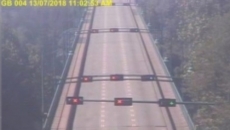
Hundreds of public servants marched across the Portage Bridge between Ottawa and Gatineau, Que., where some of the biggest federal buildings are located, holding up traffic for a short period Tuesday morning.
Ensemble, en toute solidarité. pic.twitter.com/a3hxw1nYGH
— PSAC-AFPC (@psac_afpc) April 25, 2023
Outside the Prime Minister's Office building and the Treasury Board headquarters a few blocks away, strikers limited entry to just one person every five minutes.
The escalation in the strike activity comes after a promise by union president Chris Aylward that picket lines would move to more "strategic locations," including ports of entry where the strike would have a greater economic impact.
PSAC said on Monday they "shut down" the ports in Montreal, Vancouver and St. John's. Federal ministers meeting in Ottawa for the weekly cabinet meeting said they were keeping an eye out for blockades at critical infrastructure.
"On one hand, they have the right to strike and demonstrate," Industry Minister François-Philippe Champagne told reporters Tuesday.
"On the other hand, we need to make sure that the economy can continue functioning around the country."
Transport Minister Omar Alghabra said he has been in contact with ports and airports to make sure they have contingency plans in place.
"I know Canadians would like us to avoid disruption to travel and supply chains, and our focus is to resolve this at the negotiation table," he said.
Treasury Board President Mona Fortier told reporters on Tuesday afternoon that both parties were at the bargaining table Tuesday morning.
In an open letter published on Monday afternoon, Fortier identified four main areas of disagreement that remain between the union and the government: wages, teleworking, outsourcing contracts and seniority rules in the event of a layoff.
When asked if the current offer to increase wages by nine per cent over three years was the final offer by the federal government, Fortier did not give a clear response. Speaking in French, she said that the offer was based off the recommendation of the third-party Public Interest Commission.
The union has been pushing for a 13.5 per cent increase in pay for its members over the same period of time.
Federal and provincial governments are more aware than ever about how vulnerable and critical major roadways and ports of entry are after last year's "Freedom Convoy," said Ambarish Chandra, an associate professor of economics at the University of Toronto.
Demonstrators took over major roads in downtown Ottawa for three weeks and blockaded several border crossings for days in February 2022 to protest vaccine mandates and the federal government. The protest precipitated the first use of the federal Emergencies Act.
While those events are a far cry from the activities of public servants on strike, federal workers' decision to target points of critical infrastructure could inspire copycat events, said Chandra.
He was one of the experts to testify about protecting the flow of essential goods and services during the public inquiry that was called to assess the government's decision to use the Emergencies Act in response to the convoy protests.
"The events of last year highlighted how vulnerable we are and it may not be surprising if other groups now seize on that vulnerability to exploit what they now realize is a key sort of critical shortcoming in infrastructure," he said.
Smaller disruptions at borders and other critical infrastructure are likely to be annoying and in some cases costly, he said, but they tend to fade from public memory quickly compared to more substantial blockades.