Wednesday, June 3, 2026
ADVT 
National

Survey examines hesitancy in early vaccine rollout

Darpan News Desk The Canadian Press, 31 Aug, 2021 03:29 PM
  • Survey examines hesitancy in early vaccine rollout

A national survey suggests the vast majority of Canadians planned to get vaccinated against COVID-19 when the country's rollout began, but intentions were lower among certain demographics, including residents of Alberta and racialized communities.

The survey, led by researchers at Toronto's St. Michael's Hospital, was published online Tuesday in The Lancet Regional Health —Americas.

The survey asked more than 14,500 Canadians online between December 2020 and February 2021 if they intended to get vaccinated once they were eligible, with researchers identifying differences in participants by age, education, ethnicity, and home province.

Nine per cent of respondents overall said they did not intend to get vaccinated, with hesitancy highest in Alberta at 16 per cent, and Manitoba and Saskatchewan, both at 14 per cent.

Fifteen per cent of respondents who identified as Indigenous and 12 per cent of those identifying as racialized said they did not intend to get vaccinated.

Men were more hesitant than women overall — 11 per cent versus eight — and participants aged 40 to 59 had the lowest vaccination intention, with about 12 per cent reporting no intention to get vaccinated.

The survey suggested that education also factored into hesitancy, with 14 per cent of participants with a college education or less saying they did not intend to get vaccinated, compared to five per cent of respondents with a bachelor's degree or higher.

The study did not indicate whether intent translated into action, but researchers say they plan to answer that in the coming months.

They noted that 18 per cent of eligible Canadians had not yet received a COVID-19 vaccine dose by Aug. 27 — nearly twice the rate expected in the survey.

Researchers said the findings should encourage policymakers to target vaccine campaigns on the most reluctant groups, as well as those who said they planned to get a shot but did not.

The study was a collaboration between the Centre for Global Health Research at Unity Health Toronto, the University of Toronto and the Angus Reid Forum. Funding was provided by an unrestricted grant from Pfizer Global Medical Grants and Unity Health Toronto.
MORE National ARTICLES

Trudeau welcomes Chauvin guilty verdict

Trudeau welcomes Chauvin guilty verdict
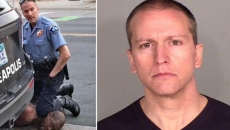
Derek Chauvin was found guilty Tuesday on all three charges against him: second-degree unintentional murder, third-degree murder and second-degree manslaughter.

Trudeau welcomes Chauvin guilty verdict

Vancouver Police seeks witnesses to elderly pedestrian killed in Downtown Eastside

Vancouver Police seeks witnesses to elderly pedestrian killed in Downtown Eastside
A 67-year-old man was struck and killed by a semi-truck that was travelling down East Cordova Street near Princess Avenue around 9:45 a.m.

Vancouver Police seeks witnesses to elderly pedestrian killed in Downtown Eastside

COVID19 outbreak at Surrey Memorial Hospital: Fraser Health

COVID19 outbreak at Surrey Memorial Hospital: Fraser Health
Upon declaring the outbreak, Fraser Health immediately implemented precautions, including enhanced cleaning as well as contact tracing to protect the health of all staff, medical staff, and patients.

COVID19 outbreak at Surrey Memorial Hospital: Fraser Health

Drugs and guns seized as part of targeted gang enforcement: Surrey RCMP

Drugs and guns seized as part of targeted gang enforcement: Surrey RCMP
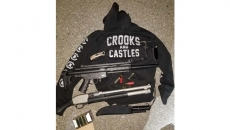
Shortly after 11:30 p.m. on April 17, 2021, SGET conducted a traffic stop with a vehicle in the area of Woodland Place and 99 Avenue. During their interactions with the driver, the officer observed a weapon inside the vehicle and subsequently detained the driver for weapons possession.

Drugs and guns seized as part of targeted gang enforcement: Surrey RCMP

B.C. to spend $8.7 billion on COVID recovery

B.C. to spend $8.7 billion on COVID recovery
Finance Minister Selina Robinson said Tuesday the deficit for the 2021-22 budget is projected to be $9.7 billion, lower than the $13.6 billion forecast last December, due to higher-than-expected revenues and lower government spending.

B.C. to spend $8.7 billion on COVID recovery

B.C. budget has millions for addiction treatment

B.C. budget has millions for addiction treatment
Selina Robinson says the budget includes $500 million over three years to expand youth mental health programs, add 195 treatment and recovery beds for substance users and expand programs that respond to the overdose crisis.

B.C. budget has millions for addiction treatment