Wednesday, December 31, 2025
ADVT 
National

Systemic issues cited in man's killing of mother

Darpan News Desk The Canadian Press, 16 Jul, 2020 09:11 PM
  • Systemic issues cited in man's killing of mother

Manitoba judge sentencing a young man for beating his own mother to death has denounced systemic issues the judge says leave Indigenous people at risk.

"The ruin of the First Nations and peoples of Canada is not just statistics. As seen here, it is real pain," Justice Chris Martin said in a written decision delivered July 10.

Anthony McKay was sentenced to four years after pleading guilty to manslaughter in the death of his mother, Shirley McKay. He faces two years behind bars, after receiving credit for time already served, and will be subject to three years of supervised probation after that.

"As a human, Mrs. McKay deserved better. And, like anyone born in this bountiful country, her son, her killer, deserved a better start, a better chance, in life," Martin wrote.

The judge said the killing on the Berens River First Nation, about 300 kilometres north of Winnipeg, was a "calamity of almost 150 years of government policy, actions and inactions affecting the Indigenous community."

Anthony McKay, who was 21 at the time, went to his mother's home after a night of drinking on June 22, 2018.

Court was told there was blood everywhere when a cousin came over about 8 a.m. The cousin found Shirley McKay unconscious and badly beaten. Her son has said he doesn't know why he viciously beat her.

The woman was taken to a nursing station before being transported to a hospital in Winnipeg. Her son visited her in hospital daily and was overheard at her bedside sobbing and apologizing.

Court heard he was confronted by a stepbrother and admitted that he had hurt his mother.

Shirley McKay died that September. Her son was arrested the following month.

"She did not recover and died months later, another victim in a mass of slain Aboriginal women," Martin said. "He pled guilty to manslaughter, joining an appalling line of young Aboriginals ending up in prison."

Crown prosecutors were asking for a seven-year sentence in a federal penitentiary. The defence asked for two years behind bars plus the probation so that McKay could have access to programming available in provincial custody.

The judge pointed to impacts of colonization, the pass system which restricted Indigenous Peoples' movement, residential schools and the '60s Scoop in his sentencing.

"It is well accepted that the government's role, since the early days of dealing with First Nations peoples, has had the effect of isolating, infantilizing, marginalizing, and traumatizing Indigenous societies like the Ojibwa (or Anishinaabe) of Berens River," Martin wrote.

"Mr. McKay is a person shaped by a system historically designed to 'take the Indian out of the Indian.'"

Reports provided to the judge on McKay's background said he has partial fetal alcohol syndrome.

One of 13 siblings, he spent most of his time in foster homes on the First Nation or more often in Winnipeg. His parents struggled with alcohol and sniffing substances, and McKay followed a similar path starting when he was 13. His father died in 2010.

McKay was neglected and not cared for, files from child and family services said. He asked to become a permanent ward of child welfare in 2013 because he didn't feel safe with his family.

Martin said McKay's troubled upbringing doesn't excuse his behaviour, but does help explain why he is who he is.

Occasionally it is incumbent on a judge to underscore systemic issues, he said, adding Indigenous people are disproportionately affected by serious crime and disproportionately incarcerated.

"Like so many other cases, this case is troubling, not only for its specific facts, but because it reminds that core issues affecting many in the Indigenous population are not really being addressed sufficiently or urgently enough," Martin wrote.

"Many in this and the next generation of Indigenous people are at risk."

MORE National ARTICLES

Local restaurants feel squeezed by delivery apps' commission fees

Local restaurants feel squeezed by delivery apps' commission fees
Restaurants struggling to survive during the COVID-19 crisis have turned to take-out and delivery, but the fees charged by food-delivery companies are eating away their bottom line, some operators say. Physical distancing measures have decimated dine-in service, which accounts for most industry revenue, said Mark von Schellwitz, a vice-president of the non-profit Restaurants Canada.

Local restaurants feel squeezed by delivery apps' commission fees

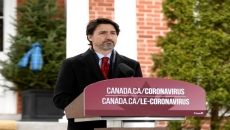
Ottawa helping guide, but not dictating, provincial reopening plans: Trudeau

Ottawa helping guide, but not dictating, provincial reopening plans: Trudeau
With Canada's two most populous provinces poised to outline plans for a gradual return to normalcy, Prime Minister Justin Trudeau said Monday that Ottawa will help guide, but not dictate, how provinces and territories should start easing restrictions. Ontario and Quebec together account for more than 80 per cent of the country's COVID-19 cases.    

Ottawa helping guide, but not dictating, provincial reopening plans: Trudeau

Crisis lines face volunteer, cash crunch even as COVID-19 drives surge in calls

Crisis lines face volunteer, cash crunch even as COVID-19 drives surge in calls
Despite a surge in demand due to COVID-19, many distress centres across Canada are dangerously close to folding thanks to major declines in both volunteers and revenue. Stephanie MacKendrick, CEO of Crisis Services Canada, which runs the only national suicide-specific helpline in Canada, says her organization relies on a network of approximately 100 community distress centres across the country to field calls from people.

Crisis lines face volunteer, cash crunch even as COVID-19 drives surge in calls

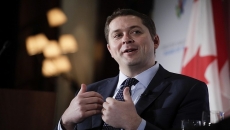
Conservatives gear up to grill government in modified return of House of Commons propose and oppose: Tories

Conservatives gear up to grill government in modified return of House of Commons propose and oppose: Tories
Conservative Leader Andrew Scheer laid out Monday the numerous lines of inquiry his party intends to follow this week as a modified version of a House of Commons sitting gets underway. They include the state of the nation's emergency supply stockpile, the mishmash of federal economic benefit programs that allow some to fall through the cracks and to what extent the minority Liberals are backstopping provincial efforts to reopen their economies, Scheer said.

Conservatives gear up to grill government in modified return of House of Commons propose and oppose: Tories

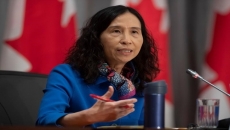
Learning to live with COVID-19 requires permanent fixes to vulnerable settings

Learning to live with COVID-19 requires permanent fixes to vulnerable settings
Canada's chief public health officer warned Monday there is still a lot we don't know about the virus that causes COVID-19, but said stopping this pandemic or preventing a future one will require more than just physical distancing and handwashing. Dr. Theresa Tam said we simply do not know yet whether someone who has had COVID-19 will be immune from getting it again, or how long that immunity will last.

Learning to live with COVID-19 requires permanent fixes to vulnerable settings

B.C. university creates institute to take microscope-telescope view of pandemic

B.C. university creates institute to take microscope-telescope view of pandemic
The COVID-19 pandemic has placed the world at a tipping point that's challenging social, political, economic and environmental structures, says the director of a new academic research institute at British Columbia's Royal Roads University. Dr. Thomas Homer-Dixon said Monday the pandemic is an event with the power to cause those structures to fall like dominos or shift radically to new paths.

B.C. university creates institute to take microscope-telescope view of pandemic