Wednesday, December 31, 2025
ADVT 
National

Systemic issues cited in man's killing of mother

Darpan News Desk The Canadian Press, 16 Jul, 2020 09:11 PM
  • Systemic issues cited in man's killing of mother

Manitoba judge sentencing a young man for beating his own mother to death has denounced systemic issues the judge says leave Indigenous people at risk.

"The ruin of the First Nations and peoples of Canada is not just statistics. As seen here, it is real pain," Justice Chris Martin said in a written decision delivered July 10.

Anthony McKay was sentenced to four years after pleading guilty to manslaughter in the death of his mother, Shirley McKay. He faces two years behind bars, after receiving credit for time already served, and will be subject to three years of supervised probation after that.

"As a human, Mrs. McKay deserved better. And, like anyone born in this bountiful country, her son, her killer, deserved a better start, a better chance, in life," Martin wrote.

The judge said the killing on the Berens River First Nation, about 300 kilometres north of Winnipeg, was a "calamity of almost 150 years of government policy, actions and inactions affecting the Indigenous community."

Anthony McKay, who was 21 at the time, went to his mother's home after a night of drinking on June 22, 2018.

Court was told there was blood everywhere when a cousin came over about 8 a.m. The cousin found Shirley McKay unconscious and badly beaten. Her son has said he doesn't know why he viciously beat her.

The woman was taken to a nursing station before being transported to a hospital in Winnipeg. Her son visited her in hospital daily and was overheard at her bedside sobbing and apologizing.

Court heard he was confronted by a stepbrother and admitted that he had hurt his mother.

Shirley McKay died that September. Her son was arrested the following month.

"She did not recover and died months later, another victim in a mass of slain Aboriginal women," Martin said. "He pled guilty to manslaughter, joining an appalling line of young Aboriginals ending up in prison."

Crown prosecutors were asking for a seven-year sentence in a federal penitentiary. The defence asked for two years behind bars plus the probation so that McKay could have access to programming available in provincial custody.

The judge pointed to impacts of colonization, the pass system which restricted Indigenous Peoples' movement, residential schools and the '60s Scoop in his sentencing.

"It is well accepted that the government's role, since the early days of dealing with First Nations peoples, has had the effect of isolating, infantilizing, marginalizing, and traumatizing Indigenous societies like the Ojibwa (or Anishinaabe) of Berens River," Martin wrote.

"Mr. McKay is a person shaped by a system historically designed to 'take the Indian out of the Indian.'"

Reports provided to the judge on McKay's background said he has partial fetal alcohol syndrome.

One of 13 siblings, he spent most of his time in foster homes on the First Nation or more often in Winnipeg. His parents struggled with alcohol and sniffing substances, and McKay followed a similar path starting when he was 13. His father died in 2010.

McKay was neglected and not cared for, files from child and family services said. He asked to become a permanent ward of child welfare in 2013 because he didn't feel safe with his family.

Martin said McKay's troubled upbringing doesn't excuse his behaviour, but does help explain why he is who he is.

Occasionally it is incumbent on a judge to underscore systemic issues, he said, adding Indigenous people are disproportionately affected by serious crime and disproportionately incarcerated.

"Like so many other cases, this case is troubling, not only for its specific facts, but because it reminds that core issues affecting many in the Indigenous population are not really being addressed sufficiently or urgently enough," Martin wrote.

"Many in this and the next generation of Indigenous people are at risk."
MORE National ARTICLES

Offers of COVID-19 financial aid from province not enough for Vancouver: mayor

Offers of COVID-19 financial aid from province not enough for Vancouver: mayor
Vancouver's mayor says the financial help being offered by the B.C. government is a "poison chalice" because of the terms it would impose on the city. Kennedy Stewart says borrowing money from the province would saddle Vancouver with a massive deficit that would result in deep service cuts or large property tax increases in the future.    

Offers of COVID-19 financial aid from province not enough for Vancouver: mayor

Horgan tells workers stay home if sick after COVID-19 outbreak at chicken plant

Horgan tells workers stay home if sick after COVID-19 outbreak at chicken plant
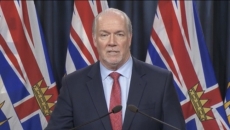
B.C. Premier John Horgan says people who are sick must stay away from work after an outbreak of COVID-19 at a chicken processing plant in Vancouver. Horgan said Wednesday workers should not go to work when they are sick because they fear losing wages, and that he was planning a meeting with Labour Minister Harry Bains and WorkSafe BC officials to discuss sick pay provisions.

Horgan tells workers stay home if sick after COVID-19 outbreak at chicken plant

Search for missing B.C. woman prompts homicide fears, second death

Search for missing B.C. woman prompts homicide fears, second death
Police are releasing more details about a British Columbia woman they fear may be the victim of a homicide. Metro Vancouver's Integrated Homicide Investigation Team says 45-year-old April Parisian was last heard from on March 28 and was declared missing earlier this month.

Search for missing B.C. woman prompts homicide fears, second death

Reports of hate crimes are up in Vancouver: police

Reports of hate crimes are up in Vancouver: police
An assault on a 92-year-old Asian man with dementia in Vancouver is being investigated as a hate crime and police say they have recently noticed an increase in reports of hate-motivated incidents. Vancouver police say the man has "severe dementia" and wandered into a convenience store on March 13 when another man yelled racist remarks that included comments about COVID-19.    

Reports of hate crimes are up in Vancouver: police

More signs COVID-19 is slowing in Canada; students to get federal help

More signs COVID-19 is slowing in Canada; students to get federal help
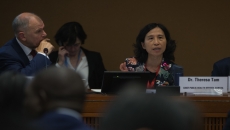
Chief Public Health Officer Dr. Theresa Tam said Canada was making progress in slowing the epidemic but warned against letting down its guard. The focus, Tam said, must be placed on stopping outbreaks in places like seniors homes and in other places where vulnerable populations live together in close quarters. How exactly Canada gets on the road to normalization will largely depend on the provinces, Prime Minister Justin Trudeau said on Wednesday. However, the closure of the Canada-U.S. border will stay in place until May 21st at least, he said.

More signs COVID-19 is slowing in Canada; students to get federal help

Prime Minister Justin Trudeau defends not creating universal COVID-19 benefit, announces student aid

Prime Minister Justin Trudeau defends not creating universal COVID-19 benefit, announces student aid
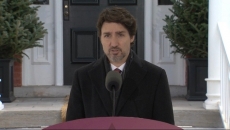
As he announced yet another emergency financial aid package Wednesday — this one aimed at students — Prime Minister Justin Trudeau defended his decision not to create a universal benefit that would ensure no Canadians affected by COVID-19 fall through the cracks. His focus for specific help Wednesday was students, announcing a $9-billion suite of programs for students whose education and job prospects are disrupted by the novel coronavirus.  Trudeau says his government's approach has been to try to target its emergency financial assistance in stages to those who need it most, rather than to everyone at once, including those who don't need it.      

Prime Minister Justin Trudeau defends not creating universal COVID-19 benefit, announces student aid