OTTAWA — Legislation such as Ottawa's proposed anti-terror bill would probably have put a quick end to Quebec's student uprising in 2012, says one of the movement's former leaders.
"From the moment people are suspected of terrorism or incitement to terrorism, the impact on the morale of people who are mobilizing is undeniable," Gabriel Nadeau-Dubois said in an interview with The Canadian Press.
"In my opinion, it (Bill C-51) certainly could have had a serious impact in 2012."
Nadeau-Dubois, a former standard-bearer of the student movement as a co-spokesman for CLASSE, is adding his voice to those concerned with the extent of the powers that would be granted to intelligence agencies and police under the Conservatives' wide-ranging anti-terror bill.
Several organizations, including a labour federation, a civil liberties group and a Quebec-based branch of Amnesty International, will denounce the legislation at a news conference in Montreal on Thursday.
Aboriginal leaders, environmentalists and human rights advocates said in Ottawa last week the bill would infringe on the right to freedom of expression and political dissent, be it protests or acts of civil disobedience.
Public Safety Minister Steven Blaney has dismissed the concerns, calling the criticism "completely false and frankly, ridiculous."
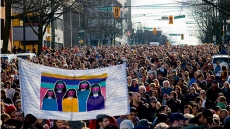
But Nadeau-Dubois doesn't believe authorities would pass up the chance to use the powers enshrined in the bill in the context of a social crisis such as the student unrest of 2012. There were nightly demonstrations, tense standoffs between students and police as well as various legal challenges.
One source involved in Quebec's student movement says the Canadian spy agency kept close watch on students "before, during and after" the tuition protests and at least 20 were met by Canadian Security Intelligence Service (CSIS) agents.
"If provisions such as those contained in Bill C-51 had been in effect at the time, I think we could have witnessed more serious incidents," Nadeau-Dubois said.
The fear of being labelled a terrorist would have kept people on the sidelines instead of in the streets, said Roch Tasse of the International Civil Liberties Monitoring Group.
New rules would prevent certain types of actions from taking place, such as blockades at the Port of Montreal or the Jacques-Cartier Bridge, he said.
Under the terror bill, those actions could result in charges as it stipulates hindering the government's ability to ensure the "economic stability of Canada" and hampering "the operation of critical infrastructure" are among the activities that threaten national security.
Another important disposition would grant several federal departments the ability to share personal information of Canadians with agencies like CSIS.
Tasse says 17 departments could share everything from travel history, tax reports and medical files.
Nadeau-Dubois is appealing to the democratic sensibilities of his fellow citizens, even those who may disagree with protests in the streets.
"It's one of the disadvantages of democracy," he said of the fundamental right of individuals and groups to express their disagreement.
"But it's better to be annoyed by democracy than to lose it," he added.