OTTAWA — The political messaging that will weave through Justin Trudeau's first budget is poised to have a recognizable ring to it: reducing inequality while laying the groundwork for long-term economic growth.
But delivering the most substantial items from the prime minister's election platform has been a tougher task than his government anticipated during the fall campaign.
For starters, Trudeau's $10-billion deficit projection is now widely expected to be three times the size.
His Liberals will unveil their inaugural budget Tuesday for an economy that has been battered by an oil-price shock. The already-dim fiscal prospects during the campaign have only darkened since the party took office in November.
Despite the slide, the government has signalled it will follow through on many — if not all — of its big-ticket election vows.
The promises include billions of dollars for economy-boosting measures, such as an enhanced child-benefit plan and infrastructure spending.
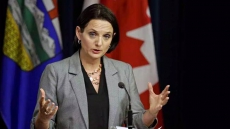
"There's no question that times are tough right now for many Canadians across the country, and in that situation, a less ambitious government might see these conditions as a reason to hide, to make cuts or to be overly cautious," Finance Minister Bill Morneau said last month after releasing a fiscal update that suggested the government would more than double its previous shortfall target.
"But our government believes strongly that the economic downturn makes our plan to grow the economy even more relevant than it was just a few short months ago."
The Liberals have cited the worse-than-expected economy as the reason they broke their promise to cap deficits at $10 billion over the next two years.
They've also backed away from their central pledge to balance the books by 2019-20. There are now doubts whether the party can even fulfil its most-flexible fiscal vow: reducing Canada's debt-to-GDP ratio in every year of their mandate.
Morneau argued the Liberals' starting point was "much further back" than they had expected.
In his budget speech, Canadians can expect Morneau to refer to helping the so-called "middle class" by gradually creating conditions that will allow it to thrive even as the country's population ages.

Infrastructure will be a key part of the plan.
The Liberals have said the infrastructure program will focus on maintenance and repair work over the next two years before shifting to larger, more substantial projects aimed at increasing long-term growth and guiding Canada toward a low-carbon economy.
Morneau took the rare step last month of releasing the government's grim fiscal numbers only a few weeks before the budget. Observers have described it as a smart political strategy to prevent much of the bad news from overshadowing budget day.
Still, experts like former parliamentary budget officer Kevin Page believe Morneau owes Canadians a clear explanation for why he's about to drive the country billions of dollars deeper into deficit.
"If you're going to talk about a major fiscal expansion ... I think you've really got to make the case that you know what you're doing from a fiscal policy perspective," Page said in an interview, noting that current conditions aren't nearly as gloomy as the deep recession of 2009-10.
Page, now a University of Ottawa professor, urged the government to show how much of the shortfall will be structural and how much is cyclical, an analysis other countries such as the United States routinely share with the public. He also called on the Liberals to spell out exactly what their measures will deliver in terms of boosting economic output and creating jobs.
The costly suite of Liberal election promises, however, doesn't just contain spending commitments aimed at reinvigorating the economy. It also includes measures such as federal cash for home health-care services.
On top of that, the Liberals have made numerous uncosted vows — before and since the election — that could easily reach billions of dollars.
The yet-to-be fully costed pledges include ending all boil-water advisories on aboriginal reserves within five years, delivering on all 94 recommendations from the Truth and Reconciliation Commission and lifting the two-per-cent cap on annual federal funding increases for First Nations communities.
Morneau has maintained the budget will include costing for "every single one" of the government's initiatives to give Canadians a very clear understanding of the financial situation.
To offset part of its spending plans, the government has also said it will find ways to raise revenues.
For example, it intends to review spending by the previous Conservative government and target tax loopholes that particularly benefit the wealthiest Canadians. In total, the Liberals estimated the actions will generate $6.5 billion over four years.
Political opponents like Tory MP Gerard Deltell warn the Liberal deficit plan threatens to be a "real mess" for the economy.
Deltell insisted the Liberals squandered a $1-billion surplus for 2015-16 that the Harper government left behind. If they were still in power, he said the Tories would be aiming for a balanced budget in 2016-17.

"You cannot think to have a deficit when you are not in a recession or an economic crisis," the Quebec MP said.
New Democrat MP Guy Caron said the Liberals must avoid steering the country into deep structural deficits, while ensuring they help the most-vulnerable Canadians.
The budget is also expected to include measures for a wide range of areas, such as climate change, affordable housing and plans to help innovators transform research and ideas into stronger productivity and growth.
Trudeau himself recently announced the budget will restore, as promised, the eligibility for old-age security to 65, from 67.
One issue that remains to be seen is whether the budget will contain specific plans to help regions hit hardest by the oil-price slump, such as Alberta.
"I won't have budget 2016 simply become a knee-jerk reaction to recent economic shifts," Morneau said last month. "We'll be acting out of reason."