The Dhahan prize aims to promote the growth of the Punjabi language globally, as well as encourage new, emerging, and established writers working in the two Punjabi scripts, Gurmukhi and Shahmukhi.
Punjabi names include Jaswinder, Rupinder, Sharnjeet, Harpinder, and Gurparveen, among others. Sometimes the vowels in these names make Caucasian teachers roll their eyes. So we wring out our flavours and become Jas, Rup, Sharn, Harp, and Gurp because it’s easy. Making them simple for mouths that have never heard syllables from the land of five rivers.
There are several prestigious awards and prizes for literature across the globe mostly in European languages. But in India and Pakistan, national languages take the forefront and one would wonder why there aren’t enough literary awards in regional languages? Well, that was one of the reasons why Vancouver-based Barj S. Dhahan started the Dhahan Prize.
The idea is to celebrate the rich culture and transnational heritage of Punjabi literature and language. The prize aims to promote the growth of the Punjabi language globally, as well as encourage new, emerging, and established writers working in the two Punjabi scripts, Gurmukhi and Shahmukhi.
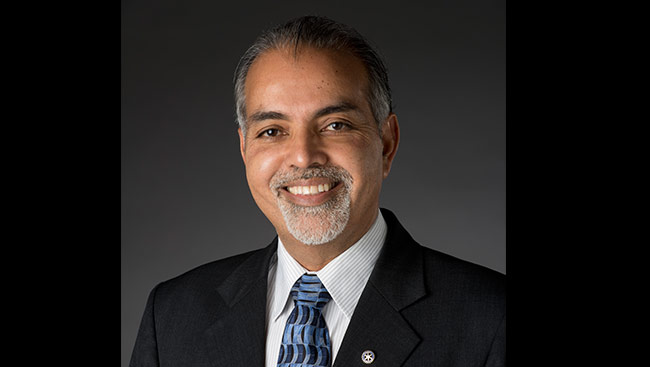
Talking to us about how the Dhahan Prize came into existence, founder Barj says, “While I was in high school no Indian languages were offered as ‘second language courses’ in Canada.
However, German, Latin, and Greek were offered. I had a keen interest in literature and I have read many English classics as well as European works of fiction translated into English. No Punjabi classics were available in English translation then and even now there are few. I also wondered why there were no ‘big’ literary prizes in South Asia’s indigenous literature. Over time I was inspired to create a global Punjabi literary prize to draw attention to the rich one thousand year-long literary tradition and the production of new works of fiction in Punjabi in Pakistan, India and within the Punjabi diaspora.”
Barj also the co-founder of Canada India Education Society, had another motive behind launching the award. He wanted to honour the Dhahan family’s history of activism in India and Canada, where they have supported education and health care initiatives, Punjabi language teaching, and learning opportunities for girls. With the support of his wife, Rita, many of their close family and friends, and the University of British Columbia, the Dhahan Prize for Punjabi Literature was founded in 2013.
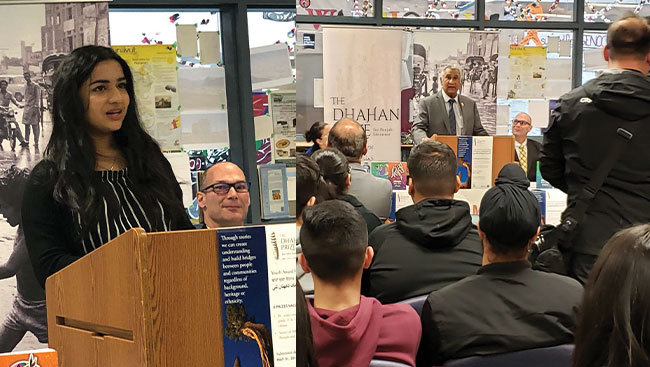
If one was to dive deeper into how The Dhahan Prize promotes the Punjabi culture and literature, Barj has a fitting answer. He says, “the Dhahan Prize promotes Punjabi language, culture, arts, and literature.
After all, culture is transmitted through the telling of stories. And in most cultures, it’s mothers and grandmothers that tell stories to their children. So story writing – short stories and novels - is an important way through which culture, history, beliefs, and values are shared. Punjabi is the language of Punjab and Punjabis. Punjabis are diverse in religious beliefs and practices. They can be Sikh, Hindu, Muslim, etc…Punjabis have strong class and caste consciousness. We are tribal to a large extent and the social structures are paternalistic. It is sad though that while the culture is rich and diverse, women and their voices are muted in literature.”
Till 2020, about 21 writers have benefitted because of the Dhahan Prize. “The Dhahan Prize awards a main prize and two finalist prizes. The winning book receives $25,000 and the two finalists receive $10,000 each. The annual Prize ceremony is held in Vancouver. The winners also receive a trophy,” says Barj, adding, “Punjabi is the 10th largest language in the world. But it is at risk due to the sheer pressure of English globally and the national languages of Hindi and Urdu in India and Pakistan respectively. So the Dhahan Prize is promoting Punjabi language and culture through fiction and increasing readership around the world. The Prize is adjudicated in both Punjabi scripts of Gurmukhi and Shahmukhi. In British Columbia, we also have an annual youth Punjabi short story contest for grade 11 and 12 students taking Punjabi courses in high schools. Coast Capital Savings is a corporate sponsor for the Youth Award. Annually we publish the eight winning stories in Gurmukhi, Shahmukhi, English, and French. Youth are learning to write and read in Punjabi. They are gaining pride and confidence in their heritage language and culture.”
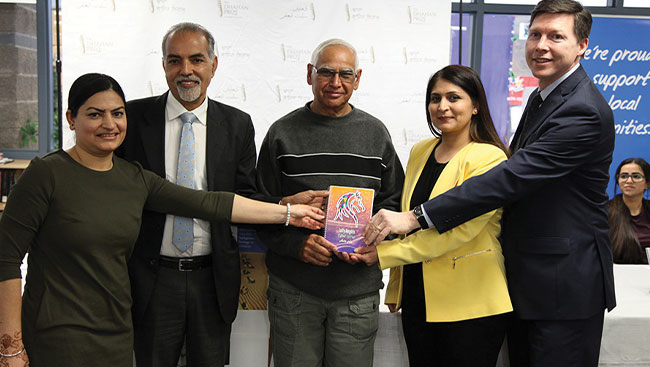
The Dhahan Prize has gone through a sea change in the past years. From the time they started in 2013, they knew that modern Punjabi literature is dominated by male writers. Most Punjabi literary associations are also male-dominated and that there is a dearth of women writers. In order to fill the gap, Barj had a goal - which was to bring diversity, equity, and inclusion into Punjabi literature but it took a long time.
“So I am proud to say that for the 2020 Dhahan Prize one-third of the submissions were from women authors. Four out of the ten finalists were crafted by women writers. And one of the two finalists was Chilliwack based Harkirat Chahal’s novel Aadam Grehan. It’s a heart-wrenching story set within the ‘third gender’ or Khusra community in Punjab,” Barj says. Adding to that, he shares that at each years’ Prize ceremony a keynote speaker gives an inspiring talk. To date, there have been four men and three women keynotes – among them Shauna Singh Baldwin (US), Parveen Malik (Pakistan), and Balli Kaur Jaswal (Singapore). “This year four of the nine Dhahan Prize advisors are women scholars in Punjabi from India, Pakistan, and Britain. So we have come a long way in creating space for the feminine voices in Punjabi literature and community,” he says.
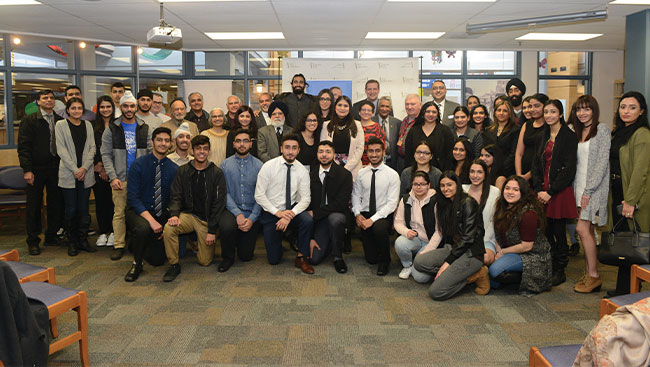
The Dhahan Prize is always looking for original stories and Barj insists that one must write one’s own stories. “Write your own stories. Otherwise, someone else will.” Two of the Dhahan Prize-winning books have been translated into English. And one of these “Prism” will be published this summer by Ekstasis Editions, a Victoria-based publisher for the Canadian market. This is very exciting. The author, Harpreet Sekha is from Surrey, BC, and his Punjabi stories will now be made available to a large English reading audience,”
he expresses.