As Ottawa refuses to say exactly how many Canadian troops are in the Middle East, experts are questioning the government's claim it has had no role in the American attack on Iran.
Here's what we know about Canada's involvement in the war launched this past weekend by U.S. President Donald Trump.
1) 'Some' troops in the region
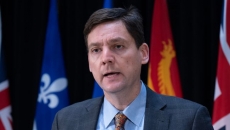
When asked Tuesday, Defence Minister David McGuinty would only say there are "some" Canadian military personnel in the Middle East and he insisted they are "out of harm's way."
McGuinty did not offer specifics and his department is refusing to say how many troops are in each country.
"Due to operational security imperatives, we will not provide a breakdown on the specific locations and number of Canadian Armed Forces personnel in the region at this time," wrote department spokesman Kened Sadiku.
The Department of National Defence has been more forthright in the past. Last June, it disclosed that "up to five Canadian Armed Forces members operate from Al Udeid airbase in Qatar," which Iran had attacked that month in retaliation for previous U.S. airstrikes.
In addition to troops stationed recently in Qatar, Canada has an operational support hub in Kuwait, which provides support for personnel, matériel and equipment in the region.
The CAF website also suggests Canadian personnel have been stationed recently at U.S. Navy Central Command in Bahrain.
Canada has stationed vessels in the region in previous conflicts and did so to support the U.S. in the 2003 Iraq War that Ottawa opted not to join.
2) No involvement?
McGuinty said the Canadian Armed Forces weren’t involved in the preparation or execution of the attack and Canada was not given advance notice.
He said the government "decided from the beginning" it would support the attack, even as Ottawa calls for a diplomatic end to the conflict.
Retired major-general Denis Thompson told CBC News it's likely Canadian military officials on exchange with the U.S. in the Middle East were involved at some point in the planning and coordination of the operation.
"Unless the Canadian government said, 'No, you cannot be directly engaged in this conflict,' then … typically, when we attach officers to another military and they go to war and the prime minister endorses this attack, then it's quite likely that they're actively engaged in the targeting process," Thompson told CBC News.
In a Toronto Star article citing Thompson's comments, former foreign affairs minister Lloyd Axworthy said Canadians deserve clarity.
"You cannot embed Canadian officers in U.S. war-fighting headquarters, plug Canadian intelligence into targeting processes, then wash your hands when missiles fly," Axworthy wrote. "If Canadian personnel helped plan, analyze or enable an operation, Canada is implicated — whether or not a Canadian finger was on the trigger."
Independent analyst Steffan Watkins, who has been critical of the war, also has questioned the claim that Canadians were not involved in the strikes. He has said on social media it's "unrealistic" to think Canada was not aware of the attack plans before they were executed.
3) Others countries doing more
Canada was among the first to voice support for Washington's campaign — Carney expressed unequivocal support on Saturday for U.S. actions to prevent Iran from obtaining a nuclear weapon "and to prevent its regime from further threatening international police and security." But Ottawa is much less vocal about military assets in the region.
French President Emmanuel Macron said Monday the country will boost its nuclear arsenal and, for the first time, allow the temporary deployment of its nuclear-armed aircraft to allied countries.
Macron said the new posture, which he called “forward deterrence,” could “provide for the temporary deployment of elements of our strategic air forces to allied countries." He said there would be no sharing of decision-making with any other nation regarding the use of the nuclear weapons.
British officials have refused to say whether the U.K. supports the U.S.-Israeli war on Iran. They have said that Iran should not be allowed to obtain a nuclear weapon and called for an end to Iranian strikes and a diplomatic solution.
Britain did not take part in the strikes on Iran that began Saturday, and did not allow the U.S. to use U.K. bases in England or on the island of Diego Garcia in the Indian Ocean.
But on Sunday, Prime Minister Keir Starmer announced that he had agreed to let the U.S. use the bases for attacks on Iran’s missiles and their launch sites. He said the change came in response to Iranian attacks on U.K. interests and Britain’s allies in the Gulf, and is legal under international law.
4) The risk for troops
Younes Zangiabadi, executive director of the Institute for Peace and Diplomacy, said there is a real risk of Canadian troops or vessels being attacked by Tehran, which may feel backed into a corner.
"By poking and pushing something that is not aligned with your interests at this moment, you are putting Canadian armed service members at risk," said Zangiabadi.
"Canada has troops in the region that could be exposed to Iranian attacks."
He noted that Iran last year listed Canada's navy as a terrorist organization, and it seems Iran or its partners have attacked a British base in Cyprus.
"Canada is not the most difficult target to hit, if you can hit the American targets left and right across the region," he said.
5) Embassies not evacuated
Canada has not evacuated its embassies in the region and has stated publicly that it has ordered its non-essential staff in Tel Aviv to leave Israel.
Some Canadian diplomatic missions are close to the American ones being bombed — the U.S. embassy in Riyadh, Saudi Arabia, is a 10-minute walk from Canada's embassy.
Global Affairs Canada would not say how many diplomatic staff are in the region.
"We do not comment publicly on specific security measures at our missions abroad," wrote spokesman John Babcock. "We would be happy to revisit your request when the situation isn’t as dynamic and see if there are any numbers can be shared, without the security concerns."
6) Not Canada's main priority
The war is the top focus for the Middle East, the Iranian diaspora in Canada and some Jewish groups across Canada. Groups like the Raoul Wallenberg Centre for Human Rights have urged Ottawa to build up Iran's civil society to help usher in accountability for the regime and a democratic future.
But Prime Minister Mark Carney's focus this week has been on his travels in the Indo-Pacific. His ministers have spent much of the week drumming up investment for Canada's defence and mining industries through a Toronto trade show and an Ottawa conference.
Global Affairs Canada only offered a technical briefing on Iran on Wednesday evening, more than four days into the war. Foreign Affairs Minister Anita Anand has touched on questions of human rights and regional stability but has said repeatedly her priority is the safety of Canadians in the region.
Picture Courtesy: AP Photo/Vahid Salemi