As some provinces prepare to expand eligibility for third-dose COVID-19 vaccines, experts say it's still unclear when the general population will need a top-up jab to boost waning protection, and how an additional dose will hold up against new variants of the virus.
The Omicron variant, now identified in several countries after South African scientists detected it last month, has led to calls by some experts on provinces to offer third doses to wider segments of the population, though the vaccines' effectiveness against the variant remains unknown.
Still others say that while third doses will be useful at some point, eligibility likely doesn't need to extend to the general population just yet.
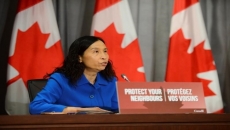
Health Canada has approved the Pfizer-BioNTech and Moderna vaccines for use as boosters for all adults, but most provinces allow only certain people — including those over 70 years old, long-term care residents, front-line health-care workers, First Nations and the immunocompromised — to book appointments.
Some jurisdictions have recently adjusted their eligibility, however, including Saskatchewan and New Brunswick, which lowered the age requirement to 65; Yukon, which authorizes boosters for those 50 and older; and Manitoba, the Northwest Territories and Nunavut, which allow third doses for adults over 18.
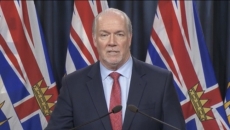
British Columbia's website says eligibility will expand to those 18 and older as of January and Ontario hinted earlier this week that larger segments of the population could soon be included in its booster rollout.
Kelly Grindrod, a pharmacy professor at the University of Waterloo, said jurisdictions are operating in a "time of transition." While most areas will likely increase eligibility soon, that doesn't mean protection from the first two doses has completely worn off.
"The things to consider are: why are we doing boosters and when are boosters needed, and I think that's the confusing part," Grindrod said. "It's not that three doses is better than two doses — it's that at a certain point, a third dose is probably important."
In most cases, provinces say a booster shouldn't be given until six months after the second dose. Grindrod said that means that even if jurisdictions expanded eligibility soon, many Canadians would still wait weeks or months before getting a third jab.
The optimal window for a third dose isn't clear yet, at least not for those among the general population.
Grindrod said evidence from breakthrough infections shows older people and those who received two doses at a shorter interval, such as health-care workers early on in the rollout, are "more susceptible to waning immunity." That can be troublesome if breakthrough infections lead to serious illness in those groups, she added.
Dr. Ilan Schwartz, an infectious disease expert with the University of Alberta, said the people that provinces are already targeting for boosters are the ones more likely to experience severe disease from breakthrough infections. The rest can likely wait a little longer.
Schwartz noted studies suggest protection against serious illness remains relatively high for most people six months after their second dose, even if protection against infection has waned.
But vaccinating more people — thereby preventing mild or asymptomatic illness before it spreads to others — does provide benefit, he added.
"The benefit is much less than it was with the first or second shot, but that's going to become less true over time because we do have waning immunity," he said. "If we give boosters to everyone, we will prevent a number of symptomatic infections and community transmission, which is an important goal ... but I feel there's certainly less urgency to do this (now)."
Schwartz said logistics of a third-dose rollout are already in place should provinces start gearing up for that — with pharmacies and mass clinics able to vaccinate more people quickly — and supply shouldn't be an issue as it was in earlier stages of the campaign.
He noted, however, that pharmacies and clinics would need enough people booking appointments to ensure doses in open vials aren't wasted at the end of the day.
Grindrod said third-dose demand hasn't been high in Ontario so far, adding that people may not know they're eligible. She expects that to change as Omicron becomes more prevalent, but she added that provinces shouldn't put the children's vaccine rollout on hold to accommodate a potential influx of third-dose appointments among healthier people who might not need them.
"We don't want to push first doses out of the way to get third doses done," she said.
The arrival of the Omicron variant, with cases confirmed in B.C., Ontario, Quebec and Alberta, has caused concern. Experts suspect it will take weeks before scientists know whether the variant is more transmissible, leads to more severe disease, or is capable of evading vaccine protection.
Schwartz said Omicron doesn't "change the game" in terms of vaccine strategy, rather it "emphasizes the importance of vaccination because we don't know very much about this strain."
"It underscores that the best way for people to protect themselves is through vaccination," he said. "And that means getting a full course — including a second dose and eventually a third."