Friday, May 8, 2026
ADVT 
National

Timeline of B.C.'s three-year drug decriminalization pilot project

Darpan News Desk The Canadian Press, 15 Jan, 2026 09:49 AM
  • Timeline of B.C.'s three-year drug decriminalization pilot project

British Columbia's three-year pilot project that decriminalized the possession of small amounts of illicit drugs for personal use is set to end on Jan. 31. 

Health Minister Josie Osbourne has announced B.C. will not be extending the program. Here are some of the key moments in its history.

May 31, 2022

Health Canada grants the B.C. government's request for an exemption from s. 56 of the federal Controlled Drugs and Substances Act.

Jan. 31, 2023

The three-year exemption is implemented in B.C. The change decriminalizes the personal possession of up to 2.5 grams cumulatively of opioids, crack and powdered cocaine, methamphetamine and MDMA for adults. Possession continues to be prohibited around schools, childcare facilities, airports and during the operation of motor vehicles.

Nov. 8, 2023

The Restricting Public Consumption of Illegal Substances Act receives Royal Assent in the B.C. legislature. The bill prohibits consumption of illegal substances in public spaces and authorizes police to seize them and/or direct people to stop. Three days later, the Harm Reduction Nurses Association asks B.C. Supreme Court to declare Bill 34 unconstitutional. The court later grants a temporary injunction, preventing the bill from going into effect.

Jan. 31, 2024

Mental Health and Addictions Minister Jennifer Whiteside releases a statement marking the one-year anniversary of decriminalization, saying ending the project won't save "a single life."

May 7, 2024

Health Canada grants an amendment that curtails B.C.'s exemption. Decriminalization is restricted to possession in private homes and places where homeless people are legally sheltering, as well as overdose prevention, drug checking and supervised consumption sites and health-care clinics providing outpatient addiction services.

Jan. 6, 2026

When asked about extending B.C.'s exemption that allows for decriminalization, Premier David Eby says the province is "not going back to the old policy of decriminalized public drug use in British Columbia." He says "it didn't work and we ended that."

Jan. 14, 2026

Health Minister Josie Osborne announces the province will not seek an extension of its exemption agreement with Health Canada. Osborne says the goal of the pilot project was to make it easier for people to come forward and seek help, but it "hasn't delivered the results" officials hoped for.

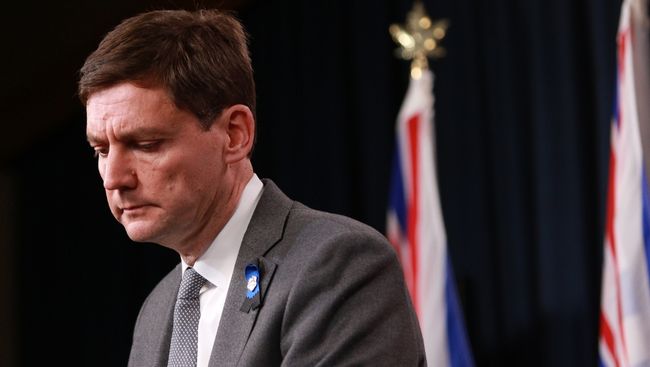
Picture Courtesy: THE CANADIAN PRESS/Chad Hipolito


MORE National ARTICLES

Retiring government rep Marc Gold calls Senate 'greatest privilege' of his life

Retiring government rep Marc Gold calls Senate 'greatest privilege' of his life
Gold reaches the Senate's mandatory retirement age of 75 on Monday.

Retiring government rep Marc Gold calls Senate 'greatest privilege' of his life

Is Canada now free of internal trade barriers? Read the fine print

Is Canada now free of internal trade barriers? Read the fine print
Throughout the spring federal election campaign, Liberal Leader Mark Carney repeatedly vowed to "eliminate" interprovincial trade barriers and create "free trade by Canada Day."

Is Canada now free of internal trade barriers? Read the fine print

Amid calls for separation, Alberta's new referendum rules set to formally take effect

Amid calls for separation, Alberta's new referendum rules set to formally take effect
Beginning Friday, Premier Danielle Smith’s United Conservative government is officially lowering the required threshold for citizens to initiate a provincewide referendum, including on separation.

Amid calls for separation, Alberta's new referendum rules set to formally take effect

Canada cancelled its digital services tax. What was it and why did the U.S. hate it?

Canada cancelled its digital services tax. What was it and why did the U.S. hate it?
The announcement from Finance Minister François-Philippe Champagne came late Sunday evening, following a phone call between Prime Minister Mark Carney and U.S. President Donald Trump.

Canada cancelled its digital services tax. What was it and why did the U.S. hate it?

Political, health leaders among more than 80 new appointees to the Order of Canada

Political, health leaders among more than 80 new appointees to the Order of Canada
The list includes Marc-André Blanchard, who takes over in July as Prime Minister Mark Carney's chief of staff. Blanchard previously worked as a lawyer and as Canada’s ambassador and permanent representative to the United Nations.

Political, health leaders among more than 80 new appointees to the Order of Canada

CFIB says internal trade barriers coming down, but patchwork could create challenges

CFIB says internal trade barriers coming down, but patchwork could create challenges
The organization's latest "internal trade report card" grades the federal and provincial governments based on factors related to interprovincial and territorial co-operation. It said Nova Scotia ranked highest in its 2025 evaluation, as the first province to introduce and implement mutual recognition legislation.

CFIB says internal trade barriers coming down, but patchwork could create challenges