
Tuesday, May 12, 2026
ADVT 
National

Timeline of B.C.'s three-year drug decriminalization pilot project

Darpan News Desk The Canadian Press, 15 Jan, 2026 09:49 AM
  • Timeline of B.C.'s three-year drug decriminalization pilot project

British Columbia's three-year pilot project that decriminalized the possession of small amounts of illicit drugs for personal use is set to end on Jan. 31. 

Health Minister Josie Osbourne has announced B.C. will not be extending the program. Here are some of the key moments in its history.

May 31, 2022

Health Canada grants the B.C. government's request for an exemption from s. 56 of the federal Controlled Drugs and Substances Act.

Jan. 31, 2023

The three-year exemption is implemented in B.C. The change decriminalizes the personal possession of up to 2.5 grams cumulatively of opioids, crack and powdered cocaine, methamphetamine and MDMA for adults. Possession continues to be prohibited around schools, childcare facilities, airports and during the operation of motor vehicles.

Nov. 8, 2023

The Restricting Public Consumption of Illegal Substances Act receives Royal Assent in the B.C. legislature. The bill prohibits consumption of illegal substances in public spaces and authorizes police to seize them and/or direct people to stop. Three days later, the Harm Reduction Nurses Association asks B.C. Supreme Court to declare Bill 34 unconstitutional. The court later grants a temporary injunction, preventing the bill from going into effect.

Jan. 31, 2024

Mental Health and Addictions Minister Jennifer Whiteside releases a statement marking the one-year anniversary of decriminalization, saying ending the project won't save "a single life."

May 7, 2024

Health Canada grants an amendment that curtails B.C.'s exemption. Decriminalization is restricted to possession in private homes and places where homeless people are legally sheltering, as well as overdose prevention, drug checking and supervised consumption sites and health-care clinics providing outpatient addiction services.

Jan. 6, 2026

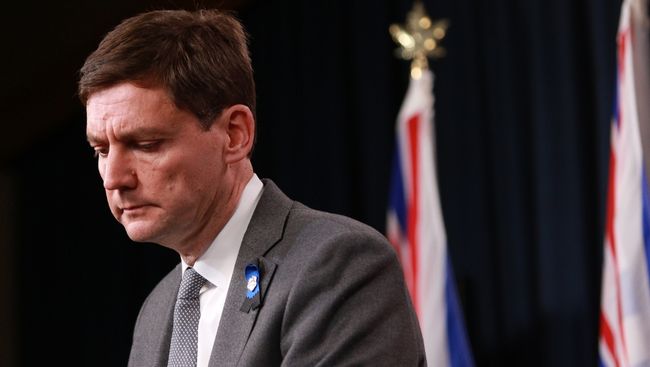
When asked about extending B.C.'s exemption that allows for decriminalization, Premier David Eby says the province is "not going back to the old policy of decriminalized public drug use in British Columbia." He says "it didn't work and we ended that."

Jan. 14, 2026

Health Minister Josie Osborne announces the province will not seek an extension of its exemption agreement with Health Canada. Osborne says the goal of the pilot project was to make it easier for people to come forward and seek help, but it "hasn't delivered the results" officials hoped for.

Picture Courtesy: THE CANADIAN PRESS/Chad Hipolito
 

MORE National ARTICLES

Advance poll turnout breaks record with 7.3M ballots cast, Elections Canada says

Advance poll turnout breaks record with 7.3M ballots cast, Elections Canada says
Elections Canada says a record number of Canadians casttheir ballots early in advance polls this year.

Advance poll turnout breaks record with 7.3M ballots cast, Elections Canada says

'You, sir, are not a change': Party leaders target Carney in final election debate

'You, sir, are not a change': Party leaders target Carney in final election debate
Liberal Leader Mark Carney spent his first English election debate presenting himself as a safe pair of hands for a country in crisis — while Conservative Leader Pierre Poilievre sought to frame him as more of the same after a decade of Liberal government.

'You, sir, are not a change': Party leaders target Carney in final election debate

B.C. ministers urge residents to have go-bags, insurance before floods and wildfires

B.C. ministers urge residents to have go-bags, insurance before floods and wildfires
he British Columbia government says residents should start preparing for wildfire and flood season with go-bags andinsurance, as emergency response officials watch the snowpack and drought levels across the province. 

B.C. ministers urge residents to have go-bags, insurance before floods and wildfires

B.C. government announces changes to graduated drivers' licensing regime

B.C. government announces changes to graduated drivers' licensing regime
The British Columbia government is making changes to its graduated drivers licensing regime, eliminating the need for a second road test to obtain a full licence. 

B.C. government announces changes to graduated drivers' licensing regime

B.C. operation by police, regulators finds losses of $4M in assets to crypto fraud

B.C. operation by police, regulators finds losses of $4M in assets to crypto fraud
British Columbia's securities regulator says a recent two-day operation to identify victims of a specific type of cryptocurrency fraud has found 89 people who were drained of more than $4 million in assets.

B.C. operation by police, regulators finds losses of $4M in assets to crypto fraud

Party leaders face off in English for second federal leaders' debate

Party leaders face off in English for second federal leaders' debate
The leaders of Canada's four main political parties will square off for a second and final leaders' debate tonight in Montreal, after an initial French-language faceoff on Wednesday.

Party leaders face off in English for second federal leaders' debate