Thursday, May 14, 2026
ADVT 
National

Timeline of B.C.'s three-year drug decriminalization pilot project

Darpan News Desk The Canadian Press, 15 Jan, 2026 09:49 AM
  • Timeline of B.C.'s three-year drug decriminalization pilot project

British Columbia's three-year pilot project that decriminalized the possession of small amounts of illicit drugs for personal use is set to end on Jan. 31. 

Health Minister Josie Osbourne has announced B.C. will not be extending the program. Here are some of the key moments in its history.

May 31, 2022

Health Canada grants the B.C. government's request for an exemption from s. 56 of the federal Controlled Drugs and Substances Act.

Jan. 31, 2023

The three-year exemption is implemented in B.C. The change decriminalizes the personal possession of up to 2.5 grams cumulatively of opioids, crack and powdered cocaine, methamphetamine and MDMA for adults. Possession continues to be prohibited around schools, childcare facilities, airports and during the operation of motor vehicles.

Nov. 8, 2023

The Restricting Public Consumption of Illegal Substances Act receives Royal Assent in the B.C. legislature. The bill prohibits consumption of illegal substances in public spaces and authorizes police to seize them and/or direct people to stop. Three days later, the Harm Reduction Nurses Association asks B.C. Supreme Court to declare Bill 34 unconstitutional. The court later grants a temporary injunction, preventing the bill from going into effect.

Jan. 31, 2024

Mental Health and Addictions Minister Jennifer Whiteside releases a statement marking the one-year anniversary of decriminalization, saying ending the project won't save "a single life."

May 7, 2024

Health Canada grants an amendment that curtails B.C.'s exemption. Decriminalization is restricted to possession in private homes and places where homeless people are legally sheltering, as well as overdose prevention, drug checking and supervised consumption sites and health-care clinics providing outpatient addiction services.

Jan. 6, 2026

When asked about extending B.C.'s exemption that allows for decriminalization, Premier David Eby says the province is "not going back to the old policy of decriminalized public drug use in British Columbia." He says "it didn't work and we ended that."

Jan. 14, 2026

Health Minister Josie Osborne announces the province will not seek an extension of its exemption agreement with Health Canada. Osborne says the goal of the pilot project was to make it easier for people to come forward and seek help, but it "hasn't delivered the results" officials hoped for.

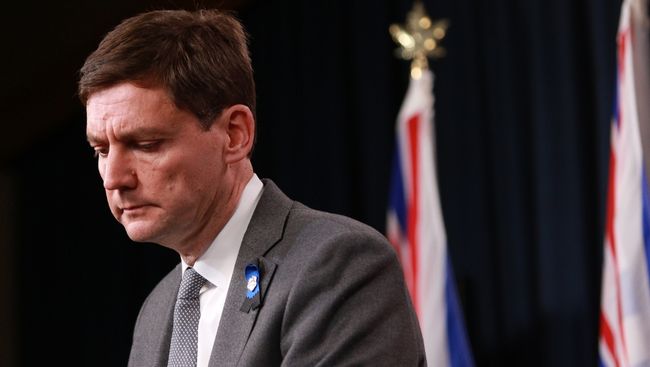
Picture Courtesy: THE CANADIAN PRESS/Chad Hipolito
 

MORE National ARTICLES

Explainer: What's a recession and why is rising anxiety about it roiling markets?

Explainer: What's a recession and why is rising anxiety about it roiling markets?
Stock markets are plunging, consumers and businesses have started to sour on the economy, and economists are marking down their estimates for growth this year, with some even seeing rising odds of a recession. The tech-heavy Nasdaq stock index slipped into a correction last week, defined as a 10% drop from its most recent peak. The broader S&P 500 neared that level Tuesday.

Explainer: What's a recession and why is rising anxiety about it roiling markets?

Poilievre wants to impose 50 per cent metal tariffs on U.S. after latest Trump threat

Poilievre wants to impose 50 per cent metal tariffs on U.S. after latest Trump threat
Trump says he will double the steel and aluminum tariffs he promised to deploy on Canadian products tomorrow — to 50 per cent — in response to Ontario's 25 per cent surcharge on electricity exports to the U.S. Trump originally vowed to impose 25 per cent tariffs on all steel and aluminum imports.

Poilievre wants to impose 50 per cent metal tariffs on U.S. after latest Trump threat

Confused about tariff deadlines? Here's what we know right now

Confused about tariff deadlines? Here's what we know right now
The trade war between the U.S. and Canada took another turn Tuesday as U.S. President Donald Trump vowed to double the tariff on steel and aluminum imports coming from Canada in response to Ontario's surcharge on electricity exports. Trump said 50 per cent tariffs will be placed on Canadian steel and aluminum starting Wednesday, up from the 25 per cent tariffs that had been expected to apply to those materials.

Confused about tariff deadlines? Here's what we know right now

PM-designate Carney demands respect from U.S. as Trump doubles tariffs

PM-designate Carney demands respect from U.S. as Trump doubles tariffs
Prime minister-designate Mark Carney says he will keep Canadian retaliatory tariffs in place until "Americans show us respect" and commit to free trade again. Carney is reacting after U.S. President Donald Trump moved today to double incoming tariffs on Canadian steel and aluminum, which Carney calls an attack on Canadian workers and businesses.

PM-designate Carney demands respect from U.S. as Trump doubles tariffs

Doctors thrust into COVID-19 celebrity reflect on backlash, threats and Thank You letters

Doctors thrust into COVID-19 celebrity reflect on backlash, threats and Thank You letters
Doctors who were thrust into national fame when COVID-19 hit five years ago say they try to focus on positive feedback from the public rather than the angry backlash and threats of violence they faced. British Columbia public health chief Dr. Bonnie Henry still has a security detail to this day because of threats against her and her family from people angry about lockdowns or opposed to COVID vaccination. 

Doctors thrust into COVID-19 celebrity reflect on backlash, threats and Thank You letters

Carney's win kills Liberals' much-delayed plan to change capital gains tax

Carney's win kills Liberals' much-delayed plan to change capital gains tax
Mark Carney's victory in the Liberal leadership race puts the final nail in the coffin of Ottawa's controversial plan to hike the inclusion rate on capital gains. When they tabled their budget last spring, the federal Liberals presented the plan to change capital gains as a way to get wealthy Canadians and corporations to pay more — but the plan has faced a series of delays ever since.

Carney's win kills Liberals' much-delayed plan to change capital gains tax