
Tuesday, May 19, 2026
ADVT 
National

Timeline of B.C.'s three-year drug decriminalization pilot project

Darpan News Desk The Canadian Press, 15 Jan, 2026 09:49 AM
  • Timeline of B.C.'s three-year drug decriminalization pilot project

British Columbia's three-year pilot project that decriminalized the possession of small amounts of illicit drugs for personal use is set to end on Jan. 31. 

Health Minister Josie Osbourne has announced B.C. will not be extending the program. Here are some of the key moments in its history.

May 31, 2022

Health Canada grants the B.C. government's request for an exemption from s. 56 of the federal Controlled Drugs and Substances Act.

Jan. 31, 2023

The three-year exemption is implemented in B.C. The change decriminalizes the personal possession of up to 2.5 grams cumulatively of opioids, crack and powdered cocaine, methamphetamine and MDMA for adults. Possession continues to be prohibited around schools, childcare facilities, airports and during the operation of motor vehicles.

Nov. 8, 2023

The Restricting Public Consumption of Illegal Substances Act receives Royal Assent in the B.C. legislature. The bill prohibits consumption of illegal substances in public spaces and authorizes police to seize them and/or direct people to stop. Three days later, the Harm Reduction Nurses Association asks B.C. Supreme Court to declare Bill 34 unconstitutional. The court later grants a temporary injunction, preventing the bill from going into effect.

Jan. 31, 2024

Mental Health and Addictions Minister Jennifer Whiteside releases a statement marking the one-year anniversary of decriminalization, saying ending the project won't save "a single life."

May 7, 2024

Health Canada grants an amendment that curtails B.C.'s exemption. Decriminalization is restricted to possession in private homes and places where homeless people are legally sheltering, as well as overdose prevention, drug checking and supervised consumption sites and health-care clinics providing outpatient addiction services.

Jan. 6, 2026

When asked about extending B.C.'s exemption that allows for decriminalization, Premier David Eby says the province is "not going back to the old policy of decriminalized public drug use in British Columbia." He says "it didn't work and we ended that."

Jan. 14, 2026

Health Minister Josie Osborne announces the province will not seek an extension of its exemption agreement with Health Canada. Osborne says the goal of the pilot project was to make it easier for people to come forward and seek help, but it "hasn't delivered the results" officials hoped for.

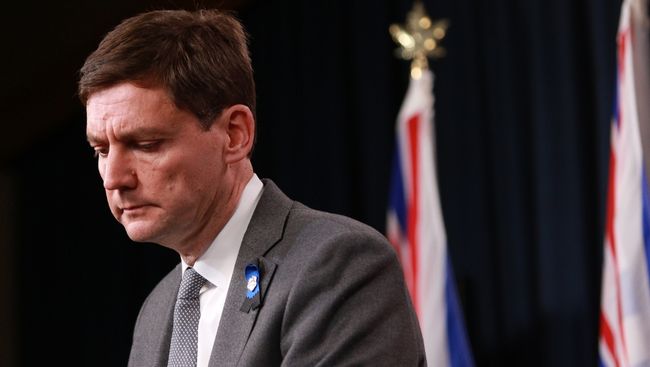
Picture Courtesy: THE CANADIAN PRESS/Chad Hipolito


MORE National ARTICLES

Indigenous kids in care more likely to experience poor health later in life: report

Indigenous kids in care more likely to experience poor health later in life: report
Indigenous people who were in government care as children experience poorer health and socioeconomic outcomes later in life than those who were never in care, a new Statistics Canada report says. They suffer higher rates of disability, lower self-rated health levels and more homelessness, and are more likely to struggle to meet basic household needs, the report says.

Indigenous kids in care more likely to experience poor health later in life: report

Ex-coroner says B.C.'s drug policy overhaul looks like 'impulsive political decision'

Ex-coroner says B.C.'s drug policy overhaul looks like 'impulsive political decision'
British Columbia's former chief coroner says she's disappointed by the province's overhaul of its program that provides prescription alternatives to toxic street drugs, a shift she says "feels like a really impulsive political decision." Lisa Lapointe said the move to a "witnessed-only" model in which people are supervised while consuming their prescription drugs appeared to ignore scientific evidence.

Ex-coroner says B.C.'s drug policy overhaul looks like 'impulsive political decision'

Internal military report blames botched shooter drill on poor organization

Internal military report blames botched shooter drill on poor organization
During the drill, which took place on Nov. 12 at a service depot at CFB Longue-Pointe in Montreal, military police also confused a racialized employee with a drill participant playing an active shooter and wrestled him to the ground.

Internal military report blames botched shooter drill on poor organization

70% of Canadians support retaliatory tariffs on United States: poll

70% of Canadians support retaliatory tariffs on United States: poll
Seventy per cent of Canadians are in favour of dollar-for-dollar retaliatory tariffs on the United States, a new poll suggests. Nearly half of respondents to the Leger poll — 45 per cent — said they were strongly in favour of such tariffs, while 25 per cent said they were somewhat in favour.

70% of Canadians support retaliatory tariffs on United States: poll

Police release names of victims in Abbotsford double homicide

Police release names of victims in Abbotsford double homicide
Police have released the names of the two victims in an Abbotsford double homicide in January. A statement from the province's Integrated Homicide Investigation Team says police responded to a vehicle fire in Sumas Mountain Regional Park on Jan. 3 and found a 2014 Mitsubishi Outlander engulfed in flames.

Police release names of victims in Abbotsford double homicide

Flood watch up due to possible ice jam on B.C. Interior waterways

Flood watch up due to possible ice jam on B.C. Interior waterways
British Columbia's River Forecast Centre has posted a flood watch on three Interior waterways because of the chance of a midseason ice jam. The centre says temperatures in the first two weeks of February have been between 10 C and 17 C below normal in the Merritt area.

Flood watch up due to possible ice jam on B.C. Interior waterways