
Wednesday, May 20, 2026
ADVT 
National

Timeline of B.C.'s three-year drug decriminalization pilot project

Darpan News Desk The Canadian Press, 15 Jan, 2026 09:49 AM
  • Timeline of B.C.'s three-year drug decriminalization pilot project

British Columbia's three-year pilot project that decriminalized the possession of small amounts of illicit drugs for personal use is set to end on Jan. 31. 

Health Minister Josie Osbourne has announced B.C. will not be extending the program. Here are some of the key moments in its history.

May 31, 2022

Health Canada grants the B.C. government's request for an exemption from s. 56 of the federal Controlled Drugs and Substances Act.

Jan. 31, 2023

The three-year exemption is implemented in B.C. The change decriminalizes the personal possession of up to 2.5 grams cumulatively of opioids, crack and powdered cocaine, methamphetamine and MDMA for adults. Possession continues to be prohibited around schools, childcare facilities, airports and during the operation of motor vehicles.

Nov. 8, 2023

The Restricting Public Consumption of Illegal Substances Act receives Royal Assent in the B.C. legislature. The bill prohibits consumption of illegal substances in public spaces and authorizes police to seize them and/or direct people to stop. Three days later, the Harm Reduction Nurses Association asks B.C. Supreme Court to declare Bill 34 unconstitutional. The court later grants a temporary injunction, preventing the bill from going into effect.

Jan. 31, 2024

Mental Health and Addictions Minister Jennifer Whiteside releases a statement marking the one-year anniversary of decriminalization, saying ending the project won't save "a single life."

May 7, 2024

Health Canada grants an amendment that curtails B.C.'s exemption. Decriminalization is restricted to possession in private homes and places where homeless people are legally sheltering, as well as overdose prevention, drug checking and supervised consumption sites and health-care clinics providing outpatient addiction services.

Jan. 6, 2026

When asked about extending B.C.'s exemption that allows for decriminalization, Premier David Eby says the province is "not going back to the old policy of decriminalized public drug use in British Columbia." He says "it didn't work and we ended that."

Jan. 14, 2026

Health Minister Josie Osborne announces the province will not seek an extension of its exemption agreement with Health Canada. Osborne says the goal of the pilot project was to make it easier for people to come forward and seek help, but it "hasn't delivered the results" officials hoped for.

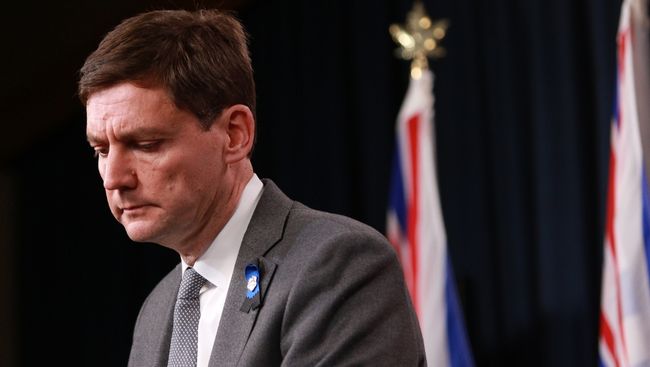
Picture Courtesy: THE CANADIAN PRESS/Chad Hipolito


MORE National ARTICLES

Most passengers injured in Pearson airport plane crash released from hospital: Delta

Most passengers injured in Pearson airport plane crash released from hospital: Delta
Delta Air Lines says all but two passengers injured Monday when a plane crashed and flipped on the tarmac at Toronto's Pearson airport have been released from hospitals as of this morning. Delta says in a social media post that 19 out of 21 passengers initially taken to Toronto-area hospitals have since been released as the investigation into the cause of the crash continues. 

Most passengers injured in Pearson airport plane crash released from hospital: Delta

B.C. Labour Relations Board finds Starbucks made threats against pro-union employee

B.C. Labour Relations Board finds Starbucks made threats against pro-union employee
The B.C. Labour Relations Board has found Starbucks wrongfully made "threats of adverse consequences" against an employee for her unionization activity, but found the company had a "legitimate business reason" to close down its only unionized location in Vancouver. 

B.C. Labour Relations Board finds Starbucks made threats against pro-union employee

Flu activity in B.C. peaking as COVID-19, respiratory virus decline

Flu activity in B.C. peaking as COVID-19, respiratory virus decline
The BC Centre for Disease Control says influenza A infections remain high and continue to increase, with the percentage of tests returning positive up to 24 per cent in the week ending Feb. 1. That figure is more than double that of the 11.7 per cent reported between Dec. 22 and Dec. 28. 

Flu activity in B.C. peaking as COVID-19, respiratory virus decline

Workers at B.C. LifeLabs file 72-hour strike notice over wages, benefits

Workers at B.C. LifeLabs file 72-hour strike notice over wages, benefits
The union representing about 1,200 workers at LifeLabs throughout British Columbia says it has issued a 72-hour strike notice to the employer. The B.C. General Employees' Union says in a news release that the action comes after months of negotiations and LifeLabs' refusal to bring wages and benefits in line with the cost of living.

Workers at B.C. LifeLabs file 72-hour strike notice over wages, benefits

Canada still top of mind for Trump, 'not a good place to be'

Canada still top of mind for Trump, 'not a good place to be'
As President Donald Trump signed an executive order for reciprocal tariffs on Thursday that escalates his trade threats, his administration took aim at Canada's digital services tax as a major trade irritant. The White House sent out a document calling digital taxes in both Canada and France "unfair" for taxing American companies.

Canada still top of mind for Trump, 'not a good place to be'

B.C. cancels $1,000 grocery rebate and pauses some hiring over Trump's tariff threats

B.C. cancels $1,000 grocery rebate and pauses some hiring over Trump's tariff threats
The British Columbia government is cancelling a promised $1,000 grocery rebate and will freeze hiring of some public service positions to "find dollars" in its budget as it prepares for "four years of unpredictability" from the United States, Finance Minister Brenda Bailey says. Bailey said Thursday that the impacts of the "reckless" and "destabilizing" tariffs threatened by U.S. President Donald Trump are impossible to predict.

B.C. cancels $1,000 grocery rebate and pauses some hiring over Trump's tariff threats