The federal government lost its bid Thursday to block former Guantanamo Bay prisoner Omar Khadr from being granted bail, clearing the way for him to get his first taste of freedom in almost 13 years. A look at some key developments in the Khadr case:
1986: Omar Khadr is born in Toronto on Sept. 19, but lives with family in Pakistan until 1995.
1995: Khadr's father is arrested in connection with the bombing of the Egyptian embassy in Islamabad, but is freed after then-prime minister Jean Chretien raises the arrest with Pakistani Prime Minister Benazir Bhutto.
1996: After briefly returning to Canada, the family moves to Jalalabad in Taliban-controlled eastern Afghanistan, where they live in Osama bin Laden's compound.
1996: The Khadr brothers begin attending weapons training camps affiliated with the Taliban and bin Laden. The family makes annual trips to Canada to raise money and collect supplies.
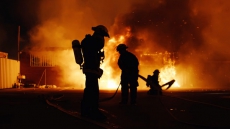
July 27, 2002: Two Afghan government soldiers are killed and several U.S. troops suffer injuries as coalition forces move in on Khadr's compound. Khadr throws a grenade that kills U.S. Sgt. 1st Class Christopher Speer. Khadr is injured in the melee.
October 2002: Khadr is transferred to Guantanamo Bay.
February 2003: Investigators from the RCMP and the Canadian Security Intelligence Service (CSIS) interview Khadr at Guantanamo.
March 2004: Khadr's grandmother, Fatmah Elsamnah, launches lawsuit against the Department of Foreign Affairs, alleging Ottawa failed to protect her grandson's rights as a Canadian. Elsamnah later launches a similar suit against U.S. authorities.
Aug. 10, 2005: A Federal Court judge says Canadian agencies, including CSIS, are violating Khadr's Charter rights by turning information gleaned in interviews over to U.S. investigators.
Nov. 7, 2005: The U.S. military charges Khadr with conspiracy, attempted murder and aiding the enemy in connection with the deadly 2002 skirmish that killed Speer.
February 2006: A U.S. civil court orders the Khadr family to pay $102 million to Speer's widow and a second soldier injured in the 2002 attack.
March 17, 2008: Khadr alleges that he was threatened with rape and violence by interrogators seeking to extract a confession.
May 23, 2008: The Supreme Court of Canada concludes that Canadian officials illegally shared information about Khadr with the U.S.
Aug. 14, 2009: Canada's Federal Court of Appeal upholds ruling that requires the Canadian government to press for Omar Khadr's return from Guantanamo Bay.
Jan. 29, 2010: Canada's Supreme Court overturns court orders requiring the Canadian government try to repatriate Khadr, despite agreeing that Khadr's human rights are being violated.
July 7, 2010: Khadr tries to fire his three American lawyers, including a military court-appointed military lawyer, saying he has no chance at a fair trial. A judge later refuses to allow it.
Aug. 9, 2010: Khadr officially pleads not guilty to five war crimes charges, including murder, at a pre-trial hearing. Judge Col. Patrick Parrish rules Khadr's confessions will be admissible as evidence.
Oct. 25, 2010: Amid talk of an agreement, Khadr changes his plea to guilty on all five counts; gets opportunity to apply for a transfer to a Canadian prison after one year in a U.S. facility.
Oct. 31, 2010: Jurors sentence Khadr to 40 years in prison for war crimes but a pre-trial deal limits the actual sentence to eight years.
May 26, 2011: The Convening Authority for Military Commissions rejects a clemency appeal filed by Khadr. The prisoner had appealed to have his sentence cut in half, arguing that improper testimony swayed the jury at his sentencing hearing.
April 2012: U.S. Defence Secretary Leon Panetta signs off on Khadr's transfer.
Sept. 29, 2012: A U.S. military airplane brings Khadr back to Canada. He is transferred to the Millhaven Institution near Kingston.
April 28, 2013: Khadr's lawyer says he plans to appeal the terrorism convictions.
May 28, 2013: Khadr is transferred to the maximum security Edmonton Institution.
Sept. 23, 2013: An Edmonton judge hears arguments on whether Khadr is actually serving a youth sentence and should be transferred to a provincial jail.
Oct. 18, 2013: Khadr is denied a transfer to a provincial jail.
Feb. 11, 2014: Khadr's lawyer confirms his client has been transferred out of the federal maximum security prison in Edmonton to Bowden Institution, a medium-security prison near the town of Innisfail.
May 22, 2014: Speer's widow and an American soldier blinded by the grenade sue Khadr for close to $45 million.
July 8, 2014: Alberta's Appeal Court grants an application that Khadr to be transferred to a provincial jail but his lawyers later consent to a stay of the ruling.
March 26, 2015: Khadr asks for bail pending outcome of his appeal in the United States of his conviction for war crimes.
April 24, 2015: An Alberta judge grants bail to Khadr, saying keeping him behind bars while he appeals his American war crimes convictions would not be in the public interest. In her ruling, Court of Queen's Bench Justice June Ross said terms of his release will be determined by May 5.
May 5, 2015: The federal government requests that Khadr not be granted bail in spite of the lower court order, arguing Ross's order threatens the international treaty under which Khadr was brought back to Canada from Guantanamo Bay in 2012. Court of Appeal Justice Myra Bielby asks for 48 hours to consider the government's request. In Court of Queen's Bench, Justice June Ross imposes bail conditions -- if the government bid is rejected later in the week and Khadr is released. They include that Khadr wear a tracking bracelet, live with one of his lawyers, observe a curfew between 10 p.m. and 7 a.m., have only supervised access to the Internet, and only communicate in English with his family in Ontario via video or phone under supervision.
May 7, 2015: An Alberta Court of Appeal justice rejects a last-ditch government attempt to keep Kahdr behind bars. Justice Myra Bielby rules the government failed to prove that allowing Khadr out now would cause "irreparable harm" to Canada's international treaty obligations. The way was thus clear for his release and his first taste of freedom since his capture as a wounded 15-year-old in Afghanistan in July 2002.