Toronto residents should stay home as much as possible to combat surging COVID-19 infections, city officials said Tuesday, as they announced the extension of several restrictions including a ban on indoor restaurant dining and indoor fitness classes.
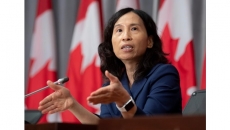
The city's top doctor, Eileen de Villa, said the restrictions -- which also include a continued shutdown of casinos, bingo halls and event spaces -- will remain in place for another 28 days after they were to expire on Saturday.
De Villa also issued "strong recommendations" for residents to limit their close contact to those in their household and one or two "essential supports," and stay home except for necessary activities such as shopping for groceries. She urged people to work from home whenever possible.
"The spread of COVID-19 has never been greater in Toronto," and residents should behave as if the virus is everywhere, she said.
She pointed to recent data that shows 5.9 per cent of the city's COVID-19 tests came back positive in the first week of November, and "alarming" case counts in recent days.
Mayor John Tory said Monday that Toronto would impose an enhanced suite of measures to curb the spread of the virus as the city transitions to the province's new colour-coded system for pandemic rules.
The measures now being extended were first enacted last month by the Ontario government at the request of Toronto health officials.
At the time, de Villa said provincial intervention was needed because she received legal advice that it would be "unprecedented'' for a local medical officer of health to implement such broad changes.
When asked about the issue Tuesday, de Villa said the legal advice hasn't changed but the urgency of the situation has. She provided no further explanation.
Public health officials in another nearby COVID-19 hot spot, Peel Region, had also asked that the provincial government extend similar measures, but that request was denied.
The local health unit also implemented additional restrictions, such as prohibiting wedding receptions, after being switched to the new provincial system last week.
Peel is the only region currently labelled a red zone, the highest alert level short of a lockdown, but the restrictions imposed under that level are still less stringent than what local public health officials had asked the province to impose.
Ontario Premier Doug Ford said Tuesday the tiered, colour-coded system brought in last week is meant to serve as a "baseline" that local health units can build on by adding their own, more strict, rules as needed.
The premier said he supports the measures brought in by Peel and Toronto authorities, however, and denied being "at loggerheads" with local health units in terms of what steps are needed.
Myer Siemiatycki, a political expert at Toronto's Ryerson University, said the premier appears to be "passing the buck" to local authorities rather than making tough decisions himself on how to best handle the second wave of COVID-19.
"I think the premier is simply recognizing that there are some politically difficult decisions to be made," Siemiatycki said Tuesday.
"Handing this over to municipalities gets the premier off the hook. He can't be, he won't be able to be held responsible for...making the situation worse."
Ford has been "selective" when it comes to granting local governments more powers or taking them away, he said, noting the province recently moved to unilaterally prevent municipalities from using ranked ballots in the next civic election.
The decision to shift more decision-making to public health units is a "strong contrast" to what's taking place in Manitoba and Quebec, where provincial governments are taking ownership and responsibility for the pandemic response, Siemiatycki said.
Calls for more provincial leadership in tackling the pandemic are also emerging in Alberta, where a group of physicians and infectious disease experts this week called on Premier Jason Kenney to take more decisive action.
In an open letter issued Monday, the group urged Kenney to consider a two-week "short, sharp lockdown" to slow the spread of the virus and allow contact tracing to catch up.
Following the lockdown, the province should turn to a sliding scale of targeted measures based on data such as case numbers, the letter said.
"We believe it is time we had clear direction from our provincial government. We need rules, not suggestions," it said.
Prime Minister Justin Trudeau pleaded with provincial governments Tuesday to ask for more help if they need it to combat surging cases.
He stressed that no leader should loosen public health measures over concerns about the economic impact of keeping those restrictions.