TORONTO — Roy Alexander's cellphone can reveal new worlds to him right before it often cuts them off from view.
When the Toronto-area resident feels like setting out on a hiking excursion, mapping applications on his mobile device can direct him toward beautiful trails he never knew existed.
Once he ventures far enough down those paths, however, the phone becomes more of a liability than an asset. The GPS directions that set him on his way have potential to lead him astray the further he gets from cell towers.
Too many fruitless attempts to right the course would leave his phone little more than a dead weight, since the mapping apps would have drained the life from the battery.
There's a thin line between the risks and rewards of mobile-assisted travel, and Alexander feels everyone should learn to navigate it before going anywhere else.
"Always have a Plan B and have a barometer of what the possibilities are if your technology is inaccurate," Alexander said in a telephone interview. "Do your research first and plan for the event that your devices will fail."
The rising popularity of smart phones and tablets has made it easy for globetrotters to embrace the benefits of mobile technology on the road. Travellers have access to apps offering everything from directions to restaurant recommendations, and a survey suggests they're taking full advantage of those options.
In a 2013 survey from travel website TripAdvisor, 87 per cent of the 30,000 people surveyed reported using a smart phone while on their trips. The polling industry's professional body, the Marketing Research and Intelligence Association, says the online survey of travellers from 22 countries cannot be assigned a margin of error.
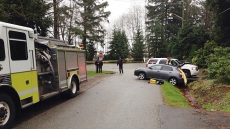
But a recent incident in British Columbia vividly illustrated the limits of relying too heavily on mobile technology. Runner Allison Tai had to be airlifted out of a provincial park in British Columbia after the route she'd plotted on Google Maps led her down a series of remote, unmarked roads.
The frigid winter weather also caused her cellphone battery to freeze up, leaving her stranded without a way to call for help. Tai was only rescued after hiking up a mountain to a point where a helicopter pilot could pull her to safety.
Chris Gibbs, assistant professor of tourism at Ryerson University, says Tai's experience perfectly demonstrate the ways in which cellphones fall short as a travel aid.
They shine in urban environments where internet connections are plentiful, but the same approach that works well in bustling areas can't be applied to more remote areas, he said.
"Cellphones are the Swiss Army Knife of electronics. Like any Swiss Army Knife it can do a good job but not a great job," he said. "If you use a mobile phone to tell me what to do in the wilderness, it's only going to do an average job."
One of the key factors limiting the effectiveness of mobile travel apps is the quality of the data underpinning them.
Kundan Joshi, Chief Executive of development company The App Labb, said most navigation apps depend on third-party maps prepared by Google.
The tech company is constantly deploying staff to make sure their maps are current, but Joshi said they can't always keep up to changing landmarks or include the kind of detail that regional cartographers would include.
"To have the most accurate data becomes a big challenge," he said.
An increasingly popular solution is social mapping tools that allow users to add information and correct inaccuracies as they travel, but even those have their limits, Joshi said.
Apps with thorough, detailed maps would exceed the strict space limits assigned by services like Apple's App Store, Joshi said. Even if apps circumvented that limit by forcing users to download map databases separately, the phones themselves may not have space to store them, he added.
It's for this reason that Alexander always brings a rugged, standalone GPS device along on his hikes, as well as extra batteries in case of emergency.
More important to him, however, are the low-tech travel preparations. These include planning routes using locally-produced maps, sharing travel plans with others and packing supplies more essential than any smart phone.
"Consider your equipment but be equipped," he said. "People take their cellphone and take the batteries but they won't take water."