As the Trudeau government is forced to explain delays rolling out COVID-19 vaccines, some of the world's economic and health leaders are warning of catastrophic financial consequences if poorer countries are shortchanged on vaccinations.
At a video meeting convened by the Paris-based Organization for Economic Co-operation and Development (OECD) on Monday, Secretary-General Angel Gurria predicted that rich countries would see their economies shrink by trillions of dollars if they don't do more to help poor countries receive vaccines.
Many thanks to @who Director-General @DrTedros for a fruitful discussion on #VaccinEquity and the importance of international cooperation in building #ResiliencyTogether. The @OECD looks forward to keep deepening & accelerating this collaboration. https://t.co/sWfl3Q2IJz
— Angel Gurría (@A_Gurria) February 9, 2021
The leaders of the World Health Organization and others also bemoaned the long-term damage of continued "vaccine nationalism" if current trends continue — rich countries getting a pandemic cure at a much higher rate than poorer ones.
It was a message that could provide some political cover for the Liberals, who have been widely criticized for shortfalls in deliveries of vaccines from Pfizer-BioNTech and Moderna while also facing international criticism for pre-buying enough doses of vaccines to cover Canada's population several times over.
Some international anti-poverty groups have also criticized Canada for planning to take delivery of 1.9 million doses from the COVAX Facility, a new international vaccine-sharing program that is primarily designed to help poor countries afford unaffordable vaccines, but also allows rich donor countries — including Canada — to receive vaccines.
Trudeau and his cabinet ministers on the vaccine file have repeatedly said that the pandemic can't be stamped out for good if it isn't defeated everywhere, a point the prime minister reiterated on Tuesday.
They say Canada is a trading nation that depends on the welfare of others for its economic prosperity — especially with the emergence of new variants of the virus in South Africa and Britain.
But their protestations are usually drowned out in the domestic clamour that tends to highlight unfavourable comparisons of Canada's vaccine rollout with the United States, Britain or other countries.
On Monday, Gurria — the veteran Mexican politician who has led the OECD for 15 years — brought the full force of his political gravitas by offering up a pocketbook argument that eschewed any pretence of altruism.
"It's a smart thing to do. It is ethically and morally right. But it is also economically right," said Gurria.
"The global economy stands to lose as much as $9.2 trillion, which is close to half the size of the U.S. economy, just to put it in context … as much as half of which would fall on advanced economies, so they would lose around $5 trillion."
The OECD is an international forum of more than three dozen mainly democratic and developed countries, including Canada, that aims to help foster economic growth and trade. It also conducts comprehensive economic research and issues the world's most authoritative annual report on what rich countries spend on foreign aid.
Canada's former finance minister Bill Morneau, who resigned last summer during the WE funding scandal, had said he was leaving politics because he long wanted to pursue the OECD leadership when Gurria departs later this year. In January, Morneau abandoned that ambition, saying he didn't have enough support among member countries.
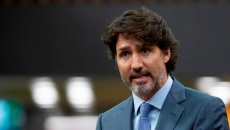
On Tuesday, Prime Minister Justin Trudeau said Canada remains committed to helping poor countries cope with COVID-19.
"We continue to work with partners around the world," he said at a news conference outside his Ottawa residence. "We understand the pressure that every government is feeling to vaccine as many of their citizens as quickly as possible."
Canada has pledged $220-million to COVAX, and $865-million to the ACT Accelerator, which tries to ensure low- and middle-income countries have equitable access to medical treatments during the pandemic.
But Jorge Moreira da Silva, the OECD's development co-operation director, said COVAX is underfunded by US$5 billion, while the World Health Organization is predicting at US$27-billion shortfall for the ACT Accelerator.
Dr. Tedros Adhanom Ghebreyesus, the WHO director-general, said 75 per cent of vaccine doses are being administered in 10 wealthy countries.
"It's understandable that governments want to prioritize vaccinating their own health workers and older people first. But it's not right to vaccinate young, healthy adults in rich countries before health workers and older people in low-income nations," Tedros told the OECD forum.
"We must ensure that vaccines, diagnostics and life-saving therapies reach those most at risk and on the front lines in all countries. This is not just a moral imperative. It's also an economic imperative."
Trudeau said the government is working hard to vaccinate all Canadians as quickly as possible because of the emergence of the new variants.
"There are real questions about what impacts these variants will have both on the spread of COVID-19 and on the impact of the vaccines," he said.
At Monday's forum, a spokesman for the pharmaceutical industry said the bumps and grinds of vaccine delivery to poor countries would be transformed into "a huge success" in the coming months.
"I think it's dangerous to talk about, you know, this is a huge moral injustice already now because … you will have significant rollout to developing countries," said Thomas Cueni, the director-general of the International Federation of Pharmaceutical Manufacturers and Associations.
"I haven't seen a single industrialized country, maybe with the exception of Israel, where young and healthy people are vaccinated."