Monday, June 8, 2026
ADVT 
National

Trudeau faces questions on 3-layer mask guidelines

Darpan News Desk The Canadian Press, 04 Nov, 2020 09:25 PM
  • Trudeau faces questions on 3-layer mask guidelines

Prime Minister Justin Trudeau was asked to defend recommendations by his top doctors in the House of Commons on Wednesday, a day after the country's chief public health officer announced changed guidelines on face masks.

Dr. Theresa Tam, the country's chief public health officer, said in a news conference Tuesday that cloth masks with three layers — including a filter — are now recommended, an upgrade from the two-layer face coverings previously suggested.

Trudeau was put on the spot by Conservative leader Erin O'Toole for the new mask recommendations, suggesting they're not in line with current provincial advice and may breed confusion.

The Prime Minister replied by saying he supports Tam and other health experts that are putting forward health measures to keep Canadians safe.

The B.C. Centre for Disease Control and Prevention's website was in line with Tam's recommendation for three-layer masks as of Wednesday, but other provinces had not yet updated their recommendations.

Quebec's guidelines for home-made face coverings suggest using "at least two thicknesses of cloth," while Ontario also says cloth masks should be made of "at least two layers of tightly woven material (such as cotton or linen)."

MORE National ARTICLES

Sleep struggles: pandemic could impact body's fear response, cause poor sleep

Sleep struggles: pandemic could impact body's fear response, cause poor sleep
Tossing and turning in the middle of the night. Lying awake for lengthy stretches. Waking up groggy. The COVID-19 pandemic seems to be messing with a number of peoples' ability to get a good night's sleep these days. And sleep experts aren't surprised by that.    

Sleep struggles: pandemic could impact body's fear response, cause poor sleep

Here are some of the deadliest mass killings in recent Canadian history:

Here are some of the deadliest mass killings in recent Canadian history:
April 19, 2020: Seventeen people are killed after a man who at one point wore a police uniform and drove a mock-up cruiser travelled across northern Nova Scotia. An RCMP officer is among the dead. Police say the suspected shooter, 51-year-old Gabriel Wortman, was killed after being intercepted by officers in Enfield, N.S.

Here are some of the deadliest mass killings in recent Canadian history:

Those who knew Nova Scotia gunman shocked by rampage

Those who knew Nova Scotia gunman shocked by rampage
Neighbours and schoolmates of the man responsible for a killing rampage that left at least 19 people dead in northern Nova Scotia were attempting Monday to come to terms with the tragedy.  A 23 year member of the RCMP police force Const Heidi Stevenson was killed, a mother of two, and another officer is recovering from non life threating injuries. 

Those who knew Nova Scotia gunman shocked by rampage

COVID-19 prompts bus driver layoffs, service cuts for Metro Vancouver transit

COVID-19 prompts bus driver layoffs, service cuts for Metro Vancouver transit
There have been significant layoffs of bus drivers and deep service cuts on buses, SeaBus, SkyTrain and West Coast Express across Metro Vancouver. Nearly 1,500 bus drivers and other transit workers across Metro Vancouver are being laid off as TransLink faces plunging ridership during the COVID-19 pandemic.    

COVID-19 prompts bus driver layoffs, service cuts for Metro Vancouver transit

Demand will fuel B.C. real estate in 2021 after COVID recession: report

Demand will fuel B.C. real estate in 2021 after COVID recession: report
A report from the B.C. Real Estate Association says the 2020 COVID-driven recession will be deep, although it could be shorter than other Canadian economic downturns. The market intelligence report released Monday by the association says it expects home sales to sink 30 to 40 per cent for April 2020. 

Demand will fuel B.C. real estate in 2021 after COVID recession: report

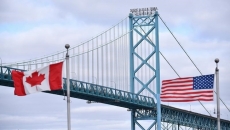
Prime Minister Justin Trudeau confirms border closure, which began on March 21 and was set to expire on Tuesday.

Prime Minister Justin Trudeau confirms border closure, which began on March 21 and was set to expire on Tuesday.
Canadian officials acknowledged some regions of the country could be closer to re-opening parts of the economy than others, but continued to stress a careful approach as the border closure with the hard-hit United States was extended for another 30 days during the COVID-19 crisis. Prime Minister Justin Trudeau confirmed the extension on Saturday for the closure restricting non-essential travel across the border, which began on March 21 and was set to expire on Tuesday.

Prime Minister Justin Trudeau confirms border closure, which began on March 21 and was set to expire on Tuesday.