Thursday, February 5, 2026
ADVT 
National

Trudeau promises to push police body-cameras with premiers to aid 'transparency'

Darpan News Desk The Canadian Press, 08 Jun, 2020 05:22 PM
  • Trudeau promises to push police body-cameras with premiers to aid 'transparency'

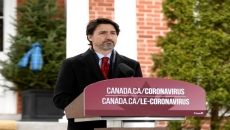
Prime Minister Justin Trudeau says he's planning to push provincial premiers to equip police with body-worn cameras as a rapid, substantive solution to allegations of racism and brutality.

The cameras document police officers' interactions with the public and Trudeau says they're one relatively simple way to address complaints that police in Canada treat racialized people unfairly.

He says fixing centuries of racial injustice won't happen overnight but recent protests have shown him that more needs to be done quickly.

"The challenges that I've heard are more logistical and economic concerns about remote areas, and the way those cameras would work," Trudeau said Monday.

"But yes, it is something that is, in my opinion, what we need to move forward with."

Trudeau says he raised the issue with RCMP Commissioner Brenda Lucki in a call Monday and he'll pursue it with the provincial premiers later in the week.

Trudeau says a look at the distribution of COVID-19 cases in large cities such as Toronto and Montreal shows that black people have been disproportionately hit by the pandemic.

Trudeau says poverty and inequality are underlying factors that need to be addressed, and that includes reviewing spending decisions on the RCMP

Conservative Leader Andrew Scheer says removing funding from the RCMP because of allegations of racism and brutality won't make Canadians any safer.

He says the RCMP and other police forces need to do more to stamp out systemic racism, but that doesn't mean taking away funding.

"I don't believe that defunding the RCMP would make Canadians safer," he said Monday.

"I believe we have to look at aspects within our police forces and stamp out systemic racism where it exists and put in measures to ensure nobody is mistreated or treated differently because of the colour of their skin or their ethnic background."

Scheer and Trudeau were speaking today in response to several incidents across the country, including allegations of police brutality from a First Nations chief in Alberta and the fatal police shooting of a 26-year-old Indigenous woman from British Columbia in Edmundston, N.B.

Public Safety Minister Bill Blair, who is a former Toronto police chief, says in a tweet that the government is "deeply concerned" by the Alberta allegations, which were made Saturday by Athabasca Chipewyan Chief Allan Adam.

But Scheer calls the government hypocritical because Blair was the Toronto police chief when the controversial practice of carding was in effect.

Thousands of protesters returned to Montreal streets on Sunday to speak against racism, systemic discrimination and police brutality, following other Canadian communities that held marches this weekend.
MORE National ARTICLES

Peter MacKay calls for China sanctions over COVID-19

Peter MacKay calls for China sanctions over COVID-19
Conservative leadership hopeful Peter MacKay is calling for use of the Magnitsky Act if specific individuals in China can be identified as having suppressed information related to COVID-19 A full inquiry, perhaps an international one, into how the novel coronavirus turned into a pandemic is required, MacKay told supporters.    

Peter MacKay calls for China sanctions over COVID-19

Despite jarring jobs numbers, Canada, U.S. charting different courses

Despite jarring jobs numbers, Canada, U.S. charting different courses
Prime Minister Justin Trudeau says it's a fundamental principle of life in Canada that no one should have to go to work if they don't feel safe doing so. Trudeau made the comments today as the country confronted some of the worst unemployment numbers in history — nearly two million jobs lost last month and an unemployment rate of 13 per cent.    

Despite jarring jobs numbers, Canada, U.S. charting different courses

B.C. government, Translink make agreement to keep transit rolling amid COVID

B.C. government, Translink make agreement to keep transit rolling amid COVID
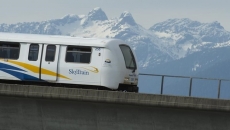
Metro Vancouver's transportation authority has reversed its plans to cut service and rescinded layoff notices to 1,500 people as it works out an emergency funding plan with the provincial government. Translink and the province say in a joint news release that they are working on a comprehensive solution to address the financial impact on the service because of the COVID-19 pandemic.

B.C. government, Translink make agreement to keep transit rolling amid COVID

Trudeau says wage-subsidy program to be extended as steep job losses continue

Trudeau says wage-subsidy program to be extended as steep job losses continue
Prime Minister Justin Trudeau says the federal government's emergency wage-subsidy program will be extended beyond its early-June endpoint. The program covers 75 per cent of worker pay up to $847 a week to try to help employers keep employees on the job in the face of steep declines in revenue due to the COVID-19 pandemic.

Trudeau says wage-subsidy program to be extended as steep job losses continue

Huge job losses in B.C. indicate a 'hard road ahead': finance minister

Huge job losses in B.C. indicate a 'hard road ahead': finance minister
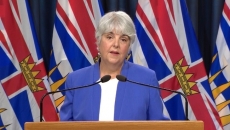
British Columbia Finance Minister Carole James says she doesn't want to sugar coat what will be a hard road ahead as labour force figures show the province lost a quarter of a million jobs in April. Combined with jobless figures in March, almost 400,000 people were unemployed.

Huge job losses in B.C. indicate a 'hard road ahead': finance minister

Canadians trust doctors, scientists and government more since pandemic began

Canadians trust doctors, scientists and government more since pandemic began
A new survey suggests the COVID-19 pandemic has given Canadians almost absolute trust in doctors. The Proof Strategies annual trust index is usually completed in January but when Canada went into a nationwide lockdown to slow the spread of the novel coronavirus the public-relations firm decided to ask the same questions again in early May.    

Canadians trust doctors, scientists and government more since pandemic began