Wednesday, December 17, 2025
ADVT 
National

Trudeau, Singh pressed on parties' decisions to access COVID-19 wage subsidy

Darpan News Desk The Canadian Press, 25 May, 2020 08:56 PM
  • Trudeau, Singh pressed on parties' decisions to access COVID-19 wage subsidy

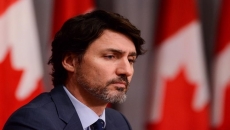
Prime Minister Justin Trudeau faced multiple questions Monday on why his party applied for a federal wage subsidy program for organizations facing economic hardship due to COVID-19.

The Liberals, Conservatives, New Democrats and the Greens have all applied for the program, which sees the government cover up to 75 per cent of a worker's salary, to a maximum of $847 a week per employee.

The program is meant for companies that have suffered major losses of revenue as a result of the pandemic, though it also covers non-profits and charities.

Trudeau didn't answer repeated questions about why his party needed to access that support, speaking only broadly about the aim of the program.

"We know families across the country depend on the jobs that they do to pay groceries, pay for the rent. That's why we put in place a wage subsidy that is available to small businesses, large business, non-profits and charities to be able to support people who might otherwise be laid off," he said.

"This is going to be an important part of the economy bouncing back."

To be eligible, a company or organization must have seen its revenues from January and February decline by 15 per cent in March or 30 per cent in April and May.

In the first three months of 2020, the Conservatives raised around $3.8 million, the Liberals around $2.8 million and the NDP around $964,000.

The donations were down from the last non-election year, and all three have said they've dropped further since the COVID-19 pandemic began shutting down the country in mid- to late March.

At the same times, costs continue to be incurred.

NDP Leader Jagmeet Singh said Monday they didn't want their staff to lose their jobs.

"It was a simple decision when we saw loss of revenue at the party level and workers potentially being laid off, losing their jobs and having to go onto other programs like the CERB," he said of his party's choice to apply for the program.

"This is exactly what the wage subsidy is for, to ensure that workers remain connected to their jobs and we believe that's important."

Singh said the NDP will be topping up their staff salaries so their paycheques remain unchanged.

The Conservatives have said they applied as well to account for the higher costs incurred by the switch to off-site work.

The party also has a leadership contest under way.

Three out of the four contenders — Leslyn Lewis, Peter MacKay and Erin O'Toole — have spoken out against the decision by the party to apply for the subsidy program.

O'Toole has said if he wins, the party won't take the subsidy and will over time repay the amount collected.

Currently, the subsidy runs out on Aug. 29. The vote for Conservative leadership ends on Aug. 21, with the winner expected to be announced a few days later.

Bloc Quebecois Leader Yves-Francois Blanchet, whose party did not apply, called the decision to do so, by the Liberals and Conservatives in particular, unacceptable.

The programs were designed to help people facing bankruptcy, he said.

"This is funding the next campaign for the Liberals and the Conservatives," he said.

MORE National ARTICLES

Federal scientists predict high wildfire risk across Western Canada

Federal scientists predict high wildfire risk across Western Canada
Federal scientists are predicting a higher than average wildfire hazard for almost the entire country this summer. Their annual forecast says the risk will be highest in early summer in Western Canada.

Federal scientists predict high wildfire risk across Western Canada

Americans trust Canadians more than they trust themselves, poll suggests

Americans trust Canadians more than they trust themselves, poll suggests
A new online poll suggests COVID-19 has damaged the trust Canadians have in their American neighbours, while U.S. residents have more faith in their northern counterparts than they do in themselves. The poll from Leger and the Association for Canadian Studies finds only 34 per cent of respondents expressed trust in Americans, compared with 58 per cent from a similar survey in November of last year.    

Americans trust Canadians more than they trust themselves, poll suggests

PM deflects questions about military's delayed confirmation of helicopter crash

PM deflects questions about military's delayed confirmation of helicopter crash
Prime Minister Justin Trudeau deflected questions Tuesday about why it took more than 12 hours for the Canadian Armed Forces to confirm a military helicopter had crashed and when he found out that horrified crew members on board a Halifax-class frigate had watched it go down.

PM deflects questions about military's delayed confirmation of helicopter crash

Scientists concerned focus on COVID-19 disrupting regular health research funds

Scientists concerned focus on COVID-19 disrupting regular health research funds
Canada's health research granting agency has postponed its usual funding competition due to COVID-19, sparking concern the lack of money could disrupt regular health research. The Canadian Institutes of Health Research put off its regular $275 million competition this spring to focus on delivering federal grants related to the novel coronavirus.

Scientists concerned focus on COVID-19 disrupting regular health research funds

Qualtrough tells MPs Moms-to-be to get CERB Friday, Liberals say

Qualtrough tells MPs Moms-to-be to get CERB Friday, Liberals say
Expecting mothers who lost their jobs due to COVID-19 in March, and have since been unable to access emergency federal aid, will receive a key benefit once a fix comes into effect on Friday. Employment Minister Carla Qualtrough told MPs in an email today that changes to the system would be in place May 8 so some pregnant women can finally receive the Canada Emergency Response Benefit.

Qualtrough tells MPs Moms-to-be to get CERB Friday, Liberals say

Canada's COVID-19 death toll passes 4,000; feds announce help for farmers

Canada's COVID-19 death toll passes 4,000; feds announce help for farmers
The number of people in Canada killed by COVID-19 passed the 4,000 mark on Tuesday, as provinces eased anti-pandemic restrictions and the government announced new aid for farmers. The grim fatality milestone came as the country's two largest provinces each reported a jump in novel coronavirus-related deaths, although the overall increase in new cases was relatively modest. 

Canada's COVID-19 death toll passes 4,000; feds announce help for farmers