

In one of history's little-known ironies, the Maple Leaf country pushing back against Donald Trump’s annexation bid is also host to a tiny, remote restaurant and brothel that helped launch the U.S. president's family fortune more than 100 years ago.
To find it, look west. Way west.
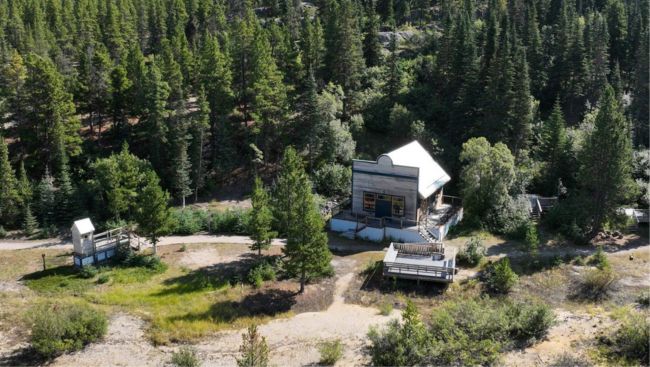
On a quiet, remote trail in British Columbia near the Yukon boundary sits a wooden facade resembling the brothel and restaurant Trump's grandfather built at the turn of the century.
Friedrich Trump called his business in Bennett, a town that sprang up because of the Klondike Gold Rush, the Arctic Restaurant & Hotel.
Parks Canada says the facade at the Chilkoot Trail National Historic Site was constructed in 2017, and the kitchen inside is now exclusively used by government workers.
"The exterior design ... was influenced by (the Arctic Restaurant & Hotel), because it is representative of numerous false-fronted buildings that existed at Bennett," Parks Canada spokesperson Megan Hope said in an email.
The elder Trump, a German immigrant, cooked and served food inside the Arctic to Americans and Canadians heading to goldfields in the Yukon. He made enough cash to sow the seeds for the future Trump empire.
A 90-year-old Yukoner who wrote a booklet about men who became wealthy off the gold rush, including Friedrich Trump, says the replica should remind President Trump to show gratitude to Canada rather than launching a trade war and annexation bid against it.
"(Donald Trump) got the darndest history," Pat Ellis, author of the "Financial Sourdough Starter Stories," said in an interview from Whitehorse.
"Americans made their stink here (and) went back to the States with their money.
"Now he has a fantasy of taking over Canada. That's gratitude, eh?" she said with a laugh.
The story of Friedrich Trump's chapter in Canada begins in the 1880s.
The 16-year-old barber's apprentice, whose father died young, moved to New York City from Germany to be closer to his sister.
He then moved to Seattle and began operating an eatery until a July 1897 newspaper headline caught his eye: "Gold! Gold! Gold!"
Friedrich Trump sold the eatery and headed north with thousands of other Americans and Canadians. He headed toward the Yukon River but landed just short of it, in B.C.
He and a business partner erected a canteen on the route and called it the Arctic Restaurant & Hotel. Their specialty was roadkill.
Within three years, he relocated the business with the same facade to Whitehorse, where the hotel became famous.
"He made quick money on booze, and he was a good cook," Ellis said, adding her grandfather, a North West Mounted Police officer at the time, also drank at the Arctic.
It served more than food and drinks.
Newspaper ads at the time mentioned private suites for ladies and scales for patrons to weigh gold — if they preferred to pay for services that way.
One Yukon Sun writer moralized about the backroom goings-on: "For single men the Arctic has the best restaurant," he wrote, "but I would not advise respectable women to go there."
By early 1901, there were fewer gold strikes and Mounties announced plans to curb prostitution, gambling and liquor.
Friedrich Trump sold the business and returned to Germany. He eventually immigrated back across the ocean to New York City, accompanied by his wife, who was pregnant with Donald Trump's dad.
In 1905, a huge fire wiped out most of the hotel, and Friedrich Trump died of pneumonia about 12 years later.
He left behind real estate for his son, Fred Trump, who used the money to invest.
Donald Trump took loans from his father to create his global brand, stamping hotels and towers with the Trump name in a large font similar to the one his grandfather once used in Canada.
For Ellis, Donald Trump's signs and hotels are a reminder of something else.
"His family's wealth began in Canada," she said.


