Federal unions are accusing the federal government of setting a dangerous precedent and even "borderline theft" by funding an early retirement incentive for employees through the Public Service Pension Fund.
The plan - announced in the budget in November - comes as government departments make job cuts to hit mandated budget reductions.
Earlier this month, the federal government began sending letters with information on its planned early retirement program to almost 68,000 public servants who may be eligible.
The government says it's trying to boost the rate of attrition and avoid laying off younger workers by offering a voluntary program allowing workers to retire earlier without incurring a pension penalty.
The budget says the government intends to implement the one-year early retirement program as soon as January, though legislation is still required to move the plan forward.
A digital copy of the letter, shared with The Canadian Press, says the program will be available only to certain employees who apply to participate under terms set by the Treasury Board.
"These parameters would be designed to maintain essential services and business continuity," the letter says. "As such, acceptance of an employee’s application to participate would not be guaranteed."
Nathan Prier, president of the Canadian Association of Professional Employees, said it's "all well and good" to protect the jobs of younger people — but those younger workers are also the ones who, throughout their careers, will pay half the cost of the program through their contributions to the pension plan.
"In the same vein, the government is using civil servants' money as if it were its own, which sounds like borderline theft," Prier said.
Sean O'Reilly, president of the Professional Institute of the Public Service of Canada, said the government is "effectively replacing employer-funded severance obligations with employee-funded early retirement provisions."
"Using workers’ own pension surpluses to finance their departure sets an extraordinary and dangerous precedent," he said. "It risks hollowing out the public service at precisely the wrong moment."
The union is also concerned about the government's recent move to move a surplus of around $0.9 billion from the pension fund to its consolidated revenue fund, where it will be held with surplus funds transferred last year while next steps are considered.
The Public Service Superannuation Act says a non-permitted surplus exists when the plan’s assets exceed 125 per cent of its liabilities, and requires the government to take action to bring the surplus below that threshold.
O'Reilly however said that money isn't for the government to use how it wishes.
"The surplus exists because of equal contributions from employees and employers, combined with strong investment performance. It is deferred compensation earned by public service workers — not discretionary income for the government," O'Reilly said.
Sharon DeSousa, national president of the Public Service Alliance of Canada, said any early departure program must be negotiated with the union because "no one should be pressured into giving up hard-fought rights."
"We are pushing the government to meet with us and release the full details so we can properly assess what this means for workers," she says.
Catherine Connelly, professor and business research chair in the department of human resources and management at McMaster University in Hamilton, said the unions are right to be concerned about the planned early retirement incentive, which she said is "problematic."
"Once an organization offers something like this, employees become reluctant to retire unless they receive it — they wait to retire because they hope that another incentive will be offered in the future," she said. "So lots of people will retire now but fewer people will retire later."
Connelly said it’s also not uncommon for the "very best people" to take the incentive, retire and then start working somewhere else.
"You can lose a lot of important institutional memory and skilled workers," she said.
Connelly said that pensions only have surpluses because the stock market is up significantly compared to last year.
"These returns are likely only temporary," said Connelly, who mentioned that most private sector employers don’t offer pensions. "There is a lot of volatility in the markets right now, and they could easily lose significant value at any time. This volatility is why pension funds should only be used for pensions."
Mohammad Kamal, director of communications at the Office of the President of the Treasury Board, said the fund’s "strong financial positioning" has allowed the government to expand eligibility under the Early Retirement Incentive, allowing eligible employees to retire early without any penalties.
"Canada’s new government recognizes the important contributions of public servants," he said.
Kamal also said the government is managing the non-permitted surplus in accordance with the law and the framework that governs the plan.
"This is a sign of a strong pension system that is exceeding expectations," Kamal said.
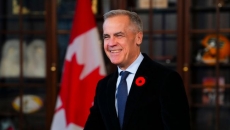
Picture Courtesy: THE CANADIAN PRESS/Justin Tang