An American outdoor leadership school says it is removing campsites along the west coast of Vancouver Island from its application to renew and expand its licence to run sea kayaking courses along British Columbia's coast next year.
The move by the National Outdoor Leadership School follows an outcry by some residents and First Nations leaders, citing concerns about consultation as well as Canadian sovereignty amid political and economic threats from south of the border.
The initial application for access to 77 campsites relates to a sea kayaking expedition the non-profit group is planning, which would span the entire B.C. coast between May and August next year, starting in Washington and ending in Alaska.
The group says it has been operating along B.C.'s coast since 1995 and a Crown land management plan submitted as part of its application says the latest expedition requires an expansion of the area it has historically operated in.
But a statement and fact sheet from the group updated on Thursday says it is removing campsites along the west coast of Vancouver Island from its application.
It says many of the campsites in the application would not be used unless necessary for evacuation due to an emergency situation, and if all goes smoothly, the expedition would use sites around Vancouver Island for 15 to 20 nights.
"Our initial intent was to apply for areas we had historically run (courses), which included Nootka Island," the group says, referring to an area northwest of Tofino.
"We have shifted our focus to our core sea kayak classrooms on the Central Coast and the northeast region off of Vancouver Island," the statement says.
The expedition from Washington to Alaska would have a maximum of seven participants and three instructors, it says.
The group practices "minimum impact camping" and follows the code of conduct by the non-profit organization BC Marine Trails," the statement adds.
"Each site is proposed to be used (three) or less times per year and leave-no-trace practices will be in place for the guided trips," a summary of the application says.
The B.C. government's application process requires every campsite to be individually mapped and approved, the group says.
"Therefore, our application includes each potential campsite the trip may use for the planned itinerary and emergencies," it says.
Still, the group's application for access to 77 sites has run into choppy waters.
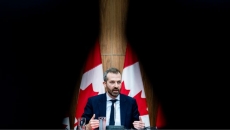
Hugh Braker, a member of the First Nations Summit executive team, was among the First Nations leaders who expressed concerns about the plan. He told The Canadian Press earlier this month that he worried about allowing outsiders to access to the remote areas, citing both environmental and political concerns.
"We're just as concerned as anybody else about the actions of the president of the United States," said Braker, a member of Tseshaht First Nation on Vancouver Island.
Canadians shouldn't be giving Americans access to land when "they're trying to hurt us so much," Braker said.
The statement from the National Outdoor Leadership School says the group has "loved and appreciated" the waters around Vancouver Island for decades.
The group says it has been working with B.C. government agencies and reaching out to First Nations in order to follow the proper process for its application.
The group has had meetings with "some local First Nations," it says, and was in the process of reaching out to each one whose territories encompass the campsites "to engage in conversations about passing through their waters and land."
The Crown land management plan posted online as part of the group's application says it respects First Nations rights and it will respect any site closures.
"If any First Nations have concerns, we will follow any mitigation measures requested," it says, adding agreements with First Nations were an "ongoing project."
Picture Courtesy: THE CANADIAN PRESS/Adrian Wyld