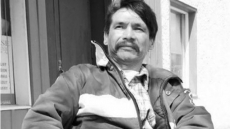
PACHENA BAY , B.C. — The low tide, bright sunshine and constant roar of endlessly approaching waves display the full power of the wide-open Vancouver Island shoreline at the remote beach handed down to Stella Peters and her family as a wedding dowry.
For generations, Peters and her relatives have been the keepers of Pachena Bay, the picturesque beach that scientists forecast as an epicentre for the next massive earthquake and tsunami.
The bay is also the home to the Huu-ay-aht First Nations village of Anacla, about 300 kilometres northwest of Victoria, which aboriginal oral history says was devastated when an ancient earthquake convulsed the West Coast of North America.
First Nations from Vancouver Island to northern California describe the earthquake and tsunami in similar legends and artwork involving a life-and-death struggle between a thunderbird and a whale that caused the earth to shake violently and the seas to wash away their people and homes.
When the next megathrust quake hits, residents on the west side of Vancouver Island will barely have 20 minutes to get to higher ground.
"Every year we hear the same thing, that, 'Oh, the big waves are going to come, the big waves are going to come,'" Peters says as she looks out on the Pacific Ocean. "I'm not really too worried about it actually happening. We're not ready for it, but in a sense we are. We seem to be on the ball when it comes to evacuating the place."
"Nobody (will be) left behind," says Peters. "All the elders, the kids, even the dogs are all taken out of here."
On Jan. 26, 1700 at about 9 p.m., a magnitude 9 earthquake struck the Pacific coast, causing violent shaking for minutes that scientists believe was felt as far away as the Manitoba border. The shaking was followed almost immediately by a tsunami that legend and scientists say sucked everybody and everything along the outer coast into the ocean.
About nine hours later, a tsunami the height of a four-storey building hit the Japanese coast on Jan. 27, 1700, destroying all in its path.
It wasn't until the late 1990s that scientists linked the tsunami in Japan to geologic reports of the earthquake off the Pacific coast in North America.

Scientists using earthquake mapping and profiling techniques now believe the ancient quake and tsunami are eerily similar to the magnitude 9.2 earthquake and tsunami that struck in the Indian Ocean on Boxing Day 2004, killing more than 250,000 people.
Earthquakes and tsunamis like the Vancouver Island and Boxing Day events are not one-time occurrences, due to their locations near major fault lines that build up pressure over 300 to 500 years and eventually cause the earth to buckle and let go, scientists say.
The Cascadia subduction zone off Vancouver Island is the result of two locked geological plates under the sea floor.
"Right now the two plates are sort of stuck together," says Alison Bird, a Victoria-area Natural Resources Canada seismologist. "They're locked, yet they are still moving toward each other. What's happening is there's a lot of stress building up. The stress builds up over hundreds of years and when it releases it releases in a megathrust earthquake."
Following the Japanese earthquake and tsunami in 2011, about 70 Pachena Bay residents were evacuated to the village's hilltop administration building and long house. Peters says there was no damage, but the Pachena River shifted from low tide to high tide in minutes.
University of Victoria ocean engineer Kate Moran says the Huu-ay-aht council was wise to accept the advice of its elders and build its new administration building high above Pachena Bay because it's only a matter of time before another devastating tsunami arrives.
Moran, who previously advised the Obama administration in the United States on climate policy issues, headed the first research team into the Indian Ocean area following the Boxing Day earthquake and tsunami.
She says there are many similarities between Boxing Day 2004 and Vancouver Island Jan. 26, 1700.
In both cases, there was a major rupture of the earth that triggered deadly earthquakes and tsunamis, Moran says. She described the events in 1700 and 2004 as ripping open the earth's zipper.
"What you can now do is actually put videos to the event and to me that's really helpful for people understanding the risks here (on Vancouver Island)," says Moran, who heads the university's world-leading Ocean Networks Canada, which includes a 24-hour ocean monitoring program through a series of Internet connected cables.
She says the university is planning to install a specialized radar at Tofino's airport this year that can detect tsunami waves far offshore.
"When scientists want to study subduction zones, I would say that Cascadia, (Japan's) Nankai, Barbados and Chile are the (locations) that have been studied the most because of their significance," Moran says.
Bird says experts know that the ancient quake and tsunami devastated the western shores of Vancouver Island and the eastern coast of Japan.
"This completely jibes with First Nations oral history, which talks about the fact it was wintertime and they'd just gone to bed," she says. "Sadly, villages along that western coastline were decimated by this wave. Many people were lost. The (Japanese) recorded the time the wave hit at various points along the coast and how high the wave went up."
She says if a similar earthquake occurs now, people living along the outer coast of Vancouver Island will have between 15 and 20 minutes to escape. Victoria can expect a tsunami wave of between two and four metres within 75 minutes.
Greater Vancouver would likely escape a tsunami in the event of a megathrust earthquake, but the shaking would be prolonged and violent enough to damage buildings, says Bird.
The odds of another megathrust earthquake and tsunami on Vancouver Island happening within the next 50 years are about one-in-10, says Bird.
Peters says she believes somebody or something has been looking out for her village for the past 315 years, but she also knows that could change at any moment.
"Right where we live we have to deal with what Mother Nature gives us," she says.
"We're supposed to be 20 metres above sea level, but now where the village is, we're six metres above."