VANCOUVER — The summer evening is warm and a buzz can be felt along Vancouver's sun-drenched Stanley Park Seawall.
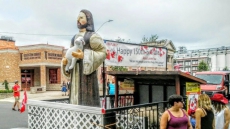
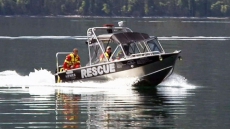
A half-dozen men jog by wearing matching "Vancouver Fire Rescue" shirts, while nearby a man sits hunched over a piece of stone, surrounded by carvings for sale.
Further along, a couple of helmeted young women stand beside rented bicycles and giggle as they take a selfie near the 15-metre Siwash Rock.
Elsewhere, a shirtless in-line skater darts along the sandstone cliffs that line the north edge of the park, while far overhead traffic surges across the busy Lions Gate Bridge, with its three lanes stretching across the Burrard Inlet.
In the 100 years since construction began on the city's Stanley Park Seawall, the nine-kilometre pathway remains as well-trodden as ever, celebrated by tourists and locals alike as integral to the Vancouver experience and emblematic of the city's relationship to the natural landscape that surrounds it.
For Michael Kluckner, president of the Vancouver Historical Society, the popular cycling, walking and roller-skating trail near the city's downtown illustrates how western Canadians identify with natural landscapes over civic infrastructure, such as bridges or art galleries.
"If you look at the tourist information, the kind of material that was published 100 years ago ... going around (Stanley Park) was the first on anybody's list of what you had to do in order to see Vancouver," Kluckner said, adding that the situation is no different today.

"It's an incredible legacy," he added. "Everybody who lives here gets it into their DNA."
Kluckner recalled how in the early 1970s, he and his girlfriend would cycle what existed of the Seawall at the time on their 10-speed bikes, picnic lunch in tow, on the hunt for a sunny patch with a view.
"It wasn't some kind of manufactured event. You just went there and you hung out," he said. "It's just really very much a part of the culture here."
Tiina Mack, spokeswoman for the Vancouver Park Board, explained that the Seawall was conceived around the turn of the 20th century as a means to protect Stanley Park from erosion. Construction began in 1917 around Coal Harbour, but the uninterrupted route remained unfinished until the 1980s.
The Seawall meets up with adjacent trails that together make up the 28 kilometres of uninterrupted paths that comprise the city's Seaside Greenway.
The park board is uncertain exactly how many people use the Seawall, but it estimates Stanley Park receives about eight million visitors per year, Mack said. That translates to an average of nearly 22,000 visits a day, resulting in the occasional clash between cyclists and pedestrians.
The Seawall was completed over more than six decades using different construction techniques, Mack said, adding that bricks, granite, rocks and even backfill were used at various stages.
"Most often you're looking at the beautiful views and the ocean, but if you really start to look at the Seawall, or if you're at low tide looking at it from the beach side, you can see the different eras of construction going around the park."
Kluckner said that around the 1950s builders began using gravestones from Mountain View Cemetery, then in disarray.
"People were beginning to notice the carved names of dead people appearing in the Seawall," he said.
James Cunningham was a central figure in the Seawall's history. He served as the park board's master stonemason, who oversaw the project from the late 1920s until — and even into — his retirement more than 30 years later.

One widely circulated, though unverified, story recounts how the retired Cunningham would show up to the Seawall in the middle of the night in the early 1960s dressed in his pyjamas to inspect the project.
His force of character, along with the appeal of the Seawall itself, was the inspiration behind a play written by Rev. Steven Epperson, a Unitarian minister who moved to Vancouver from Utah in 2002. He called it "Seawall: The Ballad of James Cunningham."
"To me, it's Vancouver at its best," Epperson said.
"One of the things about Vancouver that stood out to me and to us most powerfully was the experience we had as a family walking and riding our bicycles around the Seawall," he said.
Epperson wrote the play in 2006 as a Thanksgiving pageant, incorporating a slew of Seawall history, as well as masonry trivia and even folk music from Cunningham's hometown of Rothesay in Scotland.
"What I really wanted to do is celebrate a civic landmark that all of us can enjoy. I think that makes for a healthy city," Epperson said. "Heaven knows we have our issues and our problems, but I don't think the Seawall is one of them."