Virtual sittings of the House of Commons and parliamentary committees are causing headaches for interpreters — literally.
Coping with iffy audio quality, occasional feedback loops, new technology and MPs who speak too quickly has resulted in a steep increase in interpreters reporting workplace injuries, according to the union that represents some 70 accredited interpreters who translate English into French and vice versa.
Those injuries include acute acoustic shock, tinnitus, headaches, nausea, sleeplessness, mental fog and inability to concentrate.
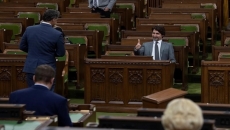
Commons Speaker Anthony Rota has been doing his best to help by reminding MPs repeatedly to wear headsets, which provide better audio quality, and to speak more slowly.
But that advice clashes with another change that has resulted from the move to virtual proceedings during the COVID-19 pandemic: strict limits on the amount of time allowed to question ministers and for them to give answers.
To make the most of their five-minutes worth of questions, some MPs are asking a series of rapid-fire questions, which can leave ministers with only a few seconds of matching time in which to attempt to answer.
"I had a long conversation yesterday ...," Deputy Prime Minister Chrystia Freeland began to say Thursday before being cut off in her response to a short question about whether there have been any discussions with the United States about re-opening the border.
Canadians were destined never to find out with whom she'd had that long conversation as her questioner, Conservative MP Todd Doherty, switched to another topic for a different minister on his next question.
Rota implored MPs at several time to "please speak at a reasonable pace" for the sake of the interpreters.
"This is just how fast I speak when we're in the House of Commons," responded Conservative MP Raquel Dancho at one point, who promised to "try to speak more slowly."
Earlier in the week, interpreters and the union representing them, the Canadian Association of Professional Employees, appealed to MPs on the procedure and House affairs committee, which is studying ways to move to a fully virtual Parliament, to help minimize the problems.
CAPE president Greg Phillips told the committee that more injuries were reported by interpreters in April alone than were reported in all of 2019.
Virtual proceedings are more of strain on interpreters at the best of times, requiring them to work shorter shifts. That, combined with the steep increase in injuries, sick leave and requests for transfer to non-virtual assignments during the pandemic, has resulted in a shrinking pool of available interpreters, Phillips said.
"We are getting close to our worst-case scenario," he said.
Due to technological challenges, the interpreters are not able to work from home but must come to Parliament Hill. But Phillips said about 40 of the 70 interpreters on staff are unable to come to work due to child care and other COVID-19-related issues.
There are about 60 accredited freelance interpreters who can help fill the gaps. But even so, Phillips said they are getting "dangerously close" to being unable to keep up with the demand for translation services required to keep officially bilingual parliamentary proceedings operable.
Interpreter Nicole Gagnon told the committee that because MPs are using different technologies to connect with virtual proceedings, sound quality is often problematic and sometimes results in loud feedback loops that cause acute acoustic shock for the interpreters, who all wear headsets.
Symptoms of acoustic shock are similar to those caused by a concussion, she said, adding that the effects are cumulative so it takes longer to recover each time it occurs.
Phillips said interpreters have also reported suffering "residual and long-lasting beating sound, pounding in sharp bursts in the ear drum."