Saturday, June 6, 2026
ADVT 
National

Virus kneecapped Canadian confidence: Poll

Darpan News Desk The Canadian Press, 03 Sep, 2020 07:06 PM
  • Virus kneecapped Canadian confidence: Poll

Confidence in the Canadian economy took a dramatic dive over the summer in the midst of the COVID-19 pandemic — a whipsaw pivot seen around the world but sharper in Canada than any other country surveyed in a new global public opinion poll.

Sixty-one per cent of Canadians who took part in the Pew Research Center survey released Thursday described the country's current economic situation as bad, more than twice the 27 per cent who said the same thing last year.

Of the 14 countries included in the poll, the 12 that were also asked the same question last year all reported double-digit reversals in sentiment, with Canada's 34 percentage-point change leading the way.

"The sharpest uptick in negative assessments has come in Canada, where second-quarter losses in gross domestic product were estimated at 12 per cent," the centre said in a release. "Negative assessments have also grown by 30 percentage points in the UK, U.S. and Australia."

The Canadian segment of the survey, conducted by phone with 1,037 adult respondents between June 15 and July 27, carries a margin of error of 3.7 percentage points, 19 times out of 20.

Of those surveyed in the U.S., 69 per cent said they believe the economy is doing poorly, compared with 30 per cent who disagreed — a finding roughly in line with the 14-country median results of 68 per cent and 31 per cent.

Only in Europe did a majority of respondents say their domestic economies were faring well, with Denmark and Sweden leading the way, at 74 per cent and 68 per cent, respectively.

The two Scandanavian nations are notable for their dramatically different pandemic strategies: Sweden initially adopted a libertarian, herd-immunity approach, while Denmark was the second country in Europe to impose a nationwide lockdown.

"But even (in Sweden), GDP is expected to contract by roughly 5 per cent in 2020, and Swedes are 11 percentage points more likely to think economic conditions in their country are poor than in 2019."

The Pew report documents an unsurprisingly dismal outlook for the world's economic prospects, with Canada and the U.S. as notable outliers.

Of Canadian respondents, 48 per cent said they expect the economy to improve over the next 12 months, compared with 34 per cent who expect the opposite and 17 per cent predicting no change. In the U.S., the optimism is even stronger: 52 per cent said they see a brighter future ahead, compared with 32 per cent who do not.

Only Spain, Germany and Australia reported similar levels of optimism.

Almost across the board, those who disapproved of how their country has handled the outbreak were more likely to describe the economy as poor. In Canada, 85 per cent of those disappointed in the government's handling of COVID-19 had a negative view of the economy, compared with 58 per cent of those who gave the feds a passing grade on the pandemic.

In the U.S., 87 per cent of those disappointed in the Trump administration's handling of the outbreak described the economy as bad, compared with 50 per cent of those who said the government has done a good job.
MORE National ARTICLES

Ottawa helping guide, but not dictating, provincial reopening plans: Trudeau

Ottawa helping guide, but not dictating, provincial reopening plans: Trudeau
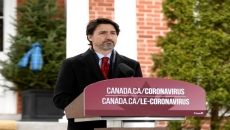
With Canada's two most populous provinces poised to outline plans for a gradual return to normalcy, Prime Minister Justin Trudeau said Monday that Ottawa will help guide, but not dictate, how provinces and territories should start easing restrictions. Ontario and Quebec together account for more than 80 per cent of the country's COVID-19 cases.    

Ottawa helping guide, but not dictating, provincial reopening plans: Trudeau

Crisis lines face volunteer, cash crunch even as COVID-19 drives surge in calls

Crisis lines face volunteer, cash crunch even as COVID-19 drives surge in calls
Despite a surge in demand due to COVID-19, many distress centres across Canada are dangerously close to folding thanks to major declines in both volunteers and revenue. Stephanie MacKendrick, CEO of Crisis Services Canada, which runs the only national suicide-specific helpline in Canada, says her organization relies on a network of approximately 100 community distress centres across the country to field calls from people.

Crisis lines face volunteer, cash crunch even as COVID-19 drives surge in calls

Conservatives gear up to grill government in modified return of House of Commons propose and oppose: Tories

Conservatives gear up to grill government in modified return of House of Commons propose and oppose: Tories
Conservative Leader Andrew Scheer laid out Monday the numerous lines of inquiry his party intends to follow this week as a modified version of a House of Commons sitting gets underway. They include the state of the nation's emergency supply stockpile, the mishmash of federal economic benefit programs that allow some to fall through the cracks and to what extent the minority Liberals are backstopping provincial efforts to reopen their economies, Scheer said.

Conservatives gear up to grill government in modified return of House of Commons propose and oppose: Tories

Learning to live with COVID-19 requires permanent fixes to vulnerable settings

Learning to live with COVID-19 requires permanent fixes to vulnerable settings
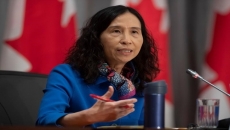
Canada's chief public health officer warned Monday there is still a lot we don't know about the virus that causes COVID-19, but said stopping this pandemic or preventing a future one will require more than just physical distancing and handwashing. Dr. Theresa Tam said we simply do not know yet whether someone who has had COVID-19 will be immune from getting it again, or how long that immunity will last.

Learning to live with COVID-19 requires permanent fixes to vulnerable settings

B.C. university creates institute to take microscope-telescope view of pandemic

B.C. university creates institute to take microscope-telescope view of pandemic
The COVID-19 pandemic has placed the world at a tipping point that's challenging social, political, economic and environmental structures, says the director of a new academic research institute at British Columbia's Royal Roads University. Dr. Thomas Homer-Dixon said Monday the pandemic is an event with the power to cause those structures to fall like dominos or shift radically to new paths.

B.C. university creates institute to take microscope-telescope view of pandemic

Drugs and cash seized from a Whalley area residence in Surrey

Drugs and cash seized from a Whalley area residence in Surrey
Illicit drugs and cash have been seized from a residence in the Whalley area following an investigation by the Surrey RCMP. The investigation began on March 5th, 2020 by the Surrey RCMP Community Response Unit (CRU). CRU observed suspicious activity consistent with drug trafficking at a residence in the 11400 block of 124 street.     

Drugs and cash seized from a Whalley area residence in Surrey