OTTAWA - The Canadian government is facing mounting pressure to waive the patent on the Johnson & Johnson COVID-19 vaccine to allow a Canadian manufacturer to export a low-cost version to Bolivia.
The Bolivian government struck a deal with Ontario's Biolyse Pharma to seek a compulsory licence to produce and export COVID-19 vaccines without the permission of the patent holder.
The process is legal under the scarcely used Canadian Access to Medicines Regime, which was designed to allow export of patented medicines to developing nations facing public health crises such as HIV/AIDS, malaria and tuberculosis.
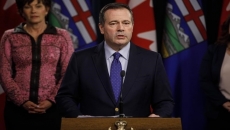
Bolivian Minister of Foreign Trade and Integration Benjamin Blanco partnered with the federal NDP for a news conference to announce the country's request has been ignored for months.
"As time elapses, the more lives are lost, more with a fourth wave where all the many countries in the world are being hit hard, especially those developing countries," he said through a translator on Tuesday.
NDP MP Niki Ashton says these vaccines would save lives in Bolivia, and Canada must grant the compulsory licence that would enable the vaccine production to take place.
"The bottom line here is saving lives. What we need to do is allow for Canada to be part of the solution," Ashton said.
So far Canadian government officials have not issued a response to Bolivia's request.
Health Canada and Innovation, Science and Economic Development Canada officials have met with Biolyse to discuss the compulsory licensing process and Health Canada requirements, according to a statement from Innovation Minister François-Philippe Champagne's spokesman Tuesday.
“Our government has been a strong advocate for equitable access to affordable, safe, and life-saving COVID-19 vaccines around the world. Our approach has been guided by an understanding that this pandemic will not be over anywhere until it’s over everywhere," said John Powers.
He did not say whether Canada is contemplating moving forward on the application.
It's possible if Canada were to go out on a limb and waive the patents for COVID-19 vaccines and treatments, they could run afoul of the pharmaceutical companies the country relies on for its own vaccine supply.
But NDP health critic Don Davies said that's part of taking leadership.
"We're talking about a responsible, judicious, sensible, targeted relaxation of patent rules for the purpose of facilitating the production of life-saving vaccines," Davies said. "I think that's not only a responsible position, I think it's the only ethical and, frankly, is the only pragmatic decision."
The Canadian Access to Medicines Regime has faced criticism for being cumbersome and slow, making it difficult to quickly deliver the aid needed in developing nations.
Critics said the phone number associated with the program is out of service and the website listing the drugs applicable for the program has gone dormant.
"I find that abhorrent," said Biolyse spokesman John Fulton. "If we can't use (Canadian Access to Medicines Regime) for a worldwide pandemic that's killing millions of millions of people, then really what's the use?"
Several other groups have called for Canada to add COVID-19 vaccines to be added to the list of drugs under the Canadian Access to Medicines Regime.
"In low-income countries around the world we're seeing about four per cent (vaccination)," said Adam Houston, medical policy and advocacy officer for Doctors Without Borders Canada.
"There's definitely need for vaccines, particularly in low-income countries."
Doctors Without Borders sent a letter to federal ministers this past summer to express concern about the impediments in Bolivia's deal with Biolyse.
While the group cites several issues with the program, they said Canada should at least follow its own process to get vaccines to those who need them.
Even if Bolivia and Biolyse Pharma get the go ahead, it would take months to ramp up and get ready for production. Biolyse would also need assistance from Johnson & Johnson, or else be forced to submit new clinical trials for approval before large-scale production and export could begin.
Meanwhile the idea for an international waiver to the Agreement on Trade-Related Aspects of Intellectual Property Rights, or TRIPS, has been gaining steam but Canada has been reticent to take a position.
Such a waiver would make it easier for developing countries to import the expertise, equipment and ingredients necessary to make their own vaccines.