The former chair of WE Charity’s board of directors says the board was explicitly told that speakers at the organization's popular youth events known as "WE Days" were not paid for speaking.
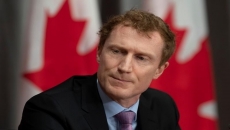
Michelle Douglas, who resigned in March from the board of WE Charity, testified Tuesday to the House of Commons finance committee.
She said the board made direct inquiries about whether speakers for WE Days were paid, and said the organization's executive director assured the board that they were not.
"The WE Charity board always understood that speakers were not paid by the charity or the related organization to speak at WE Days. The board made direct inquiries on this issue," Douglas told the committee.
The WE organization confirmed earlier this month it has paid hundreds of thousands of dollars in speaking fees to members of Prime Minister Justin Trudeau's family.
Trudeau's mother Margaret Trudeau was paid about $250,000 for 28 speaking appearances at WE-related events between 2016 and 2020 and his brother Alexandre has been paid $32,000 for eight events, according to WE.
"I don't know the precise nature of what they were paid for, but if it was exclusively to speak on the WE Day stage, that would have surprised me," Douglas told the committee.
In their testimony to the committee, WE's co-founders Craig and Marc Kielburger explained that these speakers were not paid directly for speaking at WE Days, but to compensate them for their time for participating in "auxiliary events" such as receptions and book-signings that took place in and around WE Days.
They acknowledged that not all speakers were offered this compensation, but said a small number of speakers, including Margaret Trudeau, were paid for these auxiliary events.
After Douglas's appearance, Craig and Marc Kielburger told the committee Trudeau's wife Sophie Gregoire Trudeau has participated in seven WE Days and received an average of $3,618 for each event, to cover her expenses.
Douglas detailed that she resigned from the board of WE Charity in March after the organization began a series of mass layoffs but refused to provide financial justification to the board for them.
"I did not resign as a routine member or as part of a planned board transition. I resigned because I could not do my job, I could not discharge my governance duties," she said.
After the COVID-19 health crisis hit in March, the WE Charity's executive team were "scrambling" to deal with the financial impacts of the pandemic, Douglas said, and began to lay off large numbers of staff.
As the days went by, the numbers of job losses grew quickly into the hundreds, she said.
The board of directors convened an ad hoc committee to hold daily calls with the executive team for briefings and updates, and this committee was told the executive was running daily financial reports to inform its decision-making regarding its employees.
"Those reports were not shared with the board, despite our requests," Douglas said.
"It was our view that you cannot fire hundreds of people without very strong, demonstrable evidence, and even then should explore mitigation measures to save jobs. Instead, the executive team were dismissing employees with great speed and in large numbers."
After the board made a final demand for the documents and reports to be produced immediately, Douglas said, Craig Kielburger called her up and asked her to resign.
"It was clear that there was a breakdown in trust between the founders and me as the board chair."