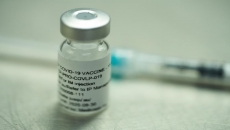
Several provinces are lowering their minimum age requirement for the Oxford-AstraZeneca vaccine, allowing those 40-and-older to receive the jab as unruly spread of COVID-19 continues in their jurisdictions.
Ontario, Manitoba and Alberta are decreasing the age range from the recommended 55+ that the National Advisory Committee on Immunization set last month.
The NACI guidelines came about as Canada and other countries investigated possible links to rare instances of blood clots seen in a small minority of AstraZeneca recipients.
Those events continue to be an exceedingly rare side effect of the vaccine, with Canada reporting twocases out of more than 700,000 doses administered.
Here's what we know about the AstraZeneca vaccine:
WHO IS ELIGIBLE TO GET IT?
As of Tuesday, people 40 years of age and older will be able to get the AstraZeneca jab in Ontario and Alberta. Manitoba said Monday that it, too, was offering the vaccine to those over age 40.
Health Canada had allowed the use of the vaccine for those 18 and up when it approved AstraZeneca in February, an authorization that has not changed.
Health Minister Patty Hajdu said in a press conference Sunday that provinces and territories were "free to use AstraZeneca in any aged population over 18."
NACI had not updated its minimum age guidance for AstraZeneca as of Monday morning.
Ontario, Manitoba and Alberta's move to a lower age range comes amid mounting pressure to expand eligibility as a third wave devastates parts of the country.
Alberta had the highest rate of active COVID-19 cases in Canada as of Sunday, while Ontario had reported an average of more than 4,300 new daily cases over the past week.
Concern around the rare clotting events has led to some hesitancy around AstraZeneca, with many eligible residents opting to wait for a jab from Pfizer-BioNTech or Moderna instead. As the COVID situation worsens in parts of the country, however, experts advise against waiting for another vaccine.
WHAT DO WE KNOW ABOUT THE BLOOD CLOT ISSUE?
The European Medicines Agency said earlier this month it found a possible link to very rare cases of unusual blood clots with low platelet counts in AstraZeneca recipients, usually happening within two weeks of getting the shot.
The global frequency of the blood clot disorder, known as vaccine-induced immune thrombotic thrombocytopenia or VITT, has been estimated at about one case in 100,000 to 250,000 doses.
Data published in the online journal Science last week said there were at least 222 suspected cases reported in Europe — out of 34 million people who received their first dose. More than 30 people have died.
Experts say the risk of developing blood clots due to COVID-19 is much higher, and they encouragepeople to accept the first vaccine they're offered.
The EMA says symptoms to watch for include: shortness of breath, chest pain, swelling in the leg, persistent abdominal pain, persistent headaches and blurred vision or tiny blood spots under the skin beyond the injection site. The clotting issue has been treatable when caught early.
HOW EFFECTIVE IS ASTRAZENECA IN PREVENTING COVID INFECTIONS?
Data from clinical trials showed AstraZeneca was 62 per cent effective in preventing COVID-19 infections, but it prevented death and hospitalization in all participants who got the virus after receiving the vaccine.
Efficacy was a major talking point when AstraZeneca was first approved, with some comparing it to the 95 per cent efficacy shown in vaccine trials from Pfizer and Moderna.
But experts have stressed that all the authorized vaccines offer excellent protection against severe disease, hospitalization and death.
Real-world data may also suggest the efficacy of AstraZeneca's vaccine increases over a longer time interval between the first and second shot. Clinical trials used a four-week span between doses but some countries have been delaying second doses by several weeks. In Canada, many provinces have opted to delay the second dose by four months.
HOW DOES THE VACCINE WORK?
All of the approved COVID-19 vaccines train the body to recognize the spike protein that coats the outer surface of the coronavirus.
AstraZeneca — a non-replicating viral vector vaccine — uses a harmless version of a cold virus as a vessel to give our cells the instructions they need to make the coronavirus's spike protein.
The immune system recognizes the protein and makes antibodies, which then allow us to fend off attack if exposed in the future.
Experts say it takes a couple of weeks for the body to build up some level of immunity with any of the vaccines.
Some may see outward signs of an immediate immune response to the inoculation — the body's way of preparing for what it perceives as an attack by the virus. This can cause side effects usually seen with other vaccines, including pain at the injection site, redness, swelling and even fever, but experts say that means the vaccine is working.
WHAT ARE THE ADVANTAGES TO THIS VACCINE?
The AstraZeneca vaccine can be shipped and stored at regular refrigerator temperature, unlike those by Pfizer-BioNTech and Moderna, which need colder storage temperatures.
That's why they've been primarily used in pharmacies across the country, rather than large vaccine clinics.
From a global vaccination standpoint, the low cost of AstraZeneca's vaccine — about US$4 per dose — gives it another advantage. AstraZeneca, which says it aims to manufacture up to three billion doses in 2021, has pledged to make their product available at cost around the world until at least July.


.jpg "Woman in wheelchair victimized")