Tuesday, April 7, 2026
ADVT 
National

What should I know about the delta variant?

Darpan News Desk The Canadian Press, 24 Jun, 2021 10:39 AM
  • What should I know about the delta variant?

What should I know about the delta variant?

It’s a version of the coronavirus that has been found in more than 80 countries since it was first detected in India. It got its name from the World Health Organization, which names notable variants after letters of the Greek alphabet.

Viruses constantly mutate, and most changes aren't concerning. But there is a worry that some variants might evolve enough to be more contagious, cause more severe illness or evade the protection that vaccines provide.

Experts say the delta variant spreads more easily because of mutations that make it better at latching onto cells in our bodies. In the United Kingdom , the variant is now responsible for 90% of all new infections. In the U.S., it represents 20% of infections, and health officials say it could become the country’s dominant type as well.

It's not clear yet whether the variant makes people sicker since more data needs to be collected, said Dr. Jacob John, who studies viruses at the Christian Medical College at Vellore in southern India.

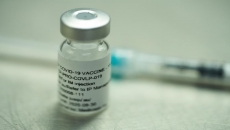
Studies have shown that the available vaccines work against variants, including the delta variant.

Researchers in England studied how effective the two-dose AstraZeneca and Pfizer-BioNTech vaccines were against it, compared with the alpha variant that was first detected in the U.K.

The vaccines were protective for those who got both doses but were less so among those who got one dose.

It's why experts say it's important to be fully vaccinated. And it's why they say making vaccines accessible globally is so critical.

___

The AP is answering your questions about the coronavirus in this series. Submit them at: FactCheck@AP.org. Read more here

MORE National ARTICLES

No known link for AstraZeneca vaccine and clots

No known link for AstraZeneca vaccine and clots
Dr. Supriya Sharma says Health Canada has a "really low threshold" for adverse events that could trigger a pause on the use of a vaccine and wouldn't hesitate to do so if something warranted it.

No known link for AstraZeneca vaccine and clots

Trudeau warns vaccine passport use could be unfair

Trudeau warns vaccine passport use could be unfair
"These are things that we have to take into account so that yes, we're looking to try and encourage everyone to get vaccinated as quickly as possible, but we're not discriminating and bringing in unfairness in the process at the same time," Trudeau said Friday at a press conference alongside health officials.

Trudeau warns vaccine passport use could be unfair

Economy surges in February, adds 259K jobs

Economy surges in February, adds 259K jobs
One year into the pandemic, Canada's job market is 599,100 jobs short of where it was in February of last year, or 3.1 per cent below pre-pandemic levels.

Economy surges in February, adds 259K jobs

Canada applies to be negligible risk for BSE

Canada applies to be negligible risk for BSE
Canada has been a controlled-risk country for bovine spongiform encephalopathy, or BSE, since 2007. One of the criteria for the change is for Canada to show that infected domestic animals were born more than 11 years prior.

Canada applies to be negligible risk for BSE

'Trust has been broken,' says defence minister

'Trust has been broken,' says defence minister

OTTAWA - Defence Minister Harjit Sajjan says that "trust has been broken" in the Canadian military f...

'Trust has been broken,' says defence minister

Canada to receive 1M Pfizer doses per week to May 10: PM

Canada to receive 1M Pfizer doses per week to May 10: PM
Trudeau says the updated delivery schedule begins March 22 and runs to May 10. He says one million doses of Pfizer-BioNTech vaccines every seven days is "going to make a big difference."

Canada to receive 1M Pfizer doses per week to May 10: PM