Tuesday, June 23, 2026
ADVT 
National

What should I know about the delta variant?

Darpan News Desk The Canadian Press, 24 Jun, 2021 10:39 AM
  • What should I know about the delta variant?

What should I know about the delta variant?

It’s a version of the coronavirus that has been found in more than 80 countries since it was first detected in India. It got its name from the World Health Organization, which names notable variants after letters of the Greek alphabet.

Viruses constantly mutate, and most changes aren't concerning. But there is a worry that some variants might evolve enough to be more contagious, cause more severe illness or evade the protection that vaccines provide.

Experts say the delta variant spreads more easily because of mutations that make it better at latching onto cells in our bodies. In the United Kingdom , the variant is now responsible for 90% of all new infections. In the U.S., it represents 20% of infections, and health officials say it could become the country’s dominant type as well.

It's not clear yet whether the variant makes people sicker since more data needs to be collected, said Dr. Jacob John, who studies viruses at the Christian Medical College at Vellore in southern India.

Studies have shown that the available vaccines work against variants, including the delta variant.

Researchers in England studied how effective the two-dose AstraZeneca and Pfizer-BioNTech vaccines were against it, compared with the alpha variant that was first detected in the U.K.

The vaccines were protective for those who got both doses but were less so among those who got one dose.

It's why experts say it's important to be fully vaccinated. And it's why they say making vaccines accessible globally is so critical.

___

The AP is answering your questions about the coronavirus in this series. Submit them at: FactCheck@AP.org. Read more here

MORE National ARTICLES

Horgan tells workers stay home if sick after COVID-19 outbreak at chicken plant

Horgan tells workers stay home if sick after COVID-19 outbreak at chicken plant
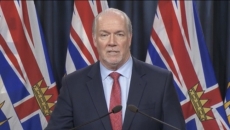
B.C. Premier John Horgan says people who are sick must stay away from work after an outbreak of COVID-19 at a chicken processing plant in Vancouver. Horgan said Wednesday workers should not go to work when they are sick because they fear losing wages, and that he was planning a meeting with Labour Minister Harry Bains and WorkSafe BC officials to discuss sick pay provisions.

Horgan tells workers stay home if sick after COVID-19 outbreak at chicken plant

Search for missing B.C. woman prompts homicide fears, second death

Search for missing B.C. woman prompts homicide fears, second death
Police are releasing more details about a British Columbia woman they fear may be the victim of a homicide. Metro Vancouver's Integrated Homicide Investigation Team says 45-year-old April Parisian was last heard from on March 28 and was declared missing earlier this month.

Search for missing B.C. woman prompts homicide fears, second death

Reports of hate crimes are up in Vancouver: police

Reports of hate crimes are up in Vancouver: police
An assault on a 92-year-old Asian man with dementia in Vancouver is being investigated as a hate crime and police say they have recently noticed an increase in reports of hate-motivated incidents. Vancouver police say the man has "severe dementia" and wandered into a convenience store on March 13 when another man yelled racist remarks that included comments about COVID-19.    

Reports of hate crimes are up in Vancouver: police

More signs COVID-19 is slowing in Canada; students to get federal help

More signs COVID-19 is slowing in Canada; students to get federal help
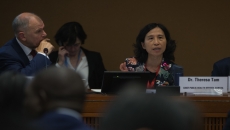
Chief Public Health Officer Dr. Theresa Tam said Canada was making progress in slowing the epidemic but warned against letting down its guard. The focus, Tam said, must be placed on stopping outbreaks in places like seniors homes and in other places where vulnerable populations live together in close quarters. How exactly Canada gets on the road to normalization will largely depend on the provinces, Prime Minister Justin Trudeau said on Wednesday. However, the closure of the Canada-U.S. border will stay in place until May 21st at least, he said.

More signs COVID-19 is slowing in Canada; students to get federal help

Prime Minister Justin Trudeau defends not creating universal COVID-19 benefit, announces student aid

Prime Minister Justin Trudeau defends not creating universal COVID-19 benefit, announces student aid
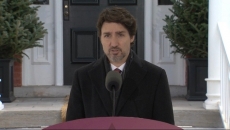
As he announced yet another emergency financial aid package Wednesday — this one aimed at students — Prime Minister Justin Trudeau defended his decision not to create a universal benefit that would ensure no Canadians affected by COVID-19 fall through the cracks. His focus for specific help Wednesday was students, announcing a $9-billion suite of programs for students whose education and job prospects are disrupted by the novel coronavirus.  Trudeau says his government's approach has been to try to target its emergency financial assistance in stages to those who need it most, rather than to everyone at once, including those who don't need it.      

Prime Minister Justin Trudeau defends not creating universal COVID-19 benefit, announces student aid

What BC is doing to fight COVID-19

What BC is doing to fight COVID-19
B.C. declared a provincial state of emergency on March 18, a day after announcing a public health emergency, and it has been extended to April 28. The measure gives the province authority to take any action necessary to protect people and communities, including charging people who ignore public health orders.

What BC is doing to fight COVID-19