Wildfire season may get off to a relatively quiet start in Canada but lingering drought and a warm summer could tip the scales towards another severe year, experts say.
Wildfire expert Mike Flannigan says this year will be his "litmus test" for whether Canada's wildfire seasons, already in uncharted territory and fuelled by human-caused climate change, have entered a "new reality."
"My narrative used to be, there'll be bad fire years and there'll be quiet years. I'm now beginning to think at a national scale most years are going to be bad fire years," said Flannigan, a professor of wildland fire at Thompson Rivers University in Kamloops, B.C.
No one can precisely predict in April how Canada's wildfire season will play out. A seasonal forecast can't account for a fire's ignition, such as a lightning strike, or the hot, dry and windy weather conditions that fuel individual fires and arrive on short notice.
Yet, some indicators can help experts describe broad wildfire risks. And Flannigan sees some cause for concern heading into this season.
Parts of Canada emerged from winter under abnormally dry or drought conditions, including historic wildfire hot spots in British Columbia's southern interior, northern Manitoba and eastern Northwest Territories.
Long-range forecasts suggest much of Canada could be hotter than normal over the coming months. And El Niño, the warming phase of a recurring climate pattern tied to shifting waters in the Pacific Ocean, is expected to take hold this summer.
Yet, much of Canada enters wildfire season in better shape than some of the worst years in recent memory. A stormy winter has left a fairly deep snowpack lingering across a large part the country, especially in areas farther north, said Richard Carr, a wildfire research analyst with Natural Resources Canada in Edmonton.
"We're not really seeing too many signs of unusual activity through April," said Carr.
There are some exceptions, such as southern B.C. into southern Alberta and southwestern Saskatchewan. Those areas have already seen some wildfire-conducive conditions emerge, Carr said.
Carr also has his eye on drought-stricken New Brunswick and areas around Hudson Bay and eastern Northwest Territories where there was lower than normal snowfall.
"It looks like we're expecting fairly warm conditions through the summer and the rest of the country might start to get fairly active by sometime in June or July," he said, though he downplayed the influence of El Niño on the wildfire season.
Canada heads into this season in uncharted territory, coming off three consecutive severe fire years. Last season was the second worst, behind only 2023 when wildfires burned through about 150,000 square kilometres of land.
Accelerating climate change, driven by the burning of fossil fuels, is loading the dice for longer and more intense wildfire seasons, scientists say. A warmer atmosphere can suck more moisture out of twigs and pine needles and turn the forest floor into a tinder box waiting for a spark. It also increases the likelihood and severity of fire-fuelling heat waves and droughts.
Canada's managed forests have in recent years started to release more carbon they absorb, reinforcing a climate feedback loop. In the most striking example, the 2023 wildfires released more planet-warming emissions than almost any country on Earth, save for China, India and the United States, a NASA study found.
Extreme wildfire behaviour is also becoming more common, Flannigan said. Wildfires such as the Jasper 2024 complex can burn so intensely they generate their own thunderstorms that spawn lighting strikes and start new spot fires. The 2023 season saw the most fire-generated thunderstorms recorded in a season, with more than 140 in Canada alone, Flannigan said. The previous global record was 100, set two years earlier.
Fires exact their toll in many ways. Tens of thousands people across Canada have fled from wildfires during recent seasons and studies document high rates of post-traumatic stress among evacuees.
Even far from a fire, smoke poses a serious health risk. A recent Health Canada review estimated that smoke exposure during the 2023 wildfires could contribute to around 400 acute and 5,400 chronic premature deaths. The study estimated that could translate into billions of dollars in medical costs, reduced productivity, and pain and suffering.
As the country emerges from winter, it's easy for people to forget they need to stay vigilant to wildfire risks when they venture onto the landscape, said Derrick Forsythe, a wildfire information officer with Alberta Wildfire. He said there have already been reports in southern parts of the province of some abandoned campfires, though thankfully none that spawned larger fires.
"This is a volatile time of year for us, because there is so much potential fuel out there," Forsythe said, referring to the dead vegetation exposed once snow melts.
"Make sure everything's out and cool to the touch. You know, just do that part to help keep the risk of new wildfires down in the spring season."
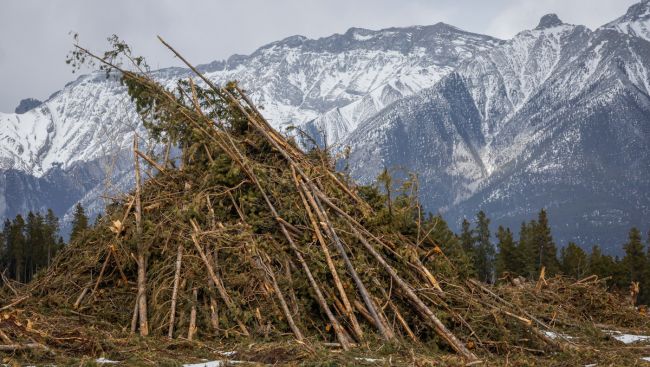
Picture Courtesy: THE CANADIAN PRESS/Jeff McIntosh