Ottawa's decision to expel India's top envoy and five other diplomats have given rise to greater tensions that have simmered for months between the two countries with Sikh groups calling for Indian consulates to be shut down in Vancouver and Toronto.
The Canadian government has previously said credible intelligence links India's government to the killing in June last year of activist Hardeep Singh Nijjar, leader of the Guru Nanak Sikh Gurdwara in Surrey, B.C., where community members have held a news conference.
Here's a look at what's driving the chill between Canada and India.
Why is India mad at Canada?
India is a staunch opponent to the Khalistan separatist movement, in which some Sikhs advocate for an independent state called Khalistan to be carved out of Indian territory.
India says the prospect is unconstitutional and threatens the country's national security. Ottawa has long stressed that it upholds India's territorial integrity but won't crack down on freedom of expression in Canada.
Khalistan supporters in Canada occasionally organize rallies and what they call referendum, which get little mainstream media attention in Canada but are the subject of emotive news reports in India. Organizers say India has persecuted them through decades, a claim New Delhi rejects.
Some Sikh temples have been found to be openly venerating people connected with acts of violence like the 1985 bombing of an Air India flight, which is the deadliest terrorist attack in Canadian history.
Did India kill a Canadian?
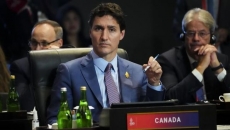
In September 2023, Prime Minister Justin Trudeau announced that Canadian intelligence services are investigating "credible" information about "a potential link" between India's government and the killing of Sikh leader Hardeep Singh Nijjar in British Columbia.
New Delhi initially outright denied any involvement, before shifting to saying that extrajudicial killings are not state policy.
Meanwhile, American authorities last November unsealed an indictment alleging a murder-for-hire plot by an Indian national. The court file alleges an Indian government employee directed the attempted assassination in the United States, and spoke about others, including Nijjar's killing in Canada.
This past May, police in Edmonton arrested three Indian nationals and charged them with first-degree murder and conspiracy to commit murder in Nijjar's death.
India maintains that Canada has never shared evidence of the country's involvement in the homicide, though Trudeau said Monday that Canadian authorities shared this information with their Indian peers over the weekend.
Since last autumn, India has temporarily suspended visa services for Canadians. It also withdrew diplomatic immunity for most of Canada's envoys, which Ottawa said forced it to bring home most of its diplomats.
Is India important?
In November 2022, Canada declared India "a critical partner" in its Indo-Pacific strategy, calling for a trade agreement, more work exchanges and partnerships in renewal energy.
Canada is among the countries that have spent years trying to court New Delhi amid growing concerns about China. Ottawa has said that India is key to promoting democracy and pluralism worldwide.
India relies on Canada for large imports of lentils and potash, and is a popular destination for students looking to study abroad in both advanced research degrees and vocational colleges.
Until September 2023, Canada and India had been in numerous rounds of high-level negotiations for a trade deal restricted to key industries, years after both countries abandoned an attempt at a comprehensive deal. Canada paused the latest negotiations shortly before making public its concerns about the Nijjar case.
Is this a political spat?
Indian Prime Minister Narendra Modi's government has argued that Trudeau hasn't taken the issue of Khalistan separatism seriously.
In 2018, Trudeau's visit to India caused controversy when it emerged that his delegation had invited Jaspal Atwal — a B.C. Sikh convicted of attempting to assassinate an Indian cabinet minister in 1986 — to two events with Trudeau.
In a background briefing arranged by the Prime Minister's Office, a government official told journalists that Atwal's presence had been arranged by factions within the Indian government who wanted to sabotage Trudeau's visit due to the Khalistan issue.
A year ago, Indian Foreign Affairs Minister Subrahmanyam Jaishankar suggested the latest rift comes down to issues his government has with Canada's Liberals.
"The problems we have are with a certain segment of Canadian politics, and the policies which flow from that," he said.
What happened on Monday?
On Monday, the RCMP warned the public about a rash of crimes including murder, extortion and coercion linked to Indian government agents.
The RCMP and other Canadian officials confronted India earlier this past weekend, and when New Delhi refused to co-operate, Ottawa ordered six Indian diplomats to leave Canada. India has similarly expelled six Canadian diplomats.
Monday's announced expulsion of six Indian diplomats from Canada comes after months of tensions between the two countries, which came to a head after the assassination of B.C. Sikh leader Hardeep Singh Nijjar, allegedly at the behest of the Indian government.
Here is a timeline related to the killing, which triggered the ongoing diplomatic rift between Canada and India.
2023
June 18 — Hardeep Singh Nijjar is shot dead outside the Guru Nanak Sikh temple in Surrey, B.C.
July 3 — Foreign Affairs Minister Mélanie Joly says she is concerned about the safety of India's diplomats following the distribution of what she called "unacceptable" posters, as some looming protests call for people to "kill India."
Sept. 1 — Canada pauses trade negotiations with India
Sept. 10 — Prime Minister Justin Trudeau and Indian Prime Minister Narendra Modi have a tense exchange on the sidelines of the G20 summit in New Delhi
Sept. 15 — Canada postpones a planned October trade mission to India
Sept. 18 — Trudeau tells the House of Commons there is credible intelligence about a potential link between India’s government and the killing of Nijjar
Sept. 18 — Canada expels a top Indian diplomat and a senior Canadian diplomat is expelled from India in return
Sept. 21 — India suspends visa services for Canadians
Oct. 19 — Canada recalls 41 diplomats from India after the Indian government revokes their diplomatic immunity
Oct. 25 — India resumes some visa services for Canadians
Nov. 29 — An indictment is unsealed in New York alleging a murder-for-hire plot by an Indian national. The indictment alleges an Indian government employee directed the attempted assassination in the United States, and spoke about others, including Nijjar's killing in Canada
2024
May 3 — Karan Brar, Kamalpreet Singh and Karanpreet Singh are arrested and charged with first-degree murder and conspiracy to commit murder in Nijjar's death
Oct. 14 — Trudeau announces Canada has expelled six Indian diplomats, including high commissioner Sanjay Kumar Verma, due to what he called accusations of widespread murder, extortion and coercion across Canada. India announces that it is also sending six Canadian diplomats home.