Cultural and broadcast industry groups are calling on the Liberal government to support the Online Streaming Act and the Online News Act, as the Prime Minister’s Office refuses to say whether the bills are part of trade negotiations with the United States.
"We are aware that the U.S. is exerting pressure on the [federal government], and the cultural sector is undoubtedly on high alert," said Marie-Julie Desrochers, executive director of a coalition representing the cultural sector.
Kevin Desjardins, president of the Canadian Association of Broadcasters, which has supported both pieces of legislation, said his group is concerned when it hears the threats.
Both Desrochers and Desjardins are hopeful the government will keep the bills in place, as the Liberals stay mum on their intentions — a marked departure to the Trudeau government’s attitude toward the bills.
Last week, the U.S. State Department took aim at Canada’s Online News Act in a human rights report that criticized press freedom in Canada, a week after a group of U.S. Republicans urged the Trump administration to push Canada to eliminate the Online Streaming Act.
At an unrelated press conference on Aug. 5, Prime Minister Mark Carney indicated in answer to a question that he may be open to repealing the Online News Act. The Prime Minister’s Office has declined to say whether Carney is considering eliminating either bill, or whether the bills are a consideration in ongoing trade talks with the U.S.
A spokesperson for the Office of the Minister of Canadian Identity and Culture told The Canadian Press in early August that "the implementation of the Online News Act is still ongoing."
The bills were implemented to require large tech and streaming companies to make financial contributions to Canadian content and news
Under the Online News Act, which requires Meta and Google to compensate news publishers for the use of their content, news outlets are now receiving payments from a $100-million Google fund.
The federal broadcast regulator is holding a series of hearings to implement the Online Streaming Act, which updated broadcasting laws to capture online platforms like Netflix.
The CRTC has ordered large foreign streamers to pay five per cent of their annual Canadian revenues to funds devoted to producing Canadian content, including local TV news. But some streamers are fighting the order in Federal Court, which has put a pause on the payments, estimated to be at least $1.25 million annually per company.
Carney already killed a bill that would have required many U.S. big tech companies to pay a digital services tax, after U.S. President Donald Trump said he was halting trade negotiations with Canada over the tax.
Desrochers said in an email her group, the Coalition for the Diversity of Cultural Expressions, is "confident" Carney will safeguard the Online Streaming Act. In July, the coalition sent Carney a letter, signed by dozens of groups in the arts and cultural sector, saying that Canadian culture "must remain untouchable in the current negotiations."
Desjardins said in the conversations with government, "they've remained strongly supportive, especially of measures to support Canadian newsrooms, and we’re continuing to encourage them to stand firm on these measures."
The broadcasters’ group respects "the government isn't going to engage in negotiations with the U.S., which have been very difficult to this point, in public and in the media," he said.
But Desjardins cautioned that "if the Canadian government were to cave on this, we think that you would see station closures and newsrooms being profoundly affected by it."
The silence from the Carney’s government is a stark difference to how Justin Trudeau’s government approached the two bills, vociferously defending both from criticism. Under Trudeau, the Liberals painted the bills as a way to defend Canada's cultural and news sectors in an environment dominated by foreign online giants.
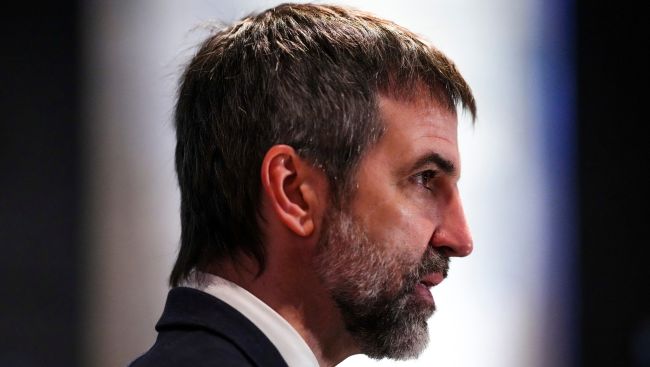
During his time as heritage minister, Steven Guilbeault introduced the first version of the Online Streaming Act and stood by the legislation despite controversy over its impact on user-generated content.
Guilbeault is now back in the same role, though now with the title of minister Canadian identity and culture. He has not spoken up about the two bills, and while his office expressed support for the cultural sector in a statement, it didn’t make specific promises about the legislation.
"In the face of potential U.S. tariffs, it’s more important than ever to stand strong as a country and celebrate what makes us uniquely Canadian. From coast to coast to coast, our filmmakers, artists, musicians, writers, and creators are producing world-class work that reflects the heart of who we are as a nation," Guilbeault’s office said in a statement.
"Now, more than ever, we must remain committed to supporting our creators and promoting Canadian content."
Desjardins said the political context between Canada and the U.S. has changed significantly.
"I respect the fact that the government is in a very difficult situation," he acknowledged.
"That said, we do think it's important for them to stand up for Canadian newsrooms and Canadian creators and to stand behind the supports that they put in place, which are really just about creating fairness in the broadcasting system."
Reynolds Mastin, president and CEO of the Canadian Media Producers Association, also called for the government to stand firm in an emailed statement.
"Any attacks on this legislation from south of the border should only strengthen the resolve of this government and all Canadians to stand up for Canada’s cultural sovereignty," he said.
Picture Courtesy: THE CANADIAN PRESS/Sean Kilpatrick