Friday, February 6, 2026
ADVT 
Tech

App to gauge happiness

Darpan News Desk IANS, 05 Aug, 2014 07:43 AM
    Using a smartphone app, researchers have unlocked what triggers happiness in people's lives -- and the key is to keep your expectations low.
     
    Researchers predicted the happiness of over 18,000 people worldwide in a smartphone game.
     
    The results showed that moment-to-moment happiness reflects not just how well things are going, but whether things are going better than expected.
     
    "The data shows that the happiness equation applies to thousands of people worldwide playing our game," said Robb Rutledge from University College London's Wellcome Trust Centre for Neuroimaging.
     
    For the study, 26 participants completed a decision-making task in which their choices led to monetary gains and losses.
     
    Using the data, scientists built a computational model in which self-reported happiness was related to recent rewards and expectations.
     
    The model was then tested on 18,420 participants in the game titled "What makes me happy?" in a smartphone app called "The Great Brain Experiment".
     
    Scientists were surprised to find that the same equation could be used to predict how happy participants would be while they played the smartphone game, even though the people could win only points and not money.
     
    They found that overall wealth accumulated during the experiment was not a good predictor of happiness.
     
    Instead, moment-to-moment happiness depended on the recent history of rewards and expectations.
     
    "It is often said that you will be happier if your expectations are lower. We find that there is some truth to this: lower expectations make it more likely that an outcome will exceed those expectations and have a positive impact on happiness," Rutledge maintained.
     
    The new equation captures different effects of expectations and allows happiness to be predicted based on the combined effects of many past events, concluded the study published in the journal Proceedings of the National Academy of Sciences.
    MORE Tech ARTICLES

    What you were waiting for, a self-driving car

    What you were waiting for, a self-driving car
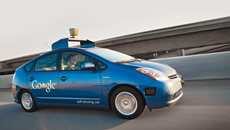
    “We have improved our software so it can detect hundreds of distinct objects simultaneously - pedestrians, buses, a stop sign held up by a crossing guard, or a cyclist making gestures that indicate a possible turn,” Chris Urmson, who leads Google’s self-driving car programme, wrote in a blog post.  

    What you were waiting for, a self-driving car

    Do you believe it! A computer mouse that can also scan

    Do you believe it! A computer mouse that can also scan
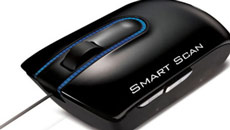
    MobScan has built-in technologies that helps to scan as well as edit the scanned material.

    Do you believe it! A computer mouse that can also scan

    Australian varsity signs MoU with two oldest IITs

    Australian varsity signs MoU with two oldest IITs
    In a bid to strengthen relationship with India in the areas of research and teaching, an Australian university has signed agreements with two Indian Institutes of Technology (IITs).

    Australian varsity signs MoU with two oldest IITs

    Magnets to power your fridge!

    Magnets to power your fridge!
    Within a decade, we could be using much more energy-efficient refrigerators than what we have today as researchers have now identified a new “universal” property of metamagnets, unleashing its potential applications for several items of everyday use.

    Magnets to power your fridge!

    Amazing! 'Gesture' keyboard lets you swipe words in air!

    Amazing! 'Gesture' keyboard lets you swipe words in air!
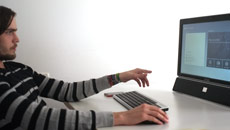
    Based partly on sensor technology built for the Microsoft Kinect games, the keyboards of the future could let users manipulate data without sitting down and typing in one letter at a time.

    Amazing! 'Gesture' keyboard lets you swipe words in air!

    Learn how to limit screen time for kids

    Learn how to limit screen time for kids
    It is no longer just the television or the computer that young children are glued to these days as smart phones and tablets have made it even more difficult for parents to limit the screen time for their kids.

    Learn how to limit screen time for kids