Friday, December 26, 2025
ADVT 
Tech

Canada signs on to U.S. space exploration pact

Darpan News Desk The Canadian Press, 13 Oct, 2020 10:08 PM
  • Canada signs on to U.S. space exploration pact

Canada has signed on to the Artemis Accords, a U.S.-led effort to establish global guidelines for sending explorers back to the Moon and beyond.

NASA says space agencies in Australia, Italy, Japan, the United Kingdom, Luxembourg and the United Arab Emirates also joined the pact.

The accords, which establish rules for extracting and using "space resources," commit signatories to exploring space peacefully and in the spirit of international co-operation.

They also call for transparency, the protection of heritage sites like the 1969 moon landing location and preventing the spread of orbital debris.

Canadian Space Agency president Lisa Campbell cheers the accords, but says more robust rules for the exploration of deep space are still a long ways off.

Campbell says the agency will begin consulting with Canadians, as well as a United Nations committee that oversees space exploration.

"The Artemis Accords are an important achievement for safe and sustainable space exploration," Campbell said in a statement.

"More work is needed to further solidify the framework for deep-space exploration activities, both nationally and internationally."

Canada has signed on to Artemis for the next 20 years, NASA administrator Jim Bridenstine told a virtual news conference Tuesday.

The country's role as a NASA partner has been evident for decades, Bridenstine said, most notably when the Maple Leaf-emblazoned Canadarm was a fixture of Space Shuttle missions throughout the 1980s and 1990s.

"Canada was the third nation on the planet to launch an object into space," he said. "Canada has a very robust history in space exploration."

It's also a country that's proud of its accomplishments in space, added Mike Gold, NASA's acting associate administrator for international and interagency relations.

"Canada is the only partner nation that has their space contribution on the $5 bill, so that absolutely makes Canada unique."

NASA's Artemis program, launched in 2017, aims to land the first woman and "the next man" on the moon in the southern pole region by 2024.


MORE Tech ARTICLES

Move effortlessly in apps world with Facebook

Move effortlessly in apps world with Facebook
Billed as a game changer in the mobile industry, Facebook has unveiled a new free and open-source service that would make it easier for you to navigate from one app to another and back again.

Move effortlessly in apps world with Facebook

What you were waiting for, a self-driving car

What you were waiting for, a self-driving car
“We have improved our software so it can detect hundreds of distinct objects simultaneously - pedestrians, buses, a stop sign held up by a crossing guard, or a cyclist making gestures that indicate a possible turn,” Chris Urmson, who leads Google’s self-driving car programme, wrote in a blog post.  

What you were waiting for, a self-driving car

Do you believe it! A computer mouse that can also scan

Do you believe it! A computer mouse that can also scan
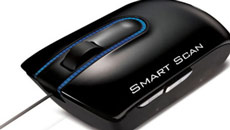
MobScan has built-in technologies that helps to scan as well as edit the scanned material.

Do you believe it! A computer mouse that can also scan

Australian varsity signs MoU with two oldest IITs

Australian varsity signs MoU with two oldest IITs
In a bid to strengthen relationship with India in the areas of research and teaching, an Australian university has signed agreements with two Indian Institutes of Technology (IITs).

Australian varsity signs MoU with two oldest IITs

Magnets to power your fridge!

Magnets to power your fridge!
Within a decade, we could be using much more energy-efficient refrigerators than what we have today as researchers have now identified a new “universal” property of metamagnets, unleashing its potential applications for several items of everyday use.

Magnets to power your fridge!

Amazing! 'Gesture' keyboard lets you swipe words in air!

Amazing! 'Gesture' keyboard lets you swipe words in air!
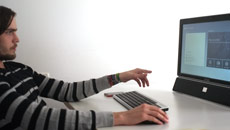
Based partly on sensor technology built for the Microsoft Kinect games, the keyboards of the future could let users manipulate data without sitting down and typing in one letter at a time.

Amazing! 'Gesture' keyboard lets you swipe words in air!