Friday, December 19, 2025
ADVT 
Tech

Device to help neuroscientists analyse 'big data'

Darpan News Desk IANS, 28 Jul, 2014 07:46 AM
    In the era of unprecedented quantities of information via web, mobile and other internet-based operations, here comes a new device that can help neuroscientists make sense of the "big data".
     
    Called Thunder - a library of tools developed at the Maryland-based nonprofit Howard Hughes Medical Institute's Janelia Research Campus - it speeds the analysis of data sets that are so large and complex they would take days or weeks to analyze on a single workstation, if a single workstation could do it at all.
     
    Researchers claim they have used Thunder to quickly find patterns in high-resolution images collected from the brains of active zebrafish and mice with multiple imaging techniques.
     
    "Using Thunder, we analysed images of the brain in minutes, interacting with and revising analyses without the lengthy delays associated with previous methods," said Janelia Research Campus group leaders Jeremy Freeman, Misha Ahrens and other colleagues.
     
    "Being able to apply analyses quickly - one after the other - is important. Speed gives us more flexibility to explore and get new ideas," Freeman added in a report appeared in the journal Nature Methods.
     
    That is why trying to analyae neuroscience data with slow computational tools can be so frustrating.
     
    "For some analyses, you can load the data, start it running, and then come back the next day. But if you need to tweak the analysis and run it again, then you have to wait another night," Ahrens noted.
     
    For larger data sets, the lag time might be weeks or months.
     
    Thunder can run on a private cluster or on Amazon's cloud computing services.

    MORE Tech ARTICLES

    'No direct evidence of link between mobile radiation and cancer'

    'No direct evidence of link between mobile radiation and cancer'
    The preponderance of evidence shows that there is no link between cell phone radiation and cancer, said oncologist and renowned author Siddhartha Mukherjee.

    'No direct evidence of link between mobile radiation and cancer'

    Watch out for muggers while wearing Google Glass

    Watch out for muggers while wearing Google Glass
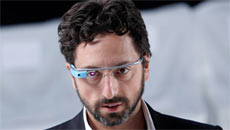
    The early birds who bought $1,500 (Rs.90,000) wearable eyewear Google Glass that was sold for one day in the US last week are facing street violence from muggers and privacy campaigners.

    Watch out for muggers while wearing Google Glass

    Feeling hot? Make the clouds rain with laser

    Feeling hot? Make the clouds rain with laser
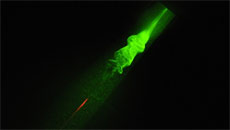
    Days are not far when we would be able to summon a shower from the sky or trigger lightning at will as researchers have now extended high-intensity laser with hope of stimulating showers.

    Feeling hot? Make the clouds rain with laser

    Talk to your smart phone to unlock car!

    Talk to your smart phone to unlock car!
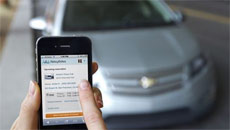
    Four students from University of Pennsylvania have developed a technology called GoogolPlex that allows users to get more from Apple's iPhone by simply talking to it.

    Talk to your smart phone to unlock car!

    Tiny robots to help you perform daily chores

    Tiny robots to help you perform daily chores
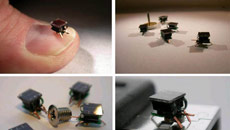
    Soon, tiny robots would be performing tasks such as measuring pollution, extinguishing fire and delivering medicines into the body in a non-invasive way.

    Tiny robots to help you perform daily chores

    Now, share your exact location with Facebook friends

    Now, share your exact location with Facebook friends
    The company has launched a new feature which can let you see which of your friends are nearby.

    Now, share your exact location with Facebook friends