Wednesday, December 24, 2025
ADVT 
Tech

First Chip That Uses Light For Communication Developed

IANS, 29 Dec, 2015 01:23 PM
    Engineers, one of them of Indian origin, have successfully developed a single-chip microprocessor - a landmark development that opens the door to ultrafast, low-power data crunching.
     
    The researchers packed two processor cores with more than 70 million transistors and 850 photonic components onto a 3-by-6-millimetre chip.
     
    They fabricated the microprocessor in a foundry that mass-produces high-performance computer chips, proving that their design can be easily and quickly scaled up for commercial production.
     
    The new chip marks the next step in the evolution of fiber optic communication technology by integrating into a microprocessor the photonic interconnects, or inputs and outputs (I/O), needed to talk to other chips.
     
    “This is a milestone. It's the first processor that can use light to communicate with the external world,” said Vladimir Stojanovic, associate professor of electrical engineering and computer sciences at University of California-Berkeley.
     
    No other processor has the photonic I/O in the chip.
     
    Stojanovic and fellow UC Berkeley professor Krste Asanovic teamed up with Rajeev Ram at the Massachusetts Institute of Technology and Milos Popovi? at the University of Colorado, Boulder, to develop the new microprocessor.
     
    “This is the first time we've put a system together at such scale, and have it actually do something useful, like run a programme," added Asanovic.
     
    The team found the chip had a bandwidth density of 300 gigabits per second per square millimeter, about 10 to 50 times greater than packaged electrical-only microprocessors currently on the market.
     
    The photonic I/O on the chip is also energy-efficient.
     
    The achievement opens the door to a new era of bandwidth-hungry applications.
     
    One near-term application for this technology is to make data centres more green.
     
    According to the US Natural Resources Defense Council, data centres consumed about 91 billion kilowatt-hours of electricity in 2013 - about two percent of the total electricity consumed in the US.
     
    The paper was published in the journal Nature.

    MORE Tech ARTICLES

    Soon, iphone earplugs won't fit in any other device

    Soon, iphone earplugs won't fit in any other device
    You will not be able to use your iPhone earplugs with other devices in the near future.

    Soon, iphone earplugs won't fit in any other device

    Facebook most preferred social networking medium for urban teens'

    Facebook most preferred social networking medium for urban teens'
    Despite a drop in the percentage, Facebook continues to be the preferred social networking playground for teenagers in India's metros and other big cities, according to a survey.

    Facebook most preferred social networking medium for urban teens'

    App that locks kids' gadgets for family meal

    App that locks kids' gadgets for family meal
    Do your kids spend dinner time playing with ipads or smartphones? Try this app that automatically locks their gadgets at meal times to get the family back to the dinner table.

    App that locks kids' gadgets for family meal

    App to help keep 'traveller's diarrhoea at bay

    App to help keep 'traveller's diarrhoea at bay
    For those who are gastronomically adventurous, travelling is hardly any fun without savouring the succulent local dishes and drinks.

    App to help keep 'traveller's diarrhoea at bay

    Did you find your spouse on Facebook or Twitter?

    Did you find your spouse on Facebook or Twitter?
    If you got married in the last few years, chances are that you may have found your life partner on a social networking site such as Twitter and Facebook - without you actually realising it.

    Did you find your spouse on Facebook or Twitter?

    'Smart' gloves to help soldiers scale vertical walls

    'Smart' gloves to help soldiers scale vertical walls
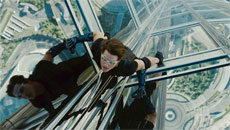
     If you have seen the movie "Mission Impossible - Ghost Protocol", you can not forget the scene where actor Tom Cruise scales and swings from world's tallest building Burj Khalifa in Dubai wearing adhesive gloves.

    'Smart' gloves to help soldiers scale vertical walls