Wednesday, December 24, 2025
ADVT 
Tech

First Chip That Uses Light For Communication Developed

IANS, 29 Dec, 2015 01:23 PM
    Engineers, one of them of Indian origin, have successfully developed a single-chip microprocessor - a landmark development that opens the door to ultrafast, low-power data crunching.
     
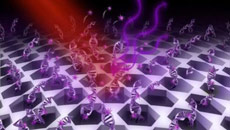
    The researchers packed two processor cores with more than 70 million transistors and 850 photonic components onto a 3-by-6-millimetre chip.
     
    They fabricated the microprocessor in a foundry that mass-produces high-performance computer chips, proving that their design can be easily and quickly scaled up for commercial production.
     
    The new chip marks the next step in the evolution of fiber optic communication technology by integrating into a microprocessor the photonic interconnects, or inputs and outputs (I/O), needed to talk to other chips.
     
    “This is a milestone. It's the first processor that can use light to communicate with the external world,” said Vladimir Stojanovic, associate professor of electrical engineering and computer sciences at University of California-Berkeley.
     
    No other processor has the photonic I/O in the chip.
     
    Stojanovic and fellow UC Berkeley professor Krste Asanovic teamed up with Rajeev Ram at the Massachusetts Institute of Technology and Milos Popovi? at the University of Colorado, Boulder, to develop the new microprocessor.
     
    “This is the first time we've put a system together at such scale, and have it actually do something useful, like run a programme," added Asanovic.
     
    The team found the chip had a bandwidth density of 300 gigabits per second per square millimeter, about 10 to 50 times greater than packaged electrical-only microprocessors currently on the market.
     
    The photonic I/O on the chip is also energy-efficient.
     
    The achievement opens the door to a new era of bandwidth-hungry applications.
     
    One near-term application for this technology is to make data centres more green.
     
    According to the US Natural Resources Defense Council, data centres consumed about 91 billion kilowatt-hours of electricity in 2013 - about two percent of the total electricity consumed in the US.
     
    The paper was published in the journal Nature.

    MORE Tech ARTICLES

    Major setback to Microsoft: No Windows 8 in China

    Major setback to Microsoft:  No Windows 8 in China
    In a major setback to Microsoft, China has banned purchase of Windows 8, the latest version of the US software giant's venerable desktop operating system, for government computers.

    Major setback to Microsoft: No Windows 8 in China

    Technology to lower risk of midair collisions

    Technology to lower risk of midair collisions
    Here is a new technology that has successfully lowered the risk of midair collisions in small aircraft.

    Technology to lower risk of midair collisions

    Apple rejects app to facilitate female masturbation

    Apple rejects app to facilitate female masturbation
     An app that teaches women how to masturbate has been removed by Apple from its iTunes stores worldwide.

    Apple rejects app to facilitate female masturbation

    Bizarre! One in six Britons prefer sex with robots

    Bizarre! One in six Britons prefer sex with robots
    Roughly one in six respondents would “have sex with an android” and another one in three (29 percent) were 'OK' with others getting down with robots, the survey revealed.

    Bizarre! One in six Britons prefer sex with robots

    Want to know how to get a good raise? Read this!

    Want to know how to get a good raise? Read this!
    Have you received a less favourable appraisal from your boss this year? You are likely coming to office late. A study has found bosses to be favouring employees who, even though on flexible timings, arrived early.

    Want to know how to get a good raise? Read this!

    New technology may improve light-based cancer treatment

    New technology may improve light-based cancer treatment
    Researchers have developed a new technology that could bring photodynamic therapy (PDT), which uses lasers to activate special drugs to treat easily accessible tumours such as oral and skin cancer, into areas of the body which were previously inaccessible.

    New technology may improve light-based cancer treatment