Thursday, April 2, 2026
ADVT 
Tech

First Chip That Uses Light For Communication Developed

IANS, 29 Dec, 2015 01:23 PM
    Engineers, one of them of Indian origin, have successfully developed a single-chip microprocessor - a landmark development that opens the door to ultrafast, low-power data crunching.
     
    The researchers packed two processor cores with more than 70 million transistors and 850 photonic components onto a 3-by-6-millimetre chip.
     
    They fabricated the microprocessor in a foundry that mass-produces high-performance computer chips, proving that their design can be easily and quickly scaled up for commercial production.
     
    The new chip marks the next step in the evolution of fiber optic communication technology by integrating into a microprocessor the photonic interconnects, or inputs and outputs (I/O), needed to talk to other chips.
     
    “This is a milestone. It's the first processor that can use light to communicate with the external world,” said Vladimir Stojanovic, associate professor of electrical engineering and computer sciences at University of California-Berkeley.
     
    No other processor has the photonic I/O in the chip.
     
    Stojanovic and fellow UC Berkeley professor Krste Asanovic teamed up with Rajeev Ram at the Massachusetts Institute of Technology and Milos Popovi? at the University of Colorado, Boulder, to develop the new microprocessor.
     
    “This is the first time we've put a system together at such scale, and have it actually do something useful, like run a programme," added Asanovic.
     
    The team found the chip had a bandwidth density of 300 gigabits per second per square millimeter, about 10 to 50 times greater than packaged electrical-only microprocessors currently on the market.
     
    The photonic I/O on the chip is also energy-efficient.
     
    The achievement opens the door to a new era of bandwidth-hungry applications.
     
    One near-term application for this technology is to make data centres more green.
     
    According to the US Natural Resources Defense Council, data centres consumed about 91 billion kilowatt-hours of electricity in 2013 - about two percent of the total electricity consumed in the US.
     
    The paper was published in the journal Nature.
    MORE Tech ARTICLES

    Electric paint to fix remote control in a jiffy

    Electric paint to fix remote control in a jiffy
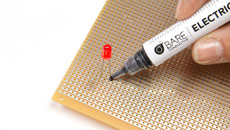
    You need not see red if you find your remote control broken just before the start of a match as you can now fix it just by painting it with a brush. All you need to do after that is wait for it to get dried up!

    Electric paint to fix remote control in a jiffy

    How to win more 'likes' on Facebook photos

    How to win more 'likes' on Facebook photos
    An Indian-American student at Massachusetts Institute of Technology, US, has devised a formula that tells how the contents of a photograph may predict its popularity online.

    How to win more 'likes' on Facebook photos

    Twitter selfies to reveal your mood

    Twitter selfies to reveal your mood
    What if selfies posted on Twitter can reveal our mood - whether people who live in “happier” cities tend to post more selfies and whether they smile more while taking self-portraits?

    Twitter selfies to reveal your mood

    Need a house? Print it in hours

    Need a house? Print it in hours
    In what could make the dream of owning a house a reality for a large section of people in developing countries, a Chinese company has devised a method of 3D printing a house.

    Need a house? Print it in hours

    This lift to zip you to 95th floor in 43 seconds!

    This lift to zip you to 95th floor in 43 seconds!
    Forget the world's tallest skyscraper Burj Khalifa in Dubai. This elevator in China will take you to the 95th floor in flat 43 seconds!

    This lift to zip you to 95th floor in 43 seconds!

    Great! Now an app to protect your credit card from hacking

    Great! Now an app to protect your credit card from hacking
    Bad news for credit card hackers. Here comes a 'remote control' app that can help you turn your credit cards on and off with the click of a button, and control when, where, and how they are used.

    Great! Now an app to protect your credit card from hacking