What started as a casual conversation among friends walking home from Princess Margaret Secondary in Surrey has now landed in history books on NASA’s global stage.
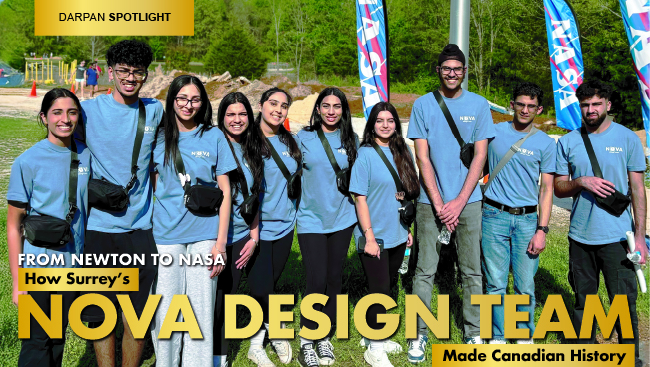
This spring, a group of ten high school students from Surrey became the first Canadian team to win first place in the 31-year history of the prestigious NASA Human Exploration Rover Challenge.
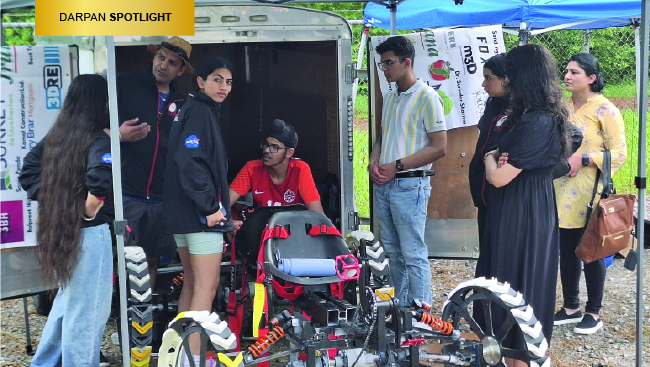
Led by Jeevan Sandhu, the Nova Design Team, a division of the Bright STEM Education Foundation, not only claimed the top overall title in 2025 but also walked away with the NASA Project Review Award and the Phoenix Award.
The victory is extraordinary not just for what it means in the competition’s context, but for what it symbolizes: a group of local students, with no major funding or institutional backing, outperforming global university teams by more than 20 points.
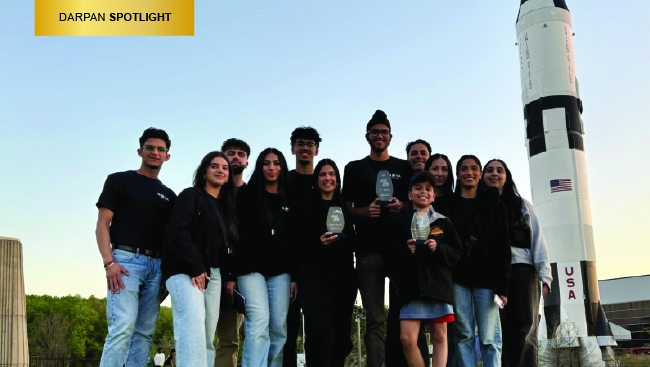
The story began in 2023, when Sandhu stumbled across a YouTube video about a NASA engineering challenge. Intrigued, he shared it with his friends Mehul Bhanot, Omar Arain, and Jasmeet Dhaliwal. What started as curiosity quickly turned into commitment. Without funding, experience, or even a name, the friends poured their energy into writing a 30-page design proposal.
“That weekend, we worked harder than I think we had ever done before,” admits Sandhu. On the following Monday, we, the LeoCraft Design Team, submitted our long-form design proposal. In the moment, it seemed an accomplishment to just complete the report in that short a time frame. We knew that it was not our best work, considering the short timeframe we had. For us, this was the closest we’d probably come to achieving our childhood dreams of being astronauts.”
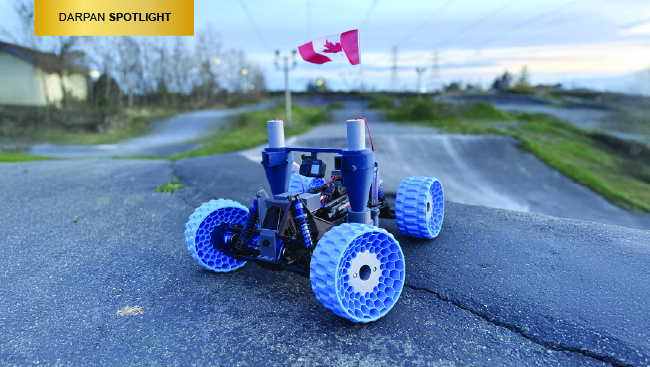
Fast forward, that dream became reality when NASA selected the LeoCraft Design Team, the first Canadian high school team ever accepted into the competition. Though their 2024 outing was plagued by shipping delays and unexpected logistical hurdles, they still managed to win the NASA STEM Engagement Award.
The group came back stronger in 2025. Then came another unexpected twist. The school district decided not to support their participation, citing strained resources and concerns about alignment with educational goals. However, giving up was not an option. “Instead of dwelling on this disappointment, we honestly only became more determined. We could not stop," recalls Sandhu.
More driven than ever, the team found a way forward by reaching out to NASA directly. In a show of goodwill, the competition administrator, as one of his last actions before his upcoming retirement, allowed them to compete as an independent team through a newly formed non-profit, the Bright STEM Education Foundation.
Sandhu highlights, “For the year, we decided on one central vision: What if you could build a bridge? A bridge to connect innovative youth, inspire younger children, and pave the way for a brighter future for our community. That bridge would be the Nova Design Team, but instead of constructing bridges, we'd be designing Virtue, the next Lunar Rover for the National Aeronautics and Space Administration.”
This time, the Nova Design Team tackled NASA’s new autonomous rover division. The design they submitted, dubbed Virtue, was an electric rover capable of reaching 85 km/h, mapping obstacles from 60 feet away, and collecting lunar material with a CycloVac sampling system without contamination. Virtue was more than a robot; it was a statement.
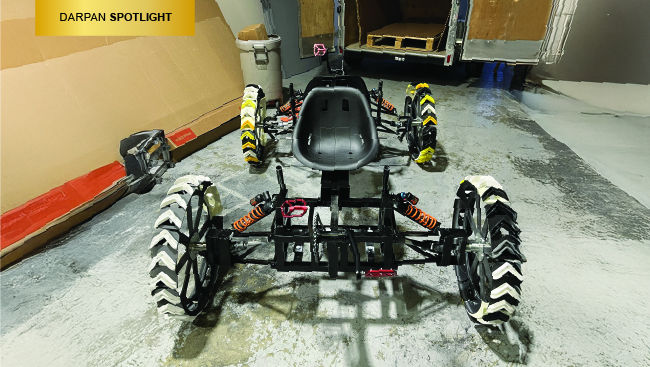
In April 2025, the team travelled to NASA’s Marshall Space Flight Center in Huntsville, Alabama, where Virtue—and their vision—made Canadian history. “It felt like a dream come true, especially knowing that we made history by bringing Canada its first-place win in the challenge’s 31-year history,” shares team member Harmeet Sond. “Months of late nights and intense design revisions all came together when we crossed the finish line. The win was both overwhelming and deeply rewarding.”
In advice to young enthusiasts, team member Parneet Dhesi emphasizes, “Don’t wait for opportunities to come to you and reach for them instead, even if it means stepping far outside your comfort zone. Failure and setbacks are part of the process. Use every resource you can, network with mentors, and keep your mind open to learning new things and building your skills through real-world projects.”
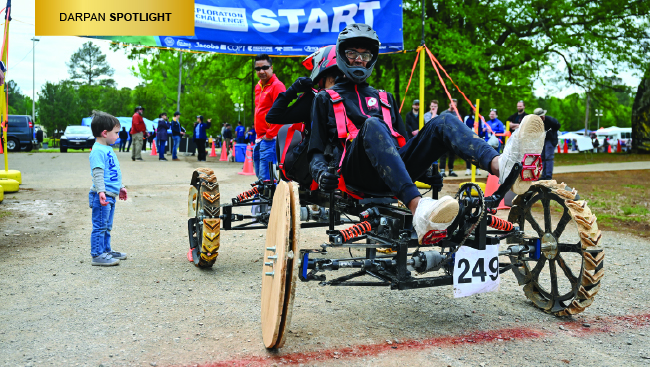
Evidently, each member brought their own strengths and commitment to the table, and the future shines bright for them all:
-
Jeevan Sandhu, Founder and Student Team Lead: Incoming student at the University of Toronto, pursuing Finance and Economics.
-
Mehul Bhanot, Team Safety Officer: Incoming student at UBC, pursuing a future in healthcare.
-
Jasmeet Dhaliwal, Co-Founder of Team Nova: Incoming student at UBC, with aspirations in healthcare.
-
Parneet Dhesi, Team Member: Incoming student at UBC, planning a career in healthcare.
-
Harmeet Sond, Team Member: Incoming student at UBC, aiming for a future in finance.
-
Monica Virk, Team Member: Incoming student at Douglas College, pursuing a path in healthcare.
-
Shubhreet Aulakh, Team Member: Incoming student at UBC, focused on a future in healthcare.
-
Sukhneet Dhesi, Team Member: Incoming student at SFU, with goals in healthcare.
-
Omar Arain, Team Member: Incoming student at UBC, preparing for a future in healthcare.
-
Haardik Garg, Team Member: Incoming student at the University of Waterloo, specializing in computer science.
Ultimately, their mission wasn’t just to win a competition. It was to inspire. “What if you could build a bridge?” they asked themselves. And then, against all odds, they did.