Wednesday, April 1, 2026
ADVT 
Tech

Google Declares 'Quantum Supremacy' With Chip Of The Future

Darpan News Desk IANS, 23 Oct, 2019 08:39 PM

    Google CEO Sundar Pichai on Wednesday announced the team at Google AI has achieved sort of "quantum supremacy" with developing a chip that performed the target computation in 200 seconds, which would otherwise take the world's fastest supercomputer 10,000 years.


    Published in the journal Nature, the Google AP paper said the team developed a new 54-qubit processor, named "Sycamore", that is comprised of fast, high-fidelity quantum logic gates, in order to perform the benchmark testing.


    "Very proud that our @GoogleAI team has achieved a big breakthrough in quantum computing known as quantum supremacy after over a decade of work, as published in @Nature. Thank you to our collaborators in the research community who helped make this possible," tweeted Pichai.


    The quantum supremacy experiment was run on a fully programmable 54-qubit processor named.


    It is comprised of a two-dimensional grid where each qubit is connected to four other qubits.


    As a consequence, the chip has enough connectivity that the qubit states quickly interact throughout the entire processor, making the overall state impossible to emulate efficiently with a classical computer.


    Not just Google but several tech giants like Microsoft, IBM and Intel have joined the race to build a scalable quantum computer.


    IBM recently unveiled its quantum computer with 53 qubits.


    A quantum computer can solve complex problems that would otherwise take billions of years for today's computers to solve. This has massive implications for research in health care, energy, environmental systems, smart materials and more.


    Google said it will make its supremacy-class processors available to collaborators and academic researchers, as well as companies that are interested in developing algorithms.


    "Second, we're investing in our team and technology to build a fault-tolerant quantum computer as quickly as possible. Such a device promises a number of valuable applications," Google said in a blog post.


    The current bits in computers store information as either 1 or 0, thus limiting the potential to make sense when faced with gigantic volumes of data.

     

    MORE Tech ARTICLES

    Amnesty International launches app for activists in danger

    Amnesty International launches app for activists in danger
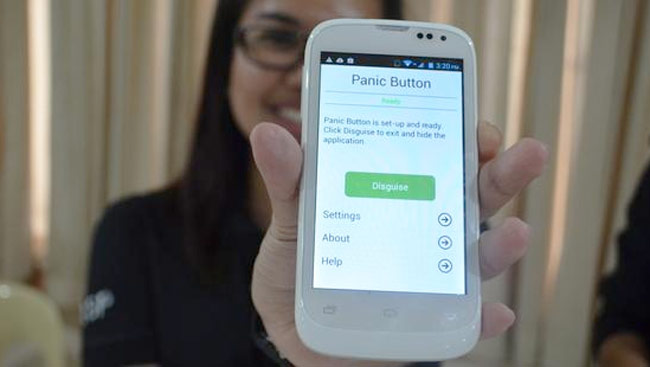
    Amnesty International has launched a new open source app called 'Panic Button’ to help activists facing imminent danger.

    Amnesty International launches app for activists in danger

    Now, a tool to predict financial pain from cancer

    Now, a tool to predict financial pain from cancer
    Along with distress that comes with cancer diagnosis and the discomfort of treatment, more patients now have to deal with "financial toxicity", the expense, anxiety and loss of confidence confronting those who face large, unpredictable costs.

    Now, a tool to predict financial pain from cancer

    LinkedIn unveils new app for job seekers

    LinkedIn unveils new app for job seekers
    If you are a job seeker and a LinkedIn user, this app may just be for you.

    LinkedIn unveils new app for job seekers

    App to measure breathing rate inside 10 seconds

    App to measure breathing rate inside 10 seconds
    A new mobile app can measure respiratory rate in children roughly six times faster than the standard stop watch method.

    App to measure breathing rate inside 10 seconds

    App can change your nail colour in seconds!

    App can change your nail colour in seconds!
    Do you want to change your nail paint everyday but don't have enough time or patience? Worry not, a new app can take care of that.

    App can change your nail colour in seconds!

    'Smart' glasses to help people with poor vision

    'Smart' glasses to help people with poor vision
    Google glass may allow you to click pictures and do video recording on the go, but Oxford University researchers are now developing a "smart" glass that enables people with poor vision to spot obstacles and "see" movement and facial expressions.

    'Smart' glasses to help people with poor vision