Friday, December 19, 2025
ADVT 
Tech

'Google street view' of galaxies a reality

Darpan News Desk IANS, 24 Jul, 2014 08:09 AM
    Australian astronomers have developed a home-grown instrument based on bundles of optical fibres that gives the first 'Google street view' of the cosmos.
     
    Developed by researchers at University of Sydney and Australian Astronomical Observatory, the optical-fibre instrument called SAMI can sample the light from up to 60 parts of a galaxy for a dozen galaxies at a time.
     
    By analysing the light's spectrum astronomers can learn how gas and stars move within each galaxy, where the young stars are forming and where the old stars live.
     
    Using the new instrument, astronomers have already spotted "galactic winds" - "streams of charged particles travelling at up to 3,000 km a second - from the centre of two galaxies.
     
    "It is a giant step. Before this, we could study one galaxy at a time in detail or lots of galaxies at once but in much less detail. Now we have both the numbers and the detail," explained James Allen of the ARC Centre of Excellence for All-sky Astrophysics (CAASTRO) at University of Sydney.
     
    In just 64 nights, the team has gathered data on 1,000 galaxies and over the next two years, it will study another 2,000.
     
    The optical-fibre instrument was installed on the 4-m Anglo-Australian Telescope at Siding Spring Observatory in northwest New South Wales, Australia last year.
     
    The researchers are also uncovering the formation history of galaxies by looking to see if they are rotating in a regular way or if the movement of their stars is random and disordered.
     
    "There are hints that galaxies with random motions sit at the centres of groups of galaxies, where many smaller galaxies may have fallen into them," informed Dr Lisa Fogarty, a CAASTRO researcher at University of Sydney.
    MORE Tech ARTICLES

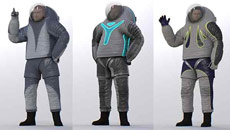
    Here comes NASA suit for men on Mars

    Here comes NASA suit for men on Mars
    With the focus being shifted to a manned mission for Mars in near future, NASA is developing technologies astronauts one day will use to live and work with on the red planet.

    Here comes NASA suit for men on Mars

    Move effortlessly in apps world with Facebook

    Move effortlessly in apps world with Facebook
    Billed as a game changer in the mobile industry, Facebook has unveiled a new free and open-source service that would make it easier for you to navigate from one app to another and back again.

    Move effortlessly in apps world with Facebook

    What you were waiting for, a self-driving car

    What you were waiting for, a self-driving car
    “We have improved our software so it can detect hundreds of distinct objects simultaneously - pedestrians, buses, a stop sign held up by a crossing guard, or a cyclist making gestures that indicate a possible turn,” Chris Urmson, who leads Google’s self-driving car programme, wrote in a blog post.  

    What you were waiting for, a self-driving car

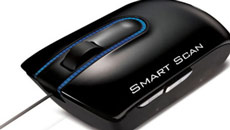
    Do you believe it! A computer mouse that can also scan

    Do you believe it! A computer mouse that can also scan
    MobScan has built-in technologies that helps to scan as well as edit the scanned material.

    Do you believe it! A computer mouse that can also scan

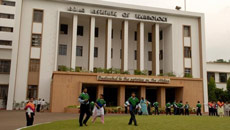
    Australian varsity signs MoU with two oldest IITs

    Australian varsity signs MoU with two oldest IITs
    In a bid to strengthen relationship with India in the areas of research and teaching, an Australian university has signed agreements with two Indian Institutes of Technology (IITs).

    Australian varsity signs MoU with two oldest IITs

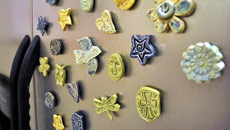
    Magnets to power your fridge!

    Magnets to power your fridge!
    Within a decade, we could be using much more energy-efficient refrigerators than what we have today as researchers have now identified a new “universal” property of metamagnets, unleashing its potential applications for several items of everyday use.

    Magnets to power your fridge!