Monday, June 29, 2026
ADVT 
Tech

How Blue Light Accelerates Blindness

Darpan News Desk IANS, 09 Aug, 2018 01:23 PM
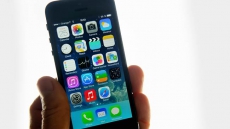
    Are you addicted to your smartphones, laptops and tablets? The blue light emitting from these digital devices can affect your eye's retina and lead to age-related macular degeneration, according to a research led by a professor of Indian-origin.
     
     
    Macular degeneration, an incurable eye disease that results in significant vision loss starting on average in a person in his 50s or 60s, is the death of photoreceptor cells in the retina. Those cells need molecules called retinal to sense light and trigger a cascade of signalling to the brain.
     
     
    The findings showed that blue light exposure causes retinal to trigger reactions that generate poisonous chemical molecules in photoreceptor cells.
     
     
    "We are being exposed to blue light continuously, and the eye's cornea and lens cannot block or reflect it," said Ajith Karunarathne, Assistant Professor, University of Toledo in Ohio, US.
     
     
    "It's no secret that blue light harms our vision by damaging the eye's retina," he added.
     
     
    Since photoreceptors, produced in the eye, are useless without retinal, one needs a continuous supply of retinal molecules to see.
     
     
    "It's toxic. If you shine blue light on retinal, the retinal kills photoreceptor cells as the signalling molecule on the membrane dissolves," explained Kasun Ratnayake, doctoral student researcher at the varsity.
     
     
    "Photoreceptor cells do not regenerate in the eye. When they're dead, they're dead for good."
     
     
    In the study, published in the journal Scientific Reports, when the team introduced blue light to other cell types in the body, such as cancer cells, heart cells and neurons, they died as a result of the combination with retinal. Blue light alone or retinal without blue light had no effect on cells.
     
     
    "The retinal-generated toxicity by blue light is universal. It can kill any cell type," Karunarathne said.
     
     
    To protect your eyes from the blue light, wear sunglasses that can filter both UV and blue light outside and avoid looking at your cell phones or tablets in the dark, he suggested.

    MORE Tech ARTICLES

    Apps that monitor your financial health

    Apps that monitor your financial health
    You have read about fitness apps offering better health monitoring and overall happiness. But have you ever tried downloading apps that keep your financial health in...

    Apps that monitor your financial health

    Cybercrimes major threat to businesses: KPMG report

    Cybercrimes major threat to businesses: KPMG report
    Cybercrime has emerged as a major threat for businesses across the country as acknowledged by an overwhelming 89 percent of executives surveyed, a KPMG...

    Cybercrimes major threat to businesses: KPMG report

    Hubble telescope inspired tech helps restore eyesight

    Hubble telescope inspired tech helps restore eyesight
    NASA's telescopes are not just helping us look into the dark deep universe but have inspired surgeons to restore the eyesight of the elderly....

    Hubble telescope inspired tech helps restore eyesight

    How does nature's strongest glue stick?

    How does nature's strongest glue stick?
    Barnacles produce the strongest glue or cement found in nature. The material is better than anything we have developed synthetically and sticks to any surface, even underwater...

    How does nature's strongest glue stick?

    Oceans vital for alien life on other planets

    Oceans vital for alien life on other planets
    Oceans have an immense capacity to control climate and they are vital in sustaining life even in case there is any on other planets, says a study....

    Oceans vital for alien life on other planets

    Sniffer laser for hard-to-detect explosives

    Sniffer laser for hard-to-detect explosives
    There's bad news for bomb-sniffing dogs: researchers have found a way to increase the sensitivity of a light-based sensor to detect incredibly minute amounts of explosives....

    Sniffer laser for hard-to-detect explosives